It is a process that allows brands to showcase themselves as a legitimate one – boosting the opening rates of their emails.

Email marketing has never been so competitive. Inbox always seems to be full. As a result, users tend to open fewer of them, as most of the time, it turns out to be unnecessary and anyway, the process is time-consuming.
In this loop, most of the small and medium-sized retail brands struggle to get the right attention. This is where the logo authentication comes into the game. By showcasing a genuine and verified logo at the top, it helps to build trust, confidence and increase chances of opening it.
Read further to explore how retail brands use logo authentication to increase email open rates.
Key Takeaways
- Most of the time, consumers often make a decision whether to open an email, even before reading the subject line.
- Verified brand logos allow retail emails to shine out in even the most crowded email inboxes.
- BIMI effectively helps to save brand reputation by making email real identification more difficult.
Even targeted campaigns get lost among the thousands of other promotional messages delivered on the same day. The problem is being identified. Consumers scan their inboxes fast, and if a sender’s name doesn’t register quickly, the email gets ignored or deleted without a second look.
Phishing has made this more difficult than it used to be. Retail brands get imitated all the time, and shoppers know it. So even when a reliable email shows up, there’s a moment of confusion – is this real, or is someone trying to trick me?
More often than not, that doubt amounts to inaction. And when that happens multiple times across a customer base, it shows up in open rates whether brands realize it or not.
Logo authentication, as arranged through BIMI, places a verified brand logo directly in the inbox next to the sender’s name. This is a functional authentication feature built on top of Domain-based Message Authentication, Reporting, and Conformance (DMARC), which calls on brands to have rigid email authentication policies in place before a logo can be displayed.
To offer a verified logo, brands must buy Verified Mark Certificate (VMC), which validates that the logo belongs to the legitimate sending domain. When the infrastructure is fully set up on the sender’s end, the logo appears in supported email clients without any action called for from the consumer. The practical effect is quick brand recognition at the inbox level, before the subject line is even checked.
These are instant recognition hacks that allow one to open emails fast. Here is a list of logo authentication that helps enhance open rates.
Subject lines are read linearly, i.e., a consumer scans the words sequentially. A logo, by contrast, is tracked in milliseconds. Visual processing works faster than language decoding, which means a verified brand logo conveys identity before the subject line has a chance.
In a retail inbox where multiple promotional emails can show up within the same hour, being instantly identified really matters. When people can quickly identify the brand, they’re more likely to open the email without evaluating it.Verified logos help build trust at a look. It also means the logo is verified with the sending domain. So, in simple terms, the email is actually from the brand it says it is. That becomes especially important in retail, where phishing emails are likely to show up more during busy shopping periods.
You can see the difference in how people act, too. When a verified logo is there, shoppers generally feel a bit more comfortable handling the email. That small layer of trust makes them less likely to hold back and more likely to spend time with what’s inside.
Brands implementing BIMI have posted double-digit percentage increases in open rates following deployment. The lift is solid across segments, which proves it’s driven by the authentication layer itself rather than other campaign variations. Retail email performance confirms that logo visibility directly aligns with improved open metrics.
The implication for retail marketers is that logo authentication should be tested as a performance lever.
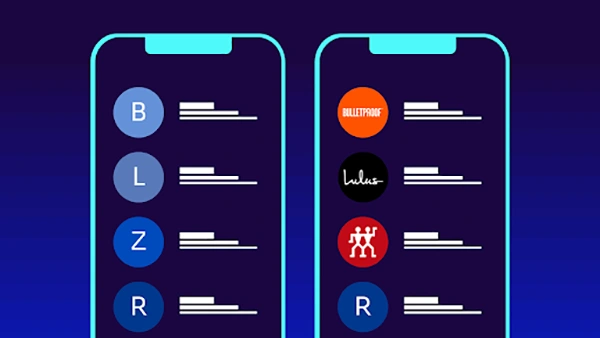
Look at what a recipient sees when they open their promotional folder: a mix of emails, some with verified logos displayed clearly and most without. The emails with logos stand out visually, even before a single word is read. The confirmed brand immediately wins more attention than unauthenticated competitors occupying the same inbox.
This effect benefits famous brands, but it’s arguably more valuable for mid-sized or regional retailers. A lesser-known brand that employs BIMI in email authentication can generate a level of visual credibility in the inbox that its recognition level alone wouldn’t produce. The logo signals legitimacy in spite of brand size.
Logo authentication follows a standardized and set process, most of the time. Here are simple steps to follow a defined sequence.
Once this infrastructure is in place, supported email clients display the logo automatically.
Open rate improvement is the most immediate and obvious outcome, but the benefits extend further. Consumers who join with verified brand emails show higher downstream engagement. More clicks, stronger conversion likelihood, and greater long-term confidence in the brand’s communications. Verified logo usage to increase purchase intent during retail’s most competitive periods.
There is also a defensive aspect: BIMI-compliant infrastructure directly reduces the effectiveness of phishing attacks that imitate the brand. That protection boosts consumer trust over time.
Despite how magical words one has added into the email, if it is not opened, then it makes no sense. This is where earning instant trust comes in.
With the help of logo authentication, one gets help to make their emails stand out in the inbox. With the increase in competition, it has become a required standard for the email to have a legitimate logo, so that the user finds it trustworthy and opens it.
It is a process that allows brands to showcase themselves as a legitimate one – boosting the opening rates of their emails.
A verified logo gives an instant signal of trust and credibility. A user feels it is right and safe to open it – as a result, the open rates improve.
At the current moment, not all email providers support BIMI. However, the support is continuously improving for the brands.