It’s technology that enables computers and machines to perform tasks that typically require human intelligence, such as learning, problem-solving, and decision-making.


“The development of full artificial intelligence could spell the end of the human race… or the beginning of unprecedented progress.”
— Stephen Hawking (Theoretical Physicist)
No one imagined that we’d be using a science fiction concept in 21st century itself: AI. Today, it powers everything from virtual assistants and smart devices to advanced medical systems and autonomous vehicles, reshaping how people live, work, and interact with the world.
As organizations accelerate their digital transformation efforts, AI is becoming a key driver of innovation, helping businesses improve efficiency, enhance decision-making, and deliver highly personalized experiences. In 2026, it’s no longer a glimpse of the future. It is a practical tool embedded in everyday life, enabling organizations to automate complex processes, analyze vast amounts of data, and unlock new growth opportunities.
KEY TAKEAWAYS
- AI has become a core technology powering innovation across industries in 2026.
- It improves efficiency, decision-making, customer experiences, and operational productivity.
- Healthcare, finance, education, and transportation are among the sectors experiencing the greatest AI-driven transformation.
- Ethical considerations such as privacy, bias, and transparency must be addressed to ensure responsible adoption.
AI refers to the simulation of human intelligence in machines and computer systems. These systems can learn from data, identify patterns, solve problems, and make decisions with minimal human intervention.
The technologies include machine learning, natural language processing, computer vision, robotics, and deep learning. Together, these technologies enable computers to perform tasks that traditionally required human intelligence.
These technologies are also finding their way into everyday products that people use beyond traditional computers and smartphones. From smart home devices and virtual assistants to AI glasses, artificial intelligence is becoming more accessible through connected technologies that can understand voice commands, provide real-time information, and support hands-free interactions in daily life.
It’s transforming almost all major industries that run our modern world.
AI has significantly improved healthcare services. AI-powered systems can analyze medical records, assist in disease diagnosis, and support doctors in developing personalized treatment plans. Advanced algorithms help identify health risks earlier, improving patient outcomes and reducing healthcare costs.
Businesses are leveraging it to automate repetitive tasks, improve customer support, and gain valuable insights from data. Financial institutions use AI for fraud detection, risk assessment, and automated trading systems. This has made their decision-making faster and more accurate.
In education sector, AI-driven learning platforms provide personalized educational experiences. Students can access customized learning paths, while teachers can monitor performance and identify areas where additional support is needed.
Self-driving technology, intelligent traffic management systems, and predictive maintenance solutions are transforming transportation. AI helps optimize routes, reduce fuel consumption, and improve road safety.
INTERESTING STATS
AI lowers compliance costs by 30% and fastens processing times by 50%.
AI is reducing the time and cost of operations while improving decisions and experience.
While AI offers significant advantages, it also presents important challenges that cannot be overlooked:
All these remain important issues that organizations must address responsibly.
Governments and technology companies are increasingly developing ethical frameworks and regulations to ensure AI systems are transparent, fair, and accountable. Its responsible development is essential for maintaining public trust and maximizing the technology’s long-term benefits.
The future of AI is filled with exciting possibilities. Experts predict that it will continue to advance in areas such as healthcare, cybersecurity, robotics, and scientific research. Emerging technologies like generative AI and autonomous systems are expected to create new opportunities for innovation and economic growth.
Businesses that invest in AI technologies today will likely gain a competitive advantage in the years ahead. As it becomes more sophisticated, it will continue to reshape industries and drive technological progress on a global scale.
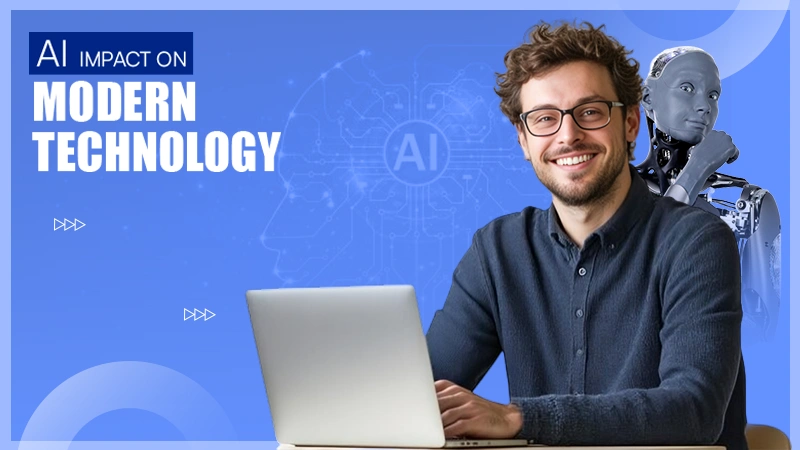
Artificial Intelligence is fundamentally transforming modern technology and reshaping the way industries operate. From healthcare and education to finance and transportation, AI is creating smarter, faster, and more efficient solutions to complex challenges.
As organizations continue to adopt AI-driven technologies, the potential for innovation and growth remains enormous. By embracing artificial intelligence responsibly and ethically, businesses and individuals can unlock new opportunities and contribute to a more technologically advanced future.
It’s technology that enables computers and machines to perform tasks that typically require human intelligence, such as learning, problem-solving, and decision-making.
It’s used in virtual assistants, recommendation systems, navigation apps, smart devices, customer service chatbots, and online search engines.
Its primary benefits include increased efficiency, improved decision-making, cost savings, automation of repetitive tasks, and enhanced customer experiences.
Key challenges include data privacy concerns, cybersecurity threats, algorithmic bias, lack of transparency, and the potential displacement of certain jobs through automation.