
Speaking Korean out loud is where most learners freeze up. The best sites to improve Korean speaking aren’t just about grammar drills or flashcard apps. They’re about finding real practice that matches how Korean actually sounds and flows. Sounds like ㄹ, ㅂ, and ㄱ don’t exist in English, and honorifics add another layer most apps ignore. After reviewing dozens of platforms and community tools, this guide breaks down five sites worth your time, whether you’re a K-drama fan, a heritage speaker, or prepping for TOPIK.
The shortlist methodology
Shortlisting came down to publicly available signals: user reviews, feature documentation, platform directories, and official site content. Only options with a real track record in language learning made the cut.
→ See the full research breakdown
Skipping the right speaking practice early on costs more time than most learners expect. Korean pronunciation is phonetically specific, and building bad habits around sounds like ㅂ or the rolled ㄹ is much easier than fixing them later.
Anxiety around speaking is real. Especially when Korean formal and informal speech levels feel like two completely different languages. Without the right platform, learners often plateau in reading comprehension and never progress to actual spoken output.
Well-chosen sites offer consistent access to native speaker interaction, structured feedback, and real conversation reps. That matters for pronunciation accuracy, keeping weekly speaking sessions on track, and actually retaining vocabulary when it counts in a real conversation.
Note: All data in this table is sourced from review platforms and the official websites of the listed companies.
| Company Name | Years Operating | Headquartered In |
| italki | Est. 2007 | Hong Kong |
| Polly Lingual | Est. 2016 | Indianapolis, United States |
| Ba Ba Dum | Est. 2014 | Poland |
| Librivox | Est. 2005 | San Francisco, California |
| JapanesePod101 | Est. 2005 | New York City / Tokyo |
What Does italki Provide?
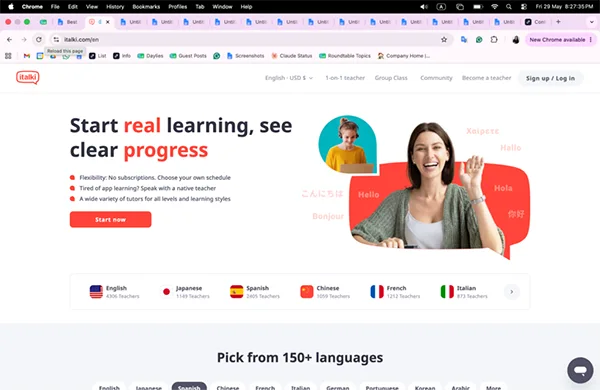
italki connects learners directly with native-speaking tutors for one-on-one video lessons across 130+ languages. For Korean learners, browsing https://www.italki.com/en/teachers/korean/los-angeles-ca gives access to LA-based and globally available Korean teachers filtered by schedule, price, and teaching style. The platform runs on a flexible pay-per-lesson model, so there’s no subscription pressure. Community features like language partner matching and writing correction add extra practice layers beyond just paid lessons.
Why Is italki Built for Sites To Improve Korean Speaking?
Learners who struggle to find consistent speaking practice with native Koreans get direct access here through a genuinely large, diverse tutor pool. That kind of real human interaction is hard to match for building spoken confidence and pronunciation accuracy that apps simply can’t replicate.
Customer Review Snapshot:
From what the reviews show, learners consistently point to tutor variety and affordability as standout qualities. The pay-per-lesson setup gets mentioned often as a low-pressure way to start. Some note that quality varies between tutors, so browsing profiles and doing trial lessons pays off early.
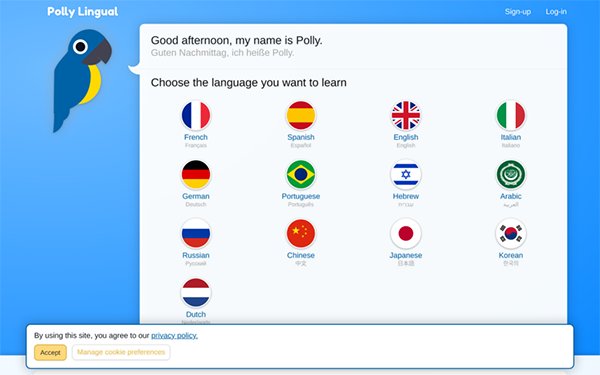
What Does Polly Lingual Provide?
Polly Lingual runs a hybrid tutoring model that pairs algorithmic interactive lessons with live native speaker tutors (called language ambassadors). Their Polly Passport subscription covers self-paced content across pronunciation, verb conjugation, local dialects, and conversation practice. It’s a solid middle ground for learners who want structured independent study alongside real speaking sessions. The bootstrapped, unfunded background (since 2016) means they’ve built this out deliberately rather than chasing scale.
Why Is Polly Lingual Built for Sites To Improve Korean Speaking?
Pronunciation and local dialect focus directly address the gap most structured courses leave open, especially for learners trying to sound natural rather than textbook-correct. The blend of self-paced and live instruction means practice happens even when a scheduled session isn’t available.
Customer Review Snapshot:
Honestly, public review data on Polly Lingual is limited compared to larger platforms. What does come through in community discussions is that the hybrid format works well for self-directed learners who don’t want to choose between apps and human tutors. That combination tends to keep consistency up over time.
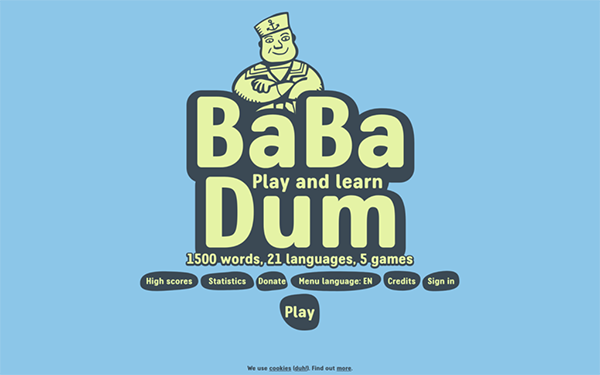
What Does Ba Ba Dum Provide?
Ba Ba Dum is a completely free, ad-free vocabulary learning platform built around five distinct games covering 1,500 words across 20+ languages. The game types include image-to-word matching, fill-in-the-blanks, multiple choice, word unscrambling, and written-to-image matching. Created by award-winning Polish graphic designers with educational publishing backgrounds, the platform feels polished in a way most free tools don’t. It’s not a speaking tool directly, but the vocabulary depth built here feeds into more confident spoken output.
Why Is Ba Ba Dum Built for Sites To Improve Korean Speaking?
Strong spoken Korean starts with a solid vocabulary base, and gaps there show up fast in real conversation. Ba Ba Dum’s game-based repetition builds word recall in a way that sticks better than passive flashcard review, and doing it without ads or cost removes the usual friction.
Customer Review Snapshot:
Users consistently praise the clean design and the genuinely enjoyable game format (which is rare for vocabulary tools). The Awwwards, FWA, and Webby Award nominations back up what users say about the quality. It won’t replace a speaking tutor, but as a vocabulary supplement, the reception is consistently positive.
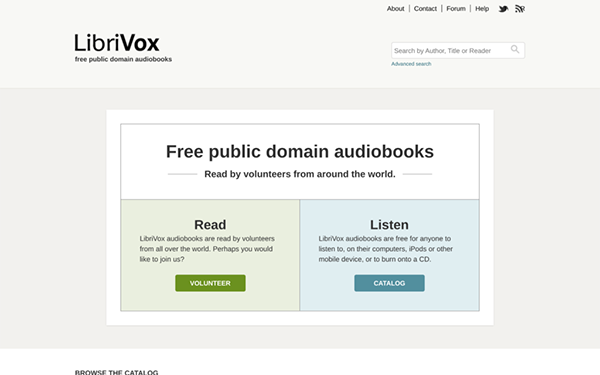
What Does Librivox Provide?
LibriVox is a volunteer-powered audiobook library offering over 20,000 free recordings in 48 languages, all donated to the public domain. Founded in 2005 by Hugh McGuire, the project runs entirely on contributions from 13,000+ global volunteers with no ads and no cost to listeners. For language learners, it’s primarily a listening resource where exposure to authentic spoken text builds comprehension over time. Audio quality varies by volunteer, which is worth knowing upfront.
Why Is Librivox Built for Sites To Improve Korean Speaking?
Consistent listening to spoken language builds your ear for rhythm, pacing, and natural phrasing. That directly supports speaking improvement when paired with active practice. And the sheer catalog size means learners at different levels can find content that actually matches where they are.
Customer Review Snapshot:
Media coverage from the BBC, Wired, and MSNBC has described LibriVox as one of the more interesting collaborative culture projects around, and that reputation holds in user discussions too. Listeners appreciate the free, open access but often flag variable audio quality as a real tradeoff. For a free listening supplement, the value-to-cost ratio is hard to argue with (it’s zero cost, after all).
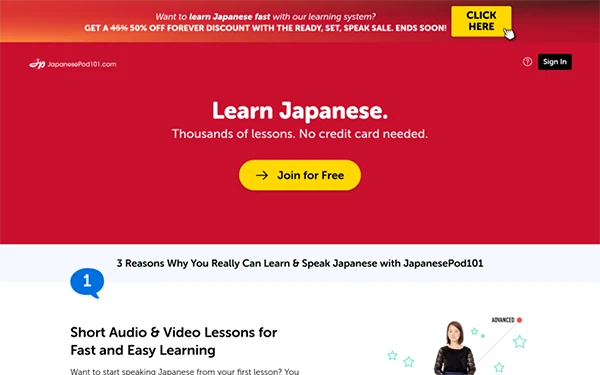
What Does JapanesePod101 Provide?
JapanesePod101 delivers 2,544+ audio and video lessons built around podcast-formatted content with scripted dialogues, vocabulary breakdowns, grammar explanations, and call-and-response speaking practice. The platform has been running for 18 years with 4 billion lesson downloads, backed by a teaching team of 29 instructors. Premium Plus tiers include dedicated one-on-one access to a teacher for personalized instruction. The podcast format targets speaking and listening as essential skills rather than treating them as add-ons to written study.
Why Is JapanesePod101 Built for Sites To Improve Korean Speaking?
The call-and-response format directly builds spoken output habits. That’s the piece most self-study approaches skip entirely. Eighteen years of curriculum refinement across beginner to advanced levels means the progression is genuinely structured rather than patched together.
Customer Review Snapshot:
From what learners report, the lesson volume and structured progression are the biggest strengths here. Some users note that the free tier is limited and the Premium Plus pricing (not cheap, but worth it for serious learners) is where the real personalization kicks in. The 4 billion downloads reflect genuine long-term value, not just sign-up numbers.
Building the longlist began by pulling platform data from multiple sources. Language learning directories, app review aggregators, educational community forums, and official platform websites all contributed to the initial pool. The goal at this stage was broad coverage rather than narrow filtering. Platforms that appeared repeatedly across multiple independent sources moved up the list naturally. That kind of cross-source presence was treated as an early signal that a platform had real traction, not just marketing visibility.
Once the initial list was assembled, platforms without verifiable track records were removed. This meant checking whether review patterns reflected genuine learner experience rather than surface-level ratings. Platforms with thin review histories, inconsistent feedback across multiple sources, or no clear evidence of active learner engagement were filtered out at this stage. The focus remained on options where sufficient public data existed to assess actual performance in language-learning contexts, rather than on the platform’s stated promises.
Each remaining platform’s stated capabilities were cross-checked against what actual users reported. When a platform claimed to support speaking fluency improvement, that claim was tested against review themes, community discussions, and any publicly available outcome data. Platforms where learner experience consistently lined up with platform claims scored higher in reliability. Where gaps appeared between what a site advertised and what learners actually experienced, those discrepancies were factored into the final assessment rather than ignored.
Authority signals went beyond star ratings. Industry awards, citations in recognized publications, longevity in the market, and mentions from educational or journalistic sources all fed into this layer. Ba Ba Dum’s Awwwards and Webby recognition, LibriVox’s BBC and Wired coverage, and JapanesePod101’s 18-year publishing history are examples of signals that carry more weight than a high aggregate score alone. These markers don’t guarantee quality in every interaction, but they do confirm that a platform has been evaluated by parties outside its own ecosystem.
The final filter applied a Korean speaking-focused lens to each platform. This meant checking for dedicated Korean language content, verified learner reviews from Korean language learners, and evidence of features that address the real challenges in this space. Things like honorific instruction, pronunciation feedback mechanisms, and access to native Korean speakers were weighted more heavily at this stage. Platforms without any meaningful Korean-specific evidence were deprioritized regardless of their general language learning reputation.
Not every platform on this list works for every learner. Picking the right one comes down to being honest about your goals, your schedule, and how you actually learn. Here are the factors worth weighing before committing.
Choosing the right platform matters more than most learners expect. Live interaction beats passive review for building spoken Korean, and the language’s phonetic demands make consistent practice non-negotiable. italki leads in one-on-one access to native speakers, while tools like Ba Ba Dum and LibriVox serve as strong free supplements. Pronunciation accuracy, session frequency, and vocabulary retention in spoken contexts are the metrics worth tracking. Korean language learning resources keep improving, and the options available now make consistent speaking practice genuinely accessible.