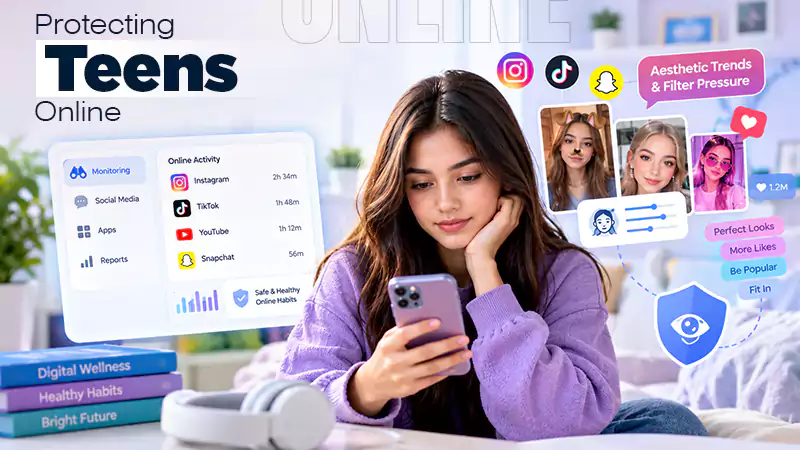
Social media has quietly changed how a teenager sees trends, shares photos, and thinks about appearance. Photos can be edited in seconds by filters, editing tools, beauty effects, and
AI-powered image features. But for some teenagers, this repeated exposure to polished images can gradually make edited appearances feel normal or even expected.
The problem is not whether a teenager should use a filter or not, but what matters is how often appearance-focused content appears, how a teen responds to it, and whether online trends are affecting the way they actually see themselves and their own appearance.
Why Aesthetic Trends Can Affect Teenagers
Teenagers are still developing their brains, identity, and self-image. Social platforms add another layer by letting users compare themselves with friends, influencers, celebrities, and even edited versions of themselves.
A 2026 meta-analysis of 45 studies and more than 33,000 adolescents found an association between greater social media engagement and higher levels of body-image issues and eating-related symptoms. The researchers also found a connection between social media use and greater internalization of appearance ideals.
Research does not say that every teen who uses social media will experience body-image problems. Individual experiences differ, and social media can also provide friendship, creativity, information, and support.
The concern is that appearance-focused use can become repetitive. A teen may start checking how they look before posting, checking their face or body with edited images, or deleting pictures that do not meet an increasingly high standard.
How Beauty Filters Create Pressure
Filters can be harmless entertainment, but repeated use may remove the difference between a natural appearance and a digitally modified one.
Some features can change skin texture, facial proportions, teeth, eyes, jawlines, or other features. When these changes become common across a teen’s feed, an edited appearance may begin to seem ordinary.
Experimental research has found that exposure to perfect social-media images can increase body dissatisfaction, with appearance comparison playing an essential role.
This is why just telling a teenager to “ignore filters” may not be enough. A more useful conversation is about how images are produced and why someone might pick to edit them.
Signs That Online Appearance Pressure May Be Growing
Parents do not need to check every photo to notice changes. Instead, look for patterns such as:
- Spending long periods taking or editing selfies
- Often deleting photos because of perceived appearance flaws
- Comparing facial or body features with people online
- Talking repeatedly about wanting to change a particular feature
- Following a large number of appearance-focused content
- Becoming increasingly uncomfortable being photographed without filters
- Showing stress after viewing or posting social-media images
None of these signs automatically mean a mental-health condition. They are simply reasons to start a calm conversation.
Monitoring Without Turning It Into Surveillance
Digital monitoring works best when it supports communication instead of replacing it.
Parents can make expectations around social-media use, review privacy settings together, discuss concerning content, and agree on what types of monitoring are correct. Practical information about parental controls and social media safety can also help families make decisions about which boundaries make sense for their situation. parental controls and social media safety
The aim should be to understand a teen’s digital environment without making every online interaction feel like an investigation.
A good approach is to explain what is being monitored and why. Depending on the child’s age and circumstances, this might involve screen time, public activity, privacy settings, or exposure to inappropriate content.
Open communication is important because a teenager who expects punishment for every online mistake may become less willing to report issues.
For broader guidance, families can also review digital parenting and parental guidance strategies.
Talk About Filters Without Shaming Appearance
A conversation about beauty filters should not become a criticism of the teenager’s appearance.
Rather than saying, “You look better without that filter,” try questions such as:
- “What do you like about using this filter?”
- “Do you feel different about the photo after editing it?”
- “Do you notice certain looks appearing over and over in your feed?”
- “Do you ever feel pressure to look like the people you see online?”
- “What happens when you compare your appearance with those images?”
These questions encourage reflection instead of defensiveness.
It can also help to explain that social media images may include filters, lighting, makeup, posing, retouching, professional photography, or carefully chosen moments. A single image rarely represents someone’s actual appearance.
When Cosmetic Trends Become Part of the Conversation
Some online trends go beyond filters and include discussions about cosmetic procedures. Teenagers may see videos about facial features, cosmetic treatments, injectables, or surgery while browsing ordinary beauty content.
That can make a permanent process appear similar to changing a filter. It is important to distinguish the two.
Cosmetic surgery includes medical considerations, risks, recovery, and individual suitability. Information about procedures such as facelift and neck lift in Red Deer is intended for understanding medical procedures, not as a suggestion that teenagers should pursue them.
Parents can use these conversations to make an important distinction: an online trend does not determine what someone wants to change about their body.
Families do not often need to eliminate appearance-related content completely. A more practical strategy is to change what a teenager sees and interacts with.
Consider encouraging teens to:
- Unfollow accounts that consistently cause unhealthy comparison
- Follow creators who discuss hobbies, skills, education, sports, art, or other interests
- Use “not interested” or similar content controls when available
- Take breaks from appearance-heavy feeds
- Avoid judging their appearance quickly after scrolling
- Spend time on offline activities that are unrelated to appearance
- Keep conversations about social media ongoing instead of having one serious discussion
Recent research reviewing appearance-focused social media found consistent links with body dissatisfaction, appearance comparison, and internalization of appearance influencers. The review also identified body-positive and body-neutral content as actually protective areas, while noting that research involving younger adolescents remains limited.
If concerns about appearance become persistent or start affecting eating, school, sleep, relationships, daily activities, or willingness to take part in normal activities, it may be correct to speak with a qualified healthcare or mental-health professional.
The goal is not to label the teenager based on social-media behavior. Rather, professional support can help determine what is happening and what kind of assistance may be important.
Social media itself is not automatically harmful, and stopping access is not the only solution. A balanced approach mixes reasonable boundaries, media literacy, privacy and safety settings, supportive conversations, and attention to changes in everyday behavior.
Conclusion
Protecting teenagers online is not about making every social-media experience totally controlled. It is about helping them understand what they see, recognize when digital trends are actually creating pressure, and feel comfortable talking about those experiences.
Beauty filters and aesthetic trends will continue to change, but the skills remain important: question unrealistic images, minimize unhealthy comparison, maintain privacy, set reasonable boundaries, and keep communication open. When online appearance pressure starts affecting everyday life, taking the concern seriously and seeking legitimate professional support can make a meaningful difference.
FAQs
Are beauty filters harmful for teenagers?
Filters are not inherently harmful, but constant exposure to idealized or heavily edited appearances can contribute to appearance comparison and body dissatisfaction for some young people. The effect depends on the type of content, how it is used, and individual circumstances.
Should parents ban beauty filters?
A complete ban is not necessarily the only option. Discussing how filters work, setting reasonable boundaries, and helping teenagers recognize edited imagery can encourage healthier digital habits.
How can parents monitor social media without damaging trust?
Be clear about what is being monitored, explain the reason, and involve the teenager in setting expectations where appropriate. Monitoring should complement communication instead of replacing it.
What if a teen wants cosmetic surgery because of something seen online?
Start with a conversation rather than an immediate judgment. Ask what they dislike, where the idea came from, and how long they have felt this way. Cosmetic procedures involve medical considerations and should be discussed with an appropriately qualified healthcare professional.
Can social media also have positive effects?
Yes. Social media can help teenagers maintain friendships, find communities, learn new skills, express creativity, and access supportive information. The concern is particularly focused on unhealthy patterns of use and repeated exposure to appearance-focused content.