It is the use of GPS, live traffic information, AI, and location analytics to calculate the best routes for the field service fleet.

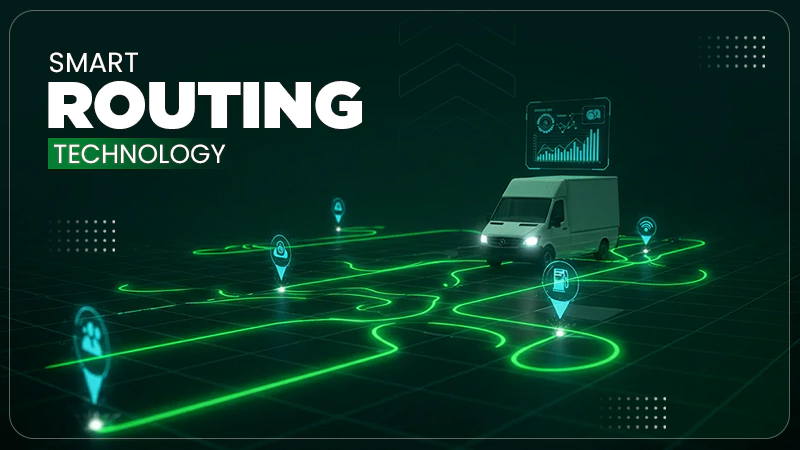
Field teams dedicate a large part of their day on the go, so there is a need for efficient travel. Congestion, traffic jams, bad planning, and other factors can lead to increased fuel expenses, difficulties in scheduling, and stress for the staff.
The use of smart routing helps deal with such problems, as this technology uses information about the current location, GPS tracking, and smart route planning. This way, businesses can avoid excessive travel, care about the health of their workers, and provide better service.
Field service operators face a harsh reality: vehicle and fuel expenses represent up to 20% of operating costs. Leaving dispatch decisions to manual intuition leads to crisscrossed territories, excessive travel time, and exhausted technicians.
The faster technicians have to run to compensate for bad planning, the more they tend to accelerate and slow down dramatically. Strategic route planning allows setting maximum daily numbers of stops and proper traveling times.
Such structural harmony decreases stress levels of technicians, reduces return visits by 12%, and makes technicians think about providing quality service instead of worrying about their work schedule. Modern dispatching relies on specialist industry platforms, like pest control software with an integrated scheduling and routing tool built for the specific needs of field agents in this sphere, to automatically balance workload across entire teams. Dedicated, bespoke solutions beat out their standard equivalents for this reason.
Unplanned traffic jams and emergency call-ins quickly derail a technician’s schedule and compromise your efforts to deliver a seamless experience to clients. Dynamic route optimization adjusts day-of itineraries based on active GPS tracking and traffic conditions.
Fleet route planning with the help of artificial intelligence reduces operation planning time up to 85% according to Locus, and also helps re-route drivers automatically in case of severe hazards or congestion. This automation makes sure that technicians don’t feel the need to put themselves at risk just to get to their next appointment.
Using live telematics data helps fleet managers build sustainable workflows:
Thus, using real-time data rather than static Excel sheets, companies ensure that their employees avoid exhaustion.
Idling and driving back and forth waste fuel budgets and wear out vehicles. Intelligent routing systems compute optimal routes based on vehicle positions, priorities of jobs, and the skills of technicians all at once.
The software calculates the most direct routes between appointments, drastically reducing the total miles driven each week.
Fewer miles on the road directly translates to fewer opportunities for highway incidents and mechanical breakdowns. Monitoring driver telemetry reduces road collisions by up to 40% across active service fleets.
Technicians operating well-maintained vehicles along efficient, low-stress routes experience less job fatigue, leading directly to improved retention and higher work quality.
Unpredictable weather creates sudden hazards for field technicians traveling between customer sites, turning routine routes into dangerous journeys. Smart routing tools leverage live weather feeds and dynamic geofencing to detect severe localized conditions, automatically alerting drivers and rerouting them around flooded roads, ice patches, or high-risk storm corridors.
By proactively keeping field crews out of dangerous weather patterns before they get stuck, fleet managers protect physical assets while demonstrating a clear, tangible commitment to employee safety during high-risk travel windows.
Location-based information is worth far more than just turn-by-turn navigation. Past route analysis helps to detect any systemic delays, dangerous driving routes, and unrealistic time slots.
Adjusting schedules around these insights creates safer conditions for field technicians while maximizing daily billable hours. Protecting field staff on the road is the single most effective way to secure long-term operational performance.
To explore more about the latest tracking and monitoring technologies, and how they can be applied in a range of industry contexts, stay on our site and read the other posts we’ve published on this topic.
The deployment of smart routing systems has emerged as a critical approach towards ensuring field service safety as well as increasing the efficiency of the process. With the use of live location information, GPS monitoring, telematics, and smart dispatching systems, companies can minimize unnecessary movement of vehicles, conserve fuel, and keep the technicians away from traffic and unfavorable weather conditions.
Not only will such an approach ensure the safety of workers, but it will also increase customer satisfaction, extend the life of vehicles, and improve productivity at the same time.
It is the use of GPS, live traffic information, AI, and location analytics to calculate the best routes for the field service fleet.
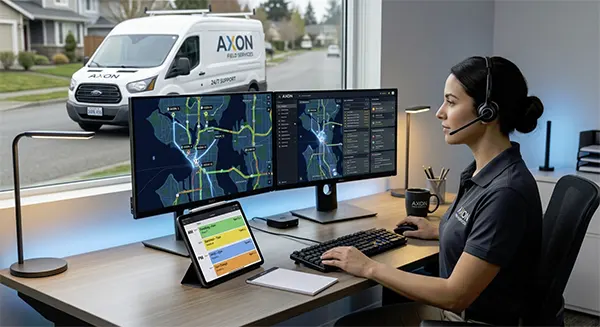
Location data allows dispatchers to track technician locations, avoid traffic delays, plan new routes to dodge dangerous situations, and schedule realistically to avoid exhaustion.
It decreases travel time, saves on fuel, extends vehicle life, improves punctuality, and increases technician efficiency.
Telematics can gather information related to the vehicle’s location, driver’s performance, speed, consumption of fuel, and maintenance requirements, allowing for improved safety and efficient operations.