They use a mix of separate components such as processor, microphone and Bluetooth. Based on the model, features cooperate with each other.

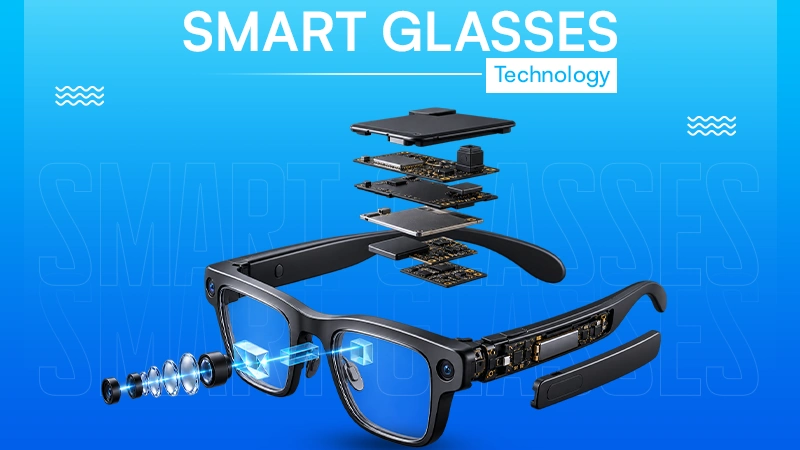

Quick answer: Smart glasses might seem like every other ordinary piece of glassware, but from the inside, they have a whole world of technology. They use processors to handle instructions, a microphone to capture sound, speakers to deliver sound and Bluetooth to connect with devices. All possible with compact software and hardware working in a defined sync.
A modern pair of smart glasses does not need to come with everything found in a smartphone. Instead, manufacturers choose the inner parts that match what they want the glasses to do.
Camera glasses need sensing hardware. Augmented-reality glasses need a window. Audio-first glasses can place emphasis on microphones, speakers, voice AI, and wireless communication. This is why two items that are both called “smart glasses” can have completely different specifications and battery life.
For most everyday AI eyewear, five parts are specifically important: the processor, microphone system, speakers, wireless connection, and battery. Exploring those parts makes the rest of the technology much simpler to follow.
Anyone asking how do smart glasses work should start with the processor, sometimes called a system-on-chip or SoC. It acts as the control center inside the frame. When you press a button, answer a call, set off a voice assistant, or start a recording, the processor helps the other components reply correctly.
The issue is that eyewear cannot use the same kind of power-hungry hardware found in a laptop. A chip inside glasses has to maintain performance with heat and battery consumption. It may handle lighter tasks straight while relying on a connected phone or cloud service for more demanding AI work. That division of features allows the frame to remain relatively small without giving up features such as transcription or talking AI.
It is great to imagine that every AI function is being calculated by a tiny computer hidden beside your temple. In reality, smart glasses often use a mix of local and remote processing.
For example, the glasses may grab your voice and handle the basic command locally, then use a connected phone or internet service for a more complex request. Translation can work similarly: microphones capture speech, the device and guide software move the information through the system, and the translated reply returns through the speakers. The chip is an crucial part of that chain, but it is not doing every stage alone.
Microphones are among the most helpful parts of audio-focused smart glasses because they support calls, voice controls, meeting capture, and transcription. Instead of leaning on one microphone, many designs use several arranged around the frame.
Why use four? Multiple microphones give the system more info about where different sounds are coming from. Software can then focus more deeply on speech near the wearer while easing some of the surrounding noise. This is notably useful in an office, café, airport, or other place where several sounds are contending at once.
Dymesty Cook Edge provides a detailed example. It’s published specifications list four microphones with environmental noise cancellation, or ENC. Dymesty defines the system as using the microphone array to emphasize the wearer’s voice while reducing unwanted outside sound. That can help with calls and also gives recorder software cleaner audio to work with.
Dymesty AI Sunglasses Moore Vision uses the same available audio-first idea in a sunglasses format. The product integrates a Qualcomm SoC, four microphones with ENC, dual speakers, Bluetooth connectivity, AI recording and outlines, translation, and voice assistance. Instead of counting a camera or visual display, the frame focuses on listening and audio relations.
That choice helps articulate an important idea about smart-glasses design: manufacturers do not simply add every general feature. Every camera, display, microphone, and wireless component ingests space and energy. Leaving something out can be just as important as proposing something new.
Traditional headphones create a border around or inside the ears. Smart glasses often take the opposite tack. Small speakers are built into the temple arms and unaffected sound toward the ears without stopping them.
This is known as open-ear audio. You can listen a podcast, phone call, navigation instruction, or AI response while still being conscious of a colleague speaking nearby or traffic when walking outside. There is also no different earbud to insert or headphone band to model over the glasses.
The settlement is that open-ear audio is not designed to create the same secret experience as large noise-cancelling headphones. On a loud airplane, established headphones will usually be better for blocking engine noise. For everyday calls, spoken info, podcasts, and casual music, however, the open plan can feel much more natural.
A pair of smart glasses may look separate, but the smartphone is still an important part of many present systems. Bluetooth delivers the connection between the two.
That link can carry call audio, music, voice-assistant relations, and other information. The phone may also supply internet access or run the companion app used to handle recordings, transcripts, settings, and AI operations.
This partnership helps manufacturers bypass turning the glasses themselves into a complete smartphone. The frame handles the parts that help from being wearable—listening, speaking, controls, and audio—while the phone can take care of more serious tasks and provide pass to online services.
Dymesty’s current Cook Edge and Moore Vision guidelines, for example, list Bluetooth 5.3 alongside a Qualcomm SoC. The company’s transcription method also uses its companion software rather than telling that every part of the process occurs completely inside the glasses.
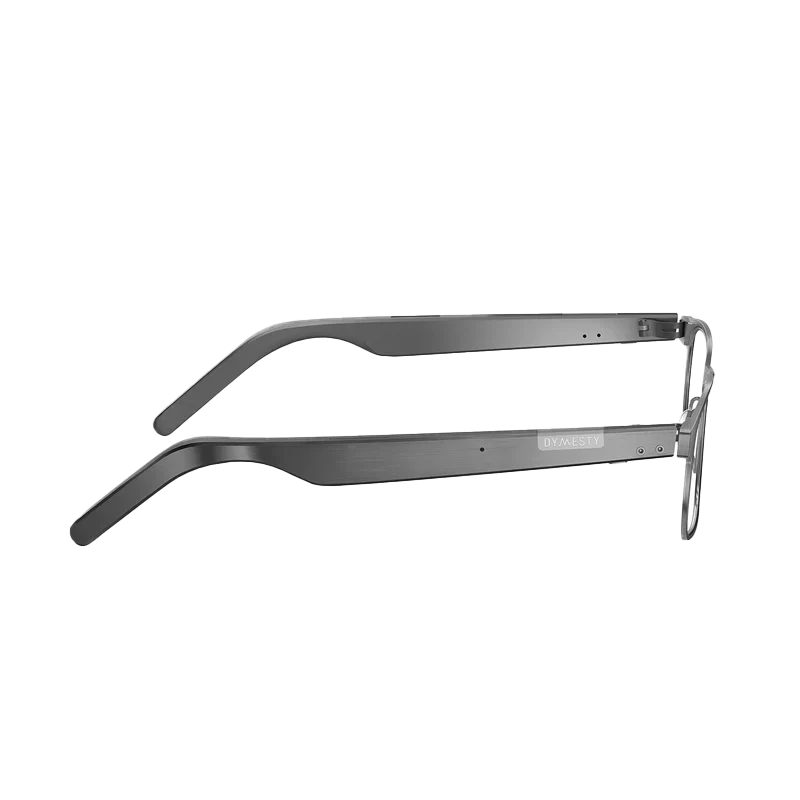
Battery life is one of the most difficult parts of wearable technology. A manufacturer could simply seat a larger battery, but that would make the temples thicker and the glasses heavier. Eyewear has to remain pleasant, so designers are actively balancing features against power use.
Cameras and visual displays can add considerable power demands because they may need to capture, process, or display information constantly. Audio-only glasses release those workloads. That does not mean microphones and speakers ingest no energy, but it gives designers a simpler power price tag.
This helps clarify why Dymesty lists up to 48 hours of typical use for Cook Edge and Moore Vision. Both are camera-free and display-free. The absence of those elements is not the only basis for their battery arrangement—battery capacity, software, wireless activity, and usage patterns all count—but it allows more of the remaining power to be reserved for audio, communication, and AI-related services.
A camera gives smart glasses some powerful abilities. It can capture first-person photographs and video, recognise objects, or provide visual information to an AI assistant. For creators and somebody who want hands-free photography, that can be a major edge.
But cameras also adjust the product. They ingest power, require extra processing, and present privacy questions in places such as offices, meetings, healthcare settings, and other sensitive grounds.
Audio-first companies such as Dymesty take the opposing route. By removing both the camera and display, the glasses focus on elements that can work through microphones and speakers: calls, meeting recording, transcription, recaps, translation, and voice help. It is a more limited design in one sense—there is no photography or visual AI—but it is purposely optimized for a diverse type of user.
Hardware is only a part of the story. A microphone can record sound, but software spins that sound into a transcript. Speakers can play audio, but software chooses which translated response should be delivered. A processor can perform instructions, but the AI service determines how a question is apprehended.
Consider real-time translations. The microphones first grab the conversation. The system then has to instantly understand the spoken language, reverse speech into information that can be processed, translate it, and return the result. Finally, the wearer listens the translation through the open-ear speakers. What feels like one instant element is actually several pieces of hardware and software performing together.
The same applies to meeting outlines. Capturing the audio is only the birth. Transcription turns speech into text, while AI software can separate that text into useful notes and key points.
There is no single template for smart glasses. A creator may enjoy a camera. Someone using augmented reality may need a show. A professional who consumes the day in calls and meetings may care much more regarding microphones, speakers, battery life, and a cosy frame.
That is why understanding the elements matters more than simply asking whether one pair of smart glasses is “more advanced” than another. More parts can create more options, but it also alters weight, battery use, and how the product feels in day-to-day life.
Also, explore best practices to protect your eyes from screen.
At the end of the day, smart glasses are just mysterious from outside, once you understand how they work and in what ways their components performs, things become simpler. They are kind of a mini computer, whose processes are divided between processors, microphones, speakers, wireless connections and more.
The real magic is how this all sets in a glass frame and works silently in the background. When the hardware and software are well-balanced, one can enjoy AI, audio and other connected features easily.
They use a mix of separate components such as processor, microphone and Bluetooth. Based on the model, features cooperate with each other.
No. Many models provide extra features to connect with a smartphone and align with other apps.
Yes, depending on the model, it comes with voice command and translation features across various languages.