Official communications come from addresses ending in .gov. If the sender’s domain is anything else, delete it and report it rather than clicking through.

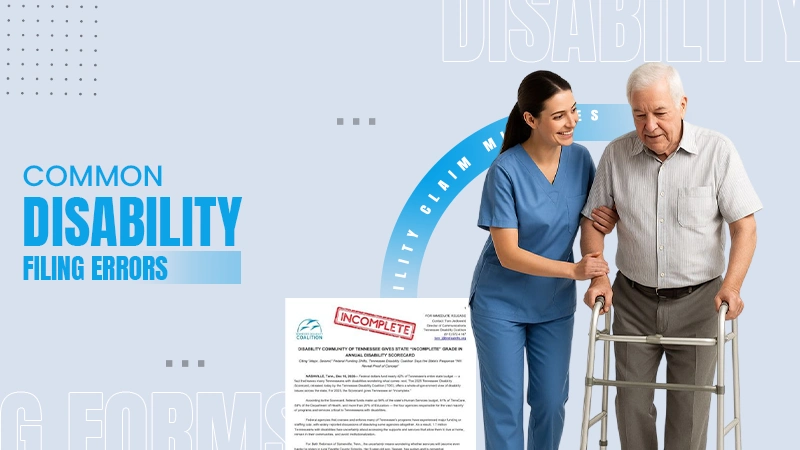
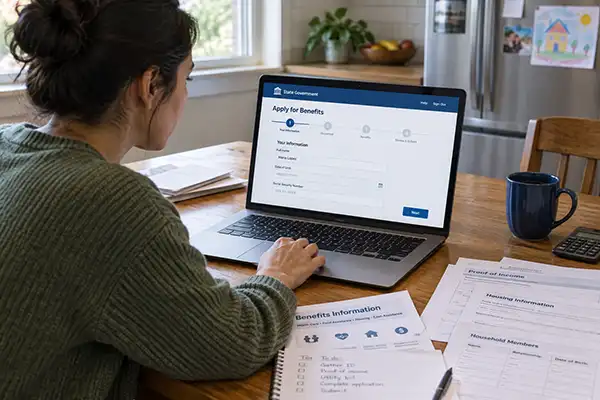
Most advice about protecting your information online assumes somebody is trying to break in.
For an application like this one, that’s the wrong worry. Nobody has to breach anything. You will sit down and type your Social Security number, your bank details, and your children’s dates of birth into a form, voluntarily, because that’s what the form requires.
The only question that matters is whether the form belongs to who you think it does.
Here’s what these applications actually ask for, why scammers wait for exactly this moment, and how to check before you start typing.
Key Takeaways
- The danger in a benefits application is voluntary disclosure to the wrong recipient, not a break-in.
- Social Security only emails from .gov addresses, which settles most questions on its own.
- Filing is free, so anyone charging to complete the government’s own form is selling you nothing.
- Urgency is the tell. Real agencies are slow, and the slowness is on your side.
Password managers, two-factor codes, antivirus. All useful, all beside the point here.
A benefits application is a voluntary disclosure event. You are being asked, legitimately, for the most sensitive data your household holds, and you are going to hand it over because withholding it means not getting the benefit. Every security habit you’ve built assumes you’re defending against someone taking your data. This is about giving it away, correctly.
Which means the whole defense collapses down to one thing: verifying the recipient before the first keystroke.
This part deserves to be read slowly, because most people never see it laid out in one place.
To file an SSD claim, Social Security suggests having ready:
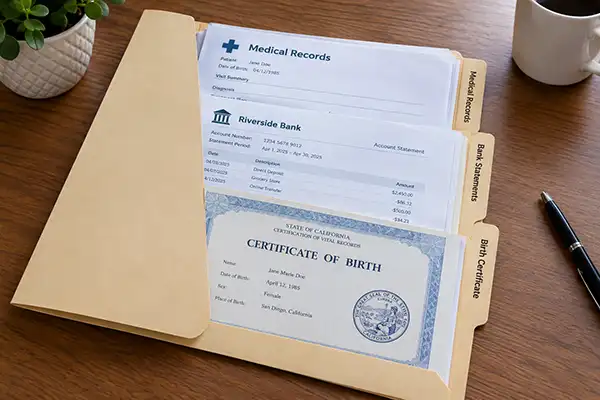
Then the documents: birth certificate, proof of citizenship or lawful status, military discharge papers, W-2s, medical records.
Read that list again and ask what an identity thief could do with a complete copy. There isn’t much left over.
Because the mark is pre-qualified. Somebody filing a disability claim is unwell, short of money, waiting on a decision, and expecting official contact. That is the ideal target, and the scam industry knows it.
The Federal Trade Commission logged more than 330,000 government impersonation complaints in 2025, a 25% jump on the year before, and Social Security remains among the most frequently impersonated agencies.
Michelle L. Anderson of SSA’s Office of the Inspector General put the method plainly: these scammers prey on fear and a false sense of urgency.
In February 2026, the OIG warned specifically about a surge in emails offering access to your Social Security statement. Official-looking logos, official-looking formatting, a link that isn’t.
Interesting Fact
Here’s a small thing worth knowing. A favorite tactic is citing a badge number, which sounds like exactly the detail a real official would offer. It’s a prop.
The oddly specific credential is doing the same job the fake letterhead does, and once you notice that, the whole performance gets easier to see through.
Urgency. Every single time. Real agencies move slowly, and that slowness is your friend.
There’s a real distinction here, and it gets blurred by companies that benefit from blurring it.
Filing is free. Social Security runs the online application itself, at no charge, and you can do the whole thing from your own kitchen table without paying anybody. Outfits that charge a fee to type your answers into the government’s own form are selling you something you already have, and I’d skip them without much agonizing.
Representation is different. Attorneys and non-attorney representatives who handle disability claims work under fee arrangements that Social Security has to approve, which is a real accountability structure rather than a marketing promise.
Did You Know?
Firms advertise themselves as legal advocates for disability claimants operate this way, and the better one tells plainly before taking your signature on anything.
The test is boring, and it works. A physical address you can find on a map, named people with verifiable credentials, and a fee structure explained before you hand over a single document.
The thing nobody says about this process is that the paperwork itself is the vulnerable moment, and it lasts for weeks rather than seconds.
You’ll assemble a folder that contains more of your family’s identity than any other document you’ll ever fill in, and you’ll carry it around while you’re already exhausted. That folder deserves the same care you’d give a passport, including where it sits on the kitchen table and who else in the house knows what’s in it.
If something about a call or an email feels engineered to rush you, it was. Report it at oig.ssa.gov and then get back to the form, slowly, at ssa.gov, where it was always free.
Official communications come from addresses ending in .gov. If the sender’s domain is anything else, delete it and report it rather than clicking through.
No. Social Security’s online application is free to file yourself. Representation is a separate service with fees that the agency has to approve.
Stop communicating with them, contact your bank, and report it to Social Security’s Office of the Inspector General. Acting quickly matters more than working out exactly what happened.
Yes, and you should. Social Security advises against delaying an application over missing documents and says it will help you obtain them.