As soon as a child starts using a device independently. Even basic ideas like not sharing personal info can begin early.


“Don’t limit a child to your own learning, for they were born in another time.” — Rabindranath Tagore (Polymath)
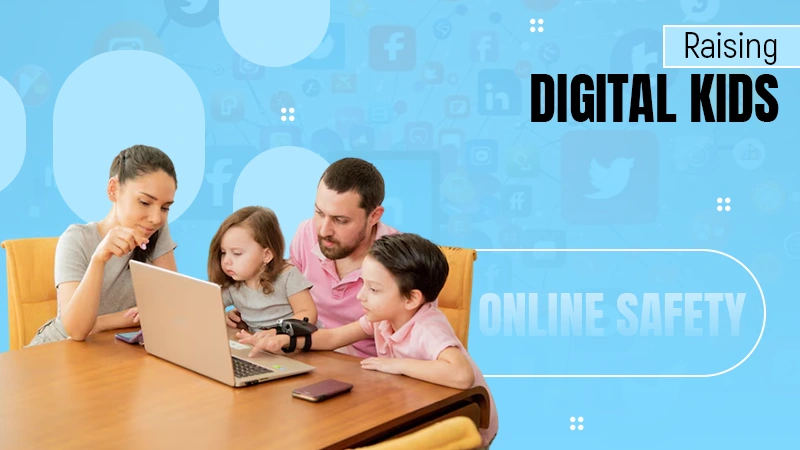
The internet isn’t something kids “go on” anymore. It’s woven into how they learn, play, and connect. That can feel overwhelming, but panic isn’t a strategy. What works better is a steady mix of small habits, open conversations, and clear boundaries that help kids think for themselves online.
You don’t need to master every app or trend. Whether you lean on routines, shared check-ins, or even small tech upgrades like 4k webcams, the goal is simple: help children protect their privacy, spot risks early, and act responsibly in digital spaces.
KEY TAKEAWAYS
- Digital safety is built through habits and conversations, not strict control.
- Open-ended discussions work better than lectures or fear tactics.
- Simple tools like privacy settings and strong passwords go a long way.
- Trust and gradual independence are essential, especially for teens.
Before setting rules, it helps to understand the terrain. Young people today use multiple platforms in parallel. They move quickly between private messages, group chats, public profiles, and live video. That fluidity makes it harder for a single rule or tool to cover every situation.
Privacy habits formed early tend to stick. Children who learn to think about what they share, who can see it, and why it matters will be better prepared as platforms and norms shift. Your role is partly to model those habits and partly to create a safe environment to practice them.
A final point is that fear rarely helps. If you shut everything down, your child may become more secretive. Instead, aim for transparent boundaries and keep dialogue ongoing.
Start small and keep it real. Conversations about online safety do not need to be lectures. They work best when they are brief, regular, and tied to real situations. Use everyday moments as prompts. A news item about a data breach, a viral video, or a school assignment that asks students to create online profiles are opportunities to talk.
Ask open questions. What did you like about that app? Who are you talking with there? When you post something, who might see it? These questions invite reflection rather than defensiveness. Listen more than you talk. When a child feels heard, they are more likely to come to you when something goes wrong.
Set a few clear, enforceable rules. Rules about who can add friends, what accounts are public, and how to handle requests from strangers are easier to follow than vague admonitions about being careful. Revisit rules as your child ages and gains experience.
Finally, normalize mistakes. Everyone misjudges a post or clicks a link they should not have. What matters is how you respond. Practice steps together so when something uncomfortable actually happens, your child knows what to do, like:
Tech can support safety, but it’s not a magic shield. Focus on settings that are easy to maintain and that align with your rules.
Privacy settings on social platforms are a first line of defense. Make accounts private where possible and review friend lists together. For younger children, limit access to apps with strict age gating and parental approval settings. On devices, use screen time and app limits to set predictable boundaries.
Two other practical tools deserve attention:
Remember that tools can create a false sense of security. They are most effective when paired with education and supervision. Regularly review settings with your child and explain why choices were made. That way, settings become part of digital literacy rather than invisible rules imposed on them.
INTERESTING STAT
As per Fortune, less than half of parents (47%) fully utilize the parental controls at their disposal.
Rules guide behavior, but habits shape judgment. Make digital skills part of daily life:
Encourage critical thinking. When your child sees sensational content, have them ask: Who posted this and why? What’s the source? Does it rely on fear or facts? Teaching how to evaluate information reduces susceptibility to scams, misinformation, and peer pressure.
Balance is important too. Practicing offline skills like face-to-face communication, problem-solving, and empathy transfers to online interactions. If your child regularly practices considering other people’s feelings in real life, they will be more likely to act considerately online.
Make mistakes into lessons. If something goes wrong, review it calmly. Talk about what happened, what could have been done differently, and how to repair any harm. That reflective approach builds judgment, which is more valuable than any parental filter.
Supervision is normal for younger kids. If a child faces harassment, predators, or serious exposure to age-inappropriate content, more active monitoring may be warranted.
But heavy surveillance is still a no. It can easily erode trust. If teens feel being watched all the time, they may stop speaking openly and even hide risky behavior. Aim to scale monitoring with maturity. As children show responsibility, give them more autonomy. When they demonstrate good choices, reduce oversight incrementally.
Consider a compromise that protects safety while preserving privacy. For example, rather than checking every message, agree to periodic app audits together. Or use monitoring tools that alert you only to high-risk terms or suspicious behavior while keeping routine conversations private. The goal is to keep channels of trust open.
Even with the best habits, things can go wrong. Teach children what to do if:
A practiced plan reduces panic and improves outcomes.
Practice role-playing. Walk through scenarios where someone asks for a password, where a peer pressures them to share a private image, or where they see hateful content targeted at someone they know. Discuss options and rehearse responses like saying no, blocking, taking screenshots, and telling an adult.
Also, reinforce legal and ethical thinking. Explain that sharing certain content can have long-term consequences for reputations and relationships. Framing digital choices as part of civic responsibility helps older children make more considered decisions.
Finally, remember the value of support networks. Friends, teachers, and counselors can all play roles in helping a child recover from a negative online experience. Encourage your child to identify at least two adults they trust and to reach out when something feels off.
Don’t control every click. Raising digitally smart kids is a process that combines conversation, some tools, and habit-building.
Focus on clear, enforceable rules early, then shift toward coaching and shared decision-making as your child grows. Teach them privacy basics, critical thinking, and recovery skills so they can act confidently in changing digital environments.
If you approach online safety as a skill you are helping them learn rather than a problem you must solve, you will give them tools they can use for life.
As soon as a child starts using a device independently. Even basic ideas like not sharing personal info can begin early.
For younger kids, yes, to an extent. For older kids, shift toward trust-based monitoring to avoid secrecy.
Keep accounts private, avoid strangers, don’t share personal info, and report anything uncomfortable.
Stay calm, understand what happened, and guide them on how to fix it. The goal is learning, not punishment.