Modern school vehicles now include advanced systems that relay transit information to district administrative offices and parent portals, allowing for greater safety.

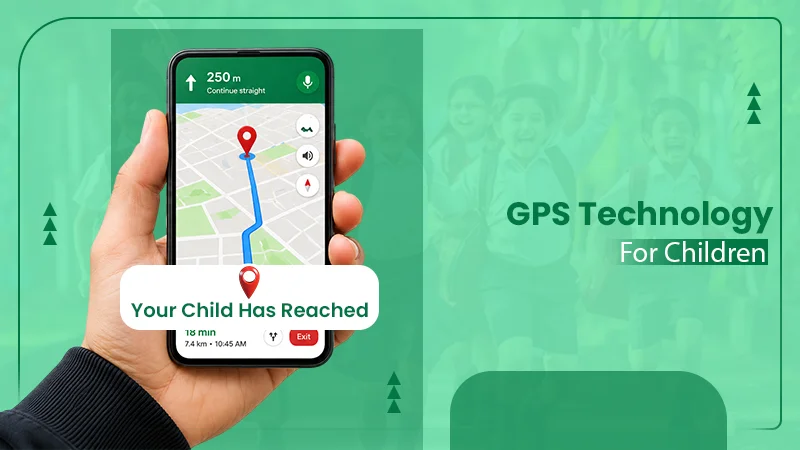
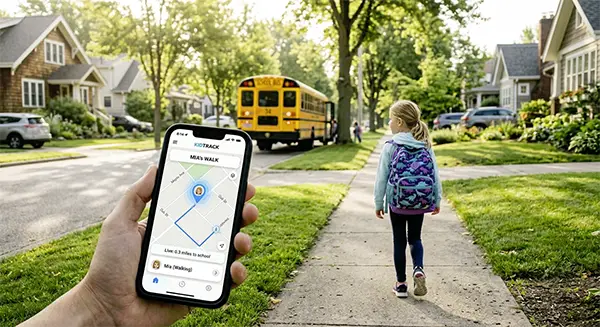
The regular school commute has become a huge challenge for modern parents who wish to encourage independence while keeping their kids safe, as streets are congested during peak times, transforming normal pathways into something much more dangerous for young children.
Because of this, the parent faces increasing anxiety when the location of their child remains unknown. Real-time GPS tracking devices and wearable locators provide parents with continuous visibility into their child’s transit routines, thereby completely eliminating the guesswork.
This article outlines the hidden dangers that young pedestrians face daily and how the right tracker can help your family stay safe at all times.
Key Takeaways
- Distracted driving, poor infrastructure, and chaotic roads mean that children face constant danger on their daily journeys
- The statistical reality of the daily school run reveals that a significant portion of the risk is concentrated during specific afternoon windows
- The most valuable safety feature available on the latest software is geofencing, the functionality that allows parents to draw invisible digital boundaries around geographic locations
- Modern school vehicles are now equipped with advanced systems that convey transit information straight to district administrative offices and the parent portals
Walking or biking to school provides various health benefits, but also exposes children to greater traffic risks. Distracted driving, poor infrastructure, and chaotic roads mean that children face constant danger on their daily journeys. When a vehicle puts the life of a child in danger, the results are devastating for the involved family.
Understanding these structural dangers highlights why continuous monitoring is so vital for parents. In the overview of common pedestrian accident injuries from DM Injury Law, issues highlighted include internal bleeding, broken bones, and traumatic brain injury. These severe physical outcomes underscore the urgent need for parents to use every available safety tool to prevent accidents and monitor commutes.
The statistical reality of the daily school run reveals that a significant portion of the risk is concentrated during specific afternoon windows.
Research indicates that 36% of child pedestrian fatalities occur between 3:00 PM and 7:00 PM when drivers are in a hurry, and children are heading home. This is precisely the period when parents require maximum visibility over their kid’s location.
Modern GPS trackers do much more than simply displaying a blinking blue dot on a digital map. The most valuable safety feature available on the latest software is geofencing, the functionality that allows parents to draw invisible digital boundaries around critical geographic locations.
When a child enters or leaves these designated spaces, the parent receives an instant push notification.
Setting up these digital perimeters creates an automated safety net that works passively in the background. Parents can customize their tracking applications to monitor several specific milestones throughout the day.
An effective tracking setup relies on monitoring three essential safety boundaries:
Utilizing these automated alerts enables parents to focus on their lives without constantly updating the app every second to stay on top of things. If a child doesn’t follow their usual route or decides to stay at a different location for an extended period of time, the system flags the anomaly immediately.
This near-instant detection allows parents to intervene before a minor interruption turns into a dangerous situation.
Local school districts also acknowledge the importance of location technology by upgrading their own transportation infrastructure.
Modern school vehicles are now equipped with advanced systems that convey transit information straight to district administrative offices and the parent portals.
This commercial integration ensures that student transit is monitored from multiple angles.
Recent transportation data indicates that modern school districts are rapidly adopting telematics and real-time GPS tracking integration to optimize fleet routing and instantly verify student ridership. This commercial oversight pairs perfectly with personal tracking devices, giving families a comprehensive view of the entire journey. When communities combine district hardware with personal wearables, student safety increases exponentially.
Selecting the ideal tracking device depends a lot on your child’s age, maturity level, and daily routine. For younger elementary students, wearable gadgets with communication features provide an appropriate balance of utility and security.
Older middle school students might prefer a hidden tracker or a dedicated mobile app that runs in the background of their device.
Look for devices that provide long battery life, waterproofing capability, and physical SOS buttons that a child can use to alert others in the case of an emergency. By aligning the technology to your lifestyle, you create a smooth safety routine that safeguards your kids and provides total peace of mind.
Check out our other posts to learn more about the advantages of modern GPS technology and its range of related applications.
Modern school vehicles now include advanced systems that relay transit information to district administrative offices and parent portals, allowing for greater safety.
For younger elementary students, wearable gadgets with communication specifications provide an appropriate balance of utility and security.
The following are the factors that affect a tracking setup:
Distracted driving, poor infrastructure, and chaotic roads at peak school timings are the immediate dangers faced by young pedestrians.