Ans: Income level matters less than consistency and stress. Federal Reserve research shows financial anxiety appears across income brackets, often tied to unpredictable expenses rather than the paycheck size itself.

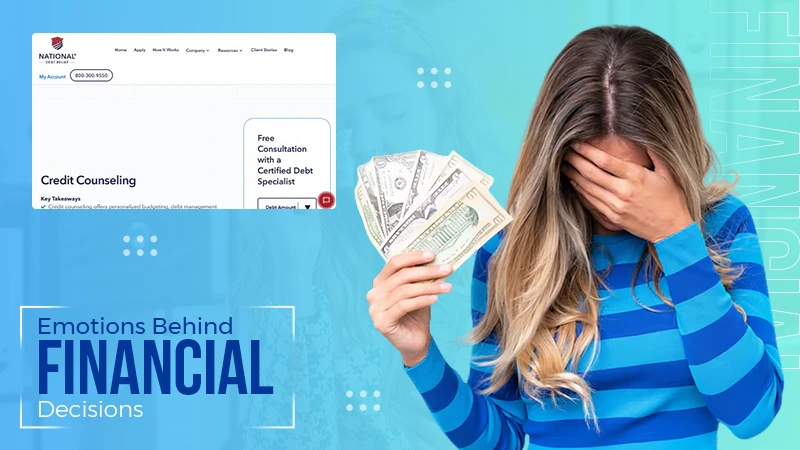

To most people, budgeting is nothing more than simple maths. Adding income and subtracting expenses is their whole idea of how it works.
And the fact is that it does behave like a mood swing.
Anyone who has actually taken the time to build a plan about monthly expenses with 10 thousand for fun activities, 5 thousand for groceries, and 30 thousand for rent knows that planning hardly works because even though the allotment of funds looks reasonable, numbers don’t spend money. Humans do, with real emotions and mood swings which a calculator can never estimate.
And so in this blog we will understand why logic, when used on its own, keeps failing and learn what actually is useful when using forces of two opposite natures by the end.
The problem with most households doesn’t arise from the fact that there is a lack of math skills.
The budgeting problem is created when a perfect plan is made instead of a realistic one. The majority of people don’t account for the times when they are tired, bored, or when they open their phones late at night looking to escape.

The American Psychological Association indicates through its studies that stress related to your household’s finances starts to show up in your real life too and can lead to problems in your relationships and difficulties in everyday tasks like sleep. Money stress is very real, and decisions taken under such stressful situations create a vicious cycle because bad decisions under pressure are exactly what drains a budget further.
That’s why, while the logical side always keeps fighting for being perfect and keeping exact track of your expenses, the real emotional side gets exhausted and pulls away.
Often, most of us don’t account for everyday moments in our lives and instead shrink our entire life down to a spreadsheet when it comes to budgeting. And that is where the problem occurs, because while your spreadsheets analyse everything from rent to fun activities, it doesn’t calculate those little moments of self-pampering.
Imagine you’re in the checkout line of a sale you’ve been waiting for months with your card already in your hand. This is the exact second when your budget loses track.
These small voices in your head that tell you that ‘you deserve it’ are the reason you get trapped in this cycle in the first place.
The biggest misconception is that financial stress equates to a low-income issue or a skill issue, which is far from the truth.
The Federal Reserve’s household well-being research shows that financial worry shows up across almost all income brackets, and while its intensity might change, but it’s impact doesn’t. Households with good middle-class wages experience the same sleep loss and stress levels as households with comparatively less income. The reason for this is pretty simple: budgeting doesn’t account for irregular work hours, surprise expenses like visiting a relative’s house or a health issue, and a debt that doesn’t move.
That’s a logic-versus-emotion problem dressed up as a math problem.
Behavioural economics explains that a purchase of small and recurring nature experiences way less resistance and rejection than the ones with big numbers. This comes out to be true even if the overall yearly expenditure graph remains the same.
See, smaller payments with a recurring pay model are designed so that a customer misses it, or even if they do notice, usually small payments are not worth the stress. For example, Netflix charges 500 for two devices in India monthly, which, when added for a year, becomes 6 thousand INR.
This is where the least use of emotions is in play because nothing about these payments screams willpower, and so one would expect logic to dominate here. Well, it doesn’t, at least not until it gets reviewed a year later while you’re checking your bank statements.
Every financial decision is adjusted according to a debt that either hasn’t been repaid or one that keeps piling up, even when people aren’t aware of it.
There is no doubt that owing people money for years doesn’t just bring shame, but it also collects emotional exhaustion no one can prepare you for. Even though people manage to repay their debt either through proper planning or sheer stubbornness, the method behind it hardly matters. The debt can be repaid both ways; what actually matters is if this can survive after coming into contact with a bad month.
Shame is not a strategy. It’s just weight with no plan attached.
Major bad financial literacy rates are due to the fact that most logical choices feel like a punishment, and this exact problem is what the best budgeting tool targets.
With a number of money management and tracking apps coming up, there are a lot of good options to track your finances for more conscious spending.
What distinguishes a good app from a great one is its ability to account for human expenses as a part of our daily lives and not a system that’s perfect yet unrealistic.
The built-in automatic categorization feature is becoming popular in such platforms these days. This feature helps take into consideration the little moments where financial discipline falls apart by giving gentler nudges and space for such emotions.
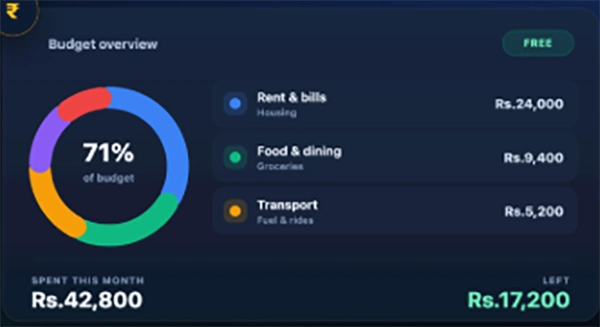
The same principle is applied in an envelope system that works on cash, because it creates an environment where the number of moments of us fighting against our willpower are significantly reduced.
To handle finances to the best of your abilities, you should know how to balance both sides; too much logic fails to account for real-time feelings and urges, but too much emotion can drain the entire budget.
Hence, the plans that actually work and stick with you are the ones that are made realistically, especially for the version of you that shows up tired and bored instead of with a conscious spending mindset.
This is not low self-control; this is what a realistic financial plan should look like.
Ans: Income level matters less than consistency and stress. Federal Reserve research shows financial anxiety appears across income brackets, often tied to unpredictable expenses rather than the paycheck size itself.
Ans: Most business models use the recurring model of payment with monthly subscription fees that feel small, but these small payments compound over time, so it is highly important to keep reviewing these because, as people say, ‘watch the pennies and the dollars will take care of themselves’
Ans: Paying off debt fixes the emotional side of financial stress after considered efforts. A plan becomes ten times harder to follow when it neglects the stress behind a debt.
Ans: Build in slack for bad days instead of assuming perfect behavior. A plan that expects a rough week survives one better than a plan that doesn’t.