Designing an Enterprise AI architecture involves much more than selecting a language model or integrating an application with an AI API.
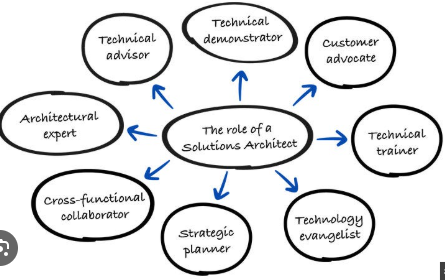
Solution architects should figure out how AI agents access business data, interact with existing systems, protect personal information, and perform sustainablly at scale. They must also consider security, governance, cost management, and human oversight.
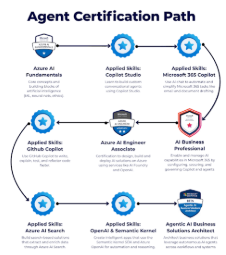
If followed a structured training programme or earning an agentic AI certification enables solution architects to develop the essential skills and technical knowledge required to design, implement, and manage these AI systems effectively.
Check out some of the best five options that are ideal for you.
5 Agentic AI Programmes at a Glance
Course
Provider
Main Skill
Best suited for
Certificate Program in Agentic AI
Johns Hopkins University
RAG, multi-agent systems, deployment
Technical architects
Professional Agentic Architect
Google Cloud
cloud-based agentic workflows
experienced cloud architects
No-Code Generative AI and Agentic AI
Johns Hopkins University
AI workflows and business automation
Enterprise solution planners
Agentic AI Business Solutions Architect Expert (AB-100)
Microsoft
Enterprise AI solution design
Business solution architects
Designing and Implementing Multi-Agent AI Solutions (AI-500)
Do you want to know the technical skills of enterprise agentic AI systems? If yes, then this course is worth looking at. The course is a combination of large language models and retrieval-augmented generation (RAG). It also consists of agent design, multi-agent workflows, evaluation, security, and production integration.
Learners can check availability, visibility, and security. All of these are important when putting agents into business environments. Projects involving RAG and multi-agent systems can help understand how different the particles work together.
Delivery and Mode: Online, 18 weeks.
Credentials: Certificate of Completion and 13 Continuing Education Units (CEUs) from Johns Hopkins University. The certificate is awarded to those who complete the course successfully.
Learning Outcomes: Build AI agents and RAG applications; understand multi-agent architecture; analyze outputs; and learn production monitoring and security.
This course is for those who want to know the technical decisions behind agent architecture, appraisal, and how they are deployed.
2. Professional Agentic Architect
Provider: Google Cloud
Google Cloud’s Professional Agentic Architect certification is directly important for professionals who want to integrate cloud-based agentic systems. The course focuses on creating, testing, integrating, and managing AI agents. It will consider trust, security, performance, and scalability.
The certification evaluates skills in all of the custom agents, using low-code tools, data sources, evaluating workflows, and governing autonomous solutions. Learners must take a monitored exam and complete practical labs. This makes the course a formal technical names rather than a course-completion certificate.
Delivery and Duration: Certification exam and practical labs. The course duration will be based on the student’s current experience.
Credentials: Google Cloud Certified. Professional Agentic Architect upon passing the required assessments.
Benefits of doing this course: Design cloud-based agentic workflows, integrate data, agents, and tell about security and governance requirements.
This course is a good option for experienced cloud architects who want to integrate enterprise-grade agents.
Solution architects don’t always have to code every particle themselves. They also need to help companies’ needs, evaluate automation options, and choose the right AI tools for current processes.
This agentic AI course covers generative AI, AI agents, RAG, and no-code workflow integration.
The course will let you use different new tools like n8n and show how AI capabilities can be added with applications and business data. The curriculum also showcases how engaging AI principles and associated risks.
Delivery and Duration: Online, 12 weeks.
Credentials: Certificate of Completion and 9 CEUs from Johns Hopkins University upon successful completion.
Benefit of doing this course: Explore no-code AI workflows, identify business use cases, understand RAG, and evaluate opportunities for intelligent automation.
Useful while checking low-code or no-code approaches for business teams and the process prototypes.
4. Agentic AI Business Solutions Architect Expert (AB-100)
Provider: Microsoft
Microsoft’s AB-100 exam is best fit for experienced solution architects. The course will help plan and deliver AI-driven business solutions. Also, the focus is shifted to designing agentic-first solutions, orchestrating multiple agents, and deploying AI capabilities with enterprise applications.
The course covers technologies across the Microsoft ecosystem, adding Dynamics 365, Power Platform, Copilot Studio, Azure AI services, and Azure OpenAI.
Delivery and Duration: Online learning and exam preparation. The certification exam is available through Microsoft’s testing arrangements.
Credentials: Microsoft Certified: Agentic AI Business Solutions Architect Expert, subject to meeting the applicable certification requirements.
Learning Outcomes: Design AI-powered business solutions, plan multi-agent orchestration, and address integration, security, scalability, and deployment.
Best for architects who can change business requirements into AI solutions across Microsoft enterprise platforms.
5. Designing and Implementing Multi-Agent AI Solutions (AI-500)
Provider: Microsoft
For architects focusing on the engineering side of multi-agent systems, Microsoft’s AI-500 exam is a different option to consider. It focuses on designing and implementing multi-agent AI solutions using Microsoft Foundry and Azure.
The associated learning resources cover logical architecture, tool ecosystems, agent orchestration, monitoring, security, and administration. These capabilities matter when multiple agents must work together while staying visible and controlled.
Delivery and Duration: Online preparation resources and certification exam; study time varies by experience.
Credentials: Check Microsoft’s current exam and certification requirements before registering.
Learning Outcomes: Design multi-agent architectures, integrate tools, implement orchestration, and plan keeping a check and governance.
Architect’s lens: Best aligned with technical professionals building and integrating multi-agent solutions on Azure.
Reasons you Should Choose Solution Architects?
The selection of the right option is based on the systems you expect to design.
For technical foundations: Look at the JHU Certificate Program in Agentic AI.
For workflow planning: You can check out the JHU no-code programme.
For cloud architecture: Review Google’s Professional Agentic Architect certification.
For Microsoft business systems: Choose AB-100.
For multi-agent engineering: Explore Microsoft’s AI-500 preparation resources.
Also do check the programme’s eligibility, fees, mentors, credential requirements, etc. before shortlisting the course.
Conclusion
There is no fixed definition of agentic AI courses, as they differ from individual to individual and can be picked based on the career goals and requirements. The best agentic AI courses are those that help you make better architecture decisions and prepare you to build secure, scalable, and useful AI systems for real business needs.
FAQs
Which agentic AI certifications are best for enterprise solution architects?
The best certification depends on your technology ecosystem and career goals. Microsoft’s Agentic AI Business Solutions Architect Expert certification focuses on designing, deploying, and governing AI-powered business solutions. Google Cloud’s Professional Agentic Architect certification emphasizes building, evaluating, securing, and managing agentic workflows.
What skills should solution architects learn before pursuing an agentic AI certification?
Solution architects should understand cloud architecture, large language models (LLMs), AI agents, multi-agent orchestration, API integration, data security, and responsible AI practices. Hands-on experience building and evaluating AI workflows is also valuable for designing reliable enterprise systems.
How can an agentic AI certification benefit enterprise solution architects?
An agentic AI certification can help architects demonstrate their ability to design scalable AI solutions, integrate autonomous agents into business processes, and address security, governance, and performance requirements. It can also support professional development as organizations explore AI-driven automation and intelligent enterprise applications.