Outsourced teams frequently work from a rigid checklist provided by the client if a requirement is missing from the test plan, or if nobody asks, how could a bad actor abuse this feature? The external team will mark the build as passing.

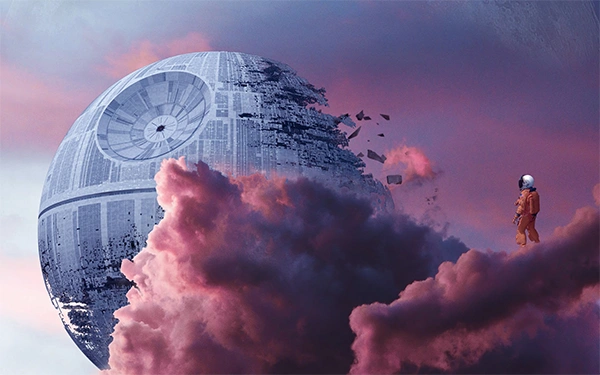
Though the famous thermal exhaust port on the Death Star is a classic, albeit fictional, case study in why spoiled energy and disconnected quality assurance led to catastrophic failure. Even without the intentional sabotage revealed in Rogue I, the Empire’s management of the Death Star project mirrors common pitfalls in modern outsourced QA and fragmented software or hardware development. Many companies that depend on software development outsourcing for their main products know the feeling behind the story, even if they have never put a name to it.
Who, exactly, was meant to look? In the story, the answer was no one is independent, which is the quiet failure beneath most disasters that later get rendered as sudden. Software outsourcing quality promise goes wrong along the same line whenever the team that writes the code also grades it, since a seller paid to hit a date, and measured on passing its own tests, has little reason to track what those tests were never built to see. However, the dashboards stay green. Discharge leaves on schedule, and the defect, should it exist, waits calmly inside a module that nobody outside the seller has opened.
The Empire’s engineer puts his weakness on purpose, which is the signal part of the tale. Most seller defects are duller than that, born of a hasty Friday fix or a ticket that got misread. The result looks the same either way: a defect ends up in the part of the system that matters most, and no analyst was ever sent to look at it. A real gate would have caught the intentional kind and the accidental kind alike.
Independence matters more here than aptitude does. A tester who answers to the developer’s manager receives the developer’s deadline, and the blind spots arrive soon after. Good purpose wears thin on the Thursday before a release, so the separation has to be written into who reports to whom.
Clients often assume an endorsed statement of work contains the safeguards. It usually does not. Asked who would have grabbed a flaw like the Empire’s, most statements of work would answer with silence. Agreements for outsourced software development spell out features and achievements in careful detail, then wave past the question of who verifies the work and with what power, as if verification were a mood rather than a job. Firms such as N-iX work in this space, and the careful ones are inclined to give QA its own reporting line instead of bolting an examination just before launch.
A Harvard-backed paper covered by TechRadar found AI assistants raising code output by roughly 30%, while the average review extended from 7.03 days to 10.48. Writing got quicker. The checking did not.
Seller teams get no exemption from that arithmetic. Most engagements built on software development outsourcing were priced and manned for a human typing pace, and now a provider that gives its producers an AI assistant ships more pull requests every week while the people competent to review them stay few. Give a reviewer 40 minutes and a change touching 14 files, and the top of the diff gets a careful read. The rest gets scanned, however good the intentions.
Bots that review code help with the small stuff, like style sliding and the odd obvious bug. Useful, but narrow. They cannot tell whether a change matches what the customer really meant, and meaning is where the errors tend to live.
Trust is weakening at the same time. Stack Overflow’s developer survey found that 46% of developers mistrust the accuracy of AI tool output, up from 31% a year earlier. So a reviewer receives a reasonable-looking change, drafted partially by a machine and backed by green tests from the seller, and still has to decide whether to believe it. Flaws hardly ever wave a flag. Somebody had to read the thing line by line, and nobody planned the hours.
Holding the vendor’s test report the week before launch, a purchasing lead wonders, quietly, what it leaves out. The report is probably exact. Accuracy and coverage are different things, though, and the gap between them is where security blemishes like to live; in Veracode’s 2025 research, GenAI models picked the nervous coding method 45% of the time when a secure option was available.
The habit is not only a machine’s. A result that looks orderly and passes its own tests says nothing about whether nobody has an idea to test.
Nobody awaits a company hiring an outside engineering team to read every line of its work, so the useful safeguards are humble ones, and most can be requested during a kickoff call:
Not a presentation, any of it. Each item can be checked on a Tuesday afternoon by someone with a login and a free hour, and a seller that answers with a long pause has also answered.
The Death Star did not fall because its builders missed talent. It fell because nobody with the standing to object ever read the work, and a tight schedule made that exclusion look like capability. Software outsourcing quality pledge asks for something modest: a person with real access, reading the work before launch and not after the damage. A reviewer shows up plainly on a budget, while the cost of a missing reviewer arrives later and without warning.
Outsourced teams frequently work from a rigid checklist provided by the client if a requirement is missing from the test plan, or if nobody asks, how could a bad actor abuse this feature? The external team will mark the build as passing.
Because the topic blends relatable post op culture with real-world DevOps and vendor management risk. It works well across all three formats, especially as a thought leadership article for engineering managers or an onboarding guide for QA vendors.
The Death Star had a thermal exhaust port because a moon sized space station generating immense energy from a planet destroying super laser must vent massive amounts of waste heat to avoid melting.