Digital, Price-sensitive, shopping for someone else, environmentally aware, conscientious, window shopper, influenced, spontaneous, loyal.


“Price is what you pay. Value is what you get.” — Warren Buffett (Investor)
This might work for a price-conscious customer. But, if you know anything about marketing, you must know there are many other types of customers. And appealing to each one requires different tactics.
Proper marketing involves knowing your customer inside out and adjusting your methods to specifically appeal to them. You have to make sure that each type of customer reaches the checkout page.
This article educates you on 9 major types of customers and how to appeal to them. This can be highly beneficial for you, increasing your profits this year.
KEY TAKEAWAYS
A digital consumer is someone who is mostly on his/her digital devices, living in their virtual world for almost all day–to-day activities.
They are already familiar with e-commerce websites and checkouts. They will likely have auto-fill enabled to make a purchase. In many ways, this means getting them through the checkout process is a lot easier.
Appeal to them by: starting a digital PR campaign
While you don’t have to worry about a general digital consumer understanding your checkout process, you do have to appeal to them first. There are many different types of digital consumers, so here, it helps to have an all-encompassing digital PR campaign that helps your business gain a better reputation.
The best way to go about this is to hire dedicated experts who will work alongside your business. A digital marketing agency like clickintelligence.co.uk is key here, as they offer a bespoke digital PR service that focuses on building highly positive media exposure via high-authority PR backlinks and industry press releases. With a PR team, you can stay ahead of the game, especially when it comes to keeping your brand visible in AI overviews and LLM search engines. Sometimes, it’s best to leave the marketing work in the hands of those who know what they are doing.
Most customers fall into this category to varying degrees. Some customers are more price sensitive than others and will instantly forget about a product if it’s even slightly over the budget they have in mind. These consumers are known as price-sensitive.
The thing about price-sensitive consumers is that they are very quick to switch brands based on the one that offers a cheaper option. They notice things like discounts, sales, and general deals much faster and will happily click on those to save themselves some money.
Appeal to them by: offering clear value
While it can be tempting to offer the lowest possible price to reel in price-sensitive shoppers, you should instead focus more on offering value. So, create bundled or tiered pricing so that the shopper gets more for what they spend. You can also implement loyalty programs that offer deals over and over again, meaning the shopper sticks with you.
There are many instances throughout the year when people are pushed to buy for other people. This includes:
So, if you sell something that could be classified as a gift, it’s important to remember that you are also trying to appeal to people who are not just shopping for themselves but also for other people.
Appeal to them by: making gifting easier
Make it very easy for shoppers to send gifts. For example, you could offer vouchers for your company. Or, you could add a gift wrapping option at checkout.
There is no denying that more and more consumers are concerned about what impact their shopping habits have on the environment.
According to Trellis, nearly half of US consumers say they buy sustainable products, and only 15% of people expressed no interest in environmentally friendly products.
Appeal to them by: offering sustainable products and services
Start by creating a product or service that is more sustainable – that might mean cutting back on plastic packaging. From there, you can boost your eco-friendly marketing by emphasizing your transparency, using digital-only campaigns, and showing any credentials that back up your green focus. Remember to avoid greenwashing (which means making vague or untrue claims about your sustainability practices), as more consumers are becoming savvy about spotting that.
Sustainable packaging is also a great way to attract them, but only when done right:
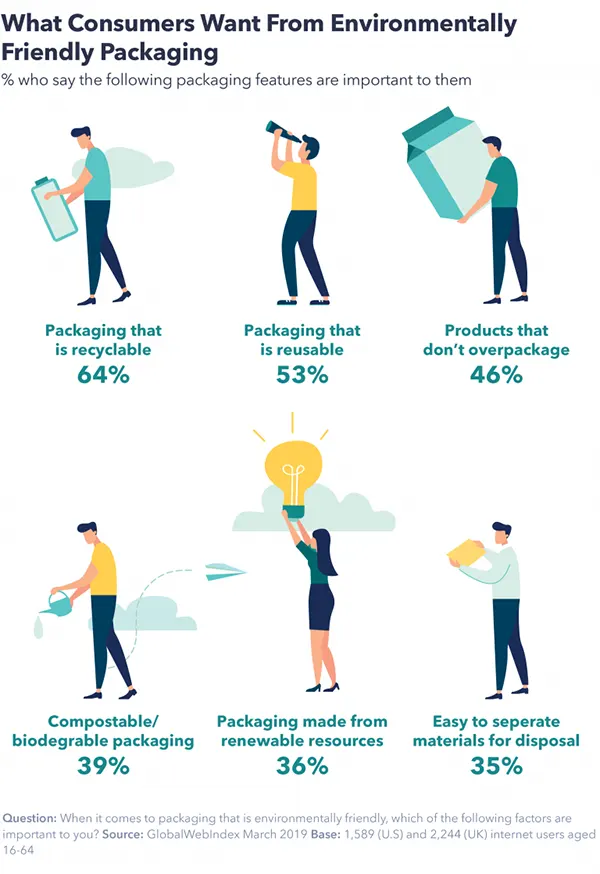
Alt: Sustainable Packaging
Besides sustainability, a conscientious consumer also looks at the ethics of a business. For example, they will want to know that the business pays its fair share in taxes and wages. Plus, they will want to know that working conditions are tip-top. So, they might avoid fast fashion brands.
Appeal to them by: taking social responsibility seriously (and showing that)
You need to be more transparent if you want to appeal to the conscientious consumer. You can do this by highlighting specific certifications on your website, such as Fair Trade. You can also include an About Us page that focuses on your commitment to being a fair, honest business that treats both workers and customers well.
In the past, the term window shopping was a lot more literal, as people would walk through shopping centers and high streets looking through windows to see if anything would catch their eye. Nowadays, this is mostly done online, especially given that many in-person stores are closing.
Instead, people often browse a variety of online stores, adding items to their wish lists or screenshotting things that appeal to them without fully committing to any single purchase.
Appeal to them by: creating a sense of urgency
Your goal here is to convince the average digital window shopper that your product or service is worth buying right now. To do that, create a sense of urgency by offering time-sensitive deals. You can also automate emails for when individuals abandon their carts.
Some people are simply more influenced than others, especially by online content creators. The influenced consumer is someone who spends more of their time online watching videos, reading blogs, or scrolling through social media. They will look up to certain creators on there and, in turn, are more likely to buy something if an influencer has promoted it to them.
Appeal to them by: starting an influencer marketing campaign
In this modern age, it’s important to know where to find your audience, and that often means online. By working alongside influencers, you can latch onto someone’s already established audience, meaning they are more likely to trust your brand. Of course, there are some ways to get it right as well as ways to get it wrong, so here are some general influencer marketing tips:
Instead of carefully reading product descriptions or watching all the reviews available on YouTube, a spontaneous consumer directly buys the things he wants. No overthinking. I want that watch, sports season pass, or pair of boots. Add to cart. Buy.
They make the decision pretty instantly, parting with their money with ease. The good news is that these types of shoppers are easier to appeal to. However, there are ways to attract them even further.
Appeal to them by: focusing on speed
As well as using exciting visuals to pull these shoppers in, make sure you pay attention to speed. This shopper wants instant gratification, so avoid any blocks to that by creating a super swift checkout process. You can also urge them to shop further by adding discounts or showcasing other products they might like to add to their basket before they complete checking out.
Every single business wants to reel in more loyal customers. These are the ones who come back to your brand time and time again because they trust that you will deliver quality every time. Often, they make up the bulk of your revenue.
Appeal to them by: offering special treatment to loyal customers only
Offer promotions, discounts, and other types of VIP treatment only to your loyal customers. For example, you might offer freebies to those who place more than three orders with you. You can also create a feeling of belonging by creating genuinely useful content in a newsletter for loyal customers.
Knowing your customer inside out is the best business practice anyway. But segmenting them based on their behaviour enables you to tailor your marketing methods better to appeal to them.
Hopefully, this guide will help you determine the different ways to attract specific types of shoppers, from more mindful, eco-friendly ones to those who are quick to rush to checkout. By doing this, you will build more profit and grow your business.
Digital, Price-sensitive, shopping for someone else, environmentally aware, conscientious, window shopper, influenced, spontaneous, loyal.
Identify the customer and their need, present your product/service as the most convenient and reliable solution.
You have 3 seconds to grab attention, 3 minutes to spark interest, and 3 touchpoints to earn a reply.