No. Firewalls remain important, but Zero Trust adds additional layers of identity verification, access control, and continuous monitoring.



“It takes 20 years to build a reputation and a few minutes of cyber-incident to ruin it.” — Stephane Nappo (Cybersecurity Expert)
Cybersecurity has changed dramatically over the past decades. Employees now work from home, applications run in the cloud, and business data flows across countless devices and locations. Yet many organizations still rely on security models built for an era when everyone worked inside a single office.
So businesses are now embracing Zero Trust Security. Instead of automatically trusting anyone inside the corporate network, it requires every user, device, and connection to continuously prove they are authorized. Combined with modern networking solutions, it helps organizations protect data wherever work happens.
KEY TAKEAWAYS
- Zero Trust follows the principle of “never trust, always verify,” requiring continuous identity verification for users and devices.
- Traditional perimeter-based security is less effective as businesses adopt remote work, cloud services, and hybrid environments.
- Its core principles include continuous authentication, least-privilege access, encrypted connections, and ongoing monitoring.
- Corporate Private Networks complement Zero Trust by providing secure, encrypted connectivity with centralized access management and network segmentation.
It’s a cybersecurity model. It’s based on one simple principle: never trust, always verify. Earlier security protocols assumed that users inside a company network are safe to trust. But this framework forces every device, user, and connection to continuously prove its identity before accessing business resources.
Think of it like a security guard who stops everyone for identification, no matter who you are:
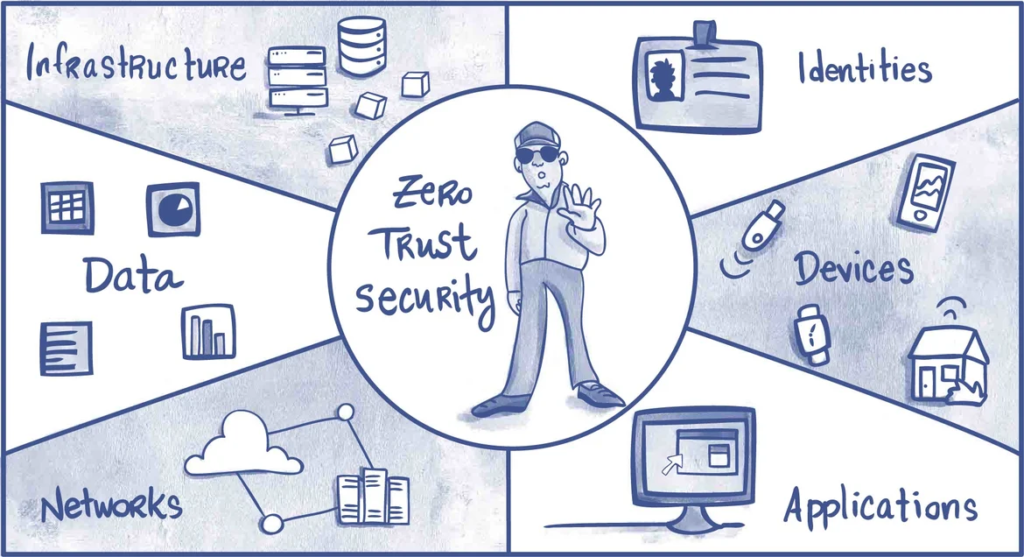
As remote work, cloud services, and distributed teams become the norm, it has quickly become one of the most discussed topics in enterprise cybersecurity.
Not just the commercial world, even the social world is embracing Zero Trust. Social media platforms are upgrading digital safety with the framework.
It’s been years since companies trusted network perimeter-based security to protect their systems.
That worked well when:
Today, the reality is very different.
Modern organizations rely on:
The traditional “inside equals trusted” approach no longer provides enough protection.
Implementations may vary, but most of them have many things in common:
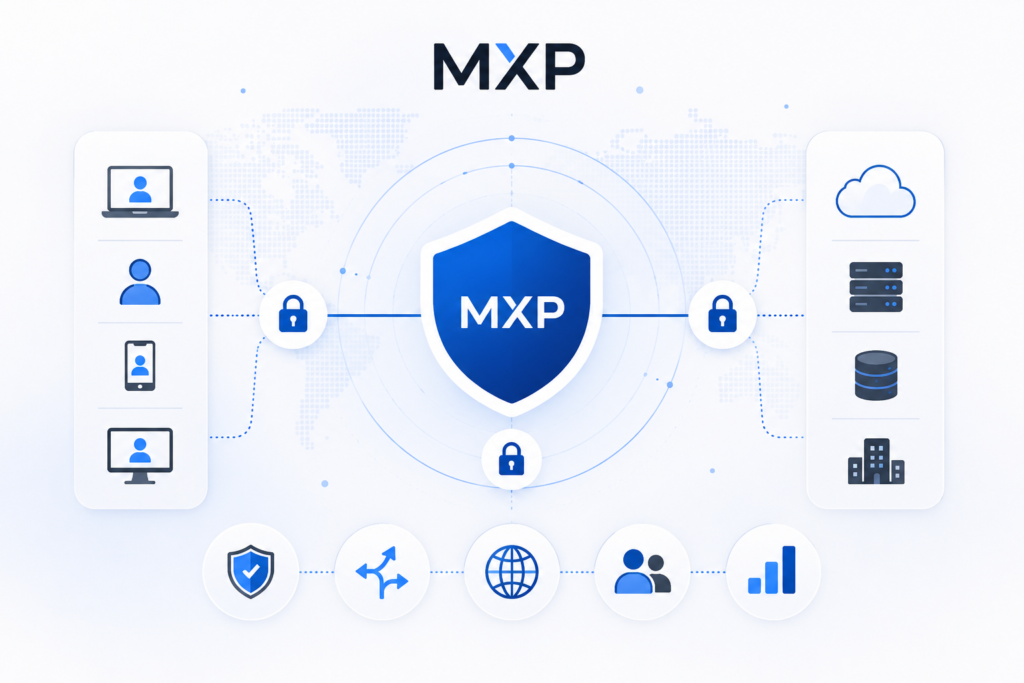
Firms need secure private connectivity between employees, offices, cloud infrastructure, and internal applications.
Instead of relying on traditional VPN architectures designed years ago, businesses increasingly deploy Corporate Private Networks that provide encrypted communication together with centralized access management and network segmentation.
One example is Corporate Private Network by MXP (mxp.net). It enables organizations to build secure private networks. Those private networks are used to connect distributed teams, offices, and cloud resources through encrypted tunnels. Its centralized management, flexible access controls, and scalable architecture make it well suited for companies adopting modern Zero Trust principles without adding unnecessary complexity.
The framework benefits firms with:
Physical location stops defining the system security. It becomes more focused on verified identity.
Zero Trust isn’t a single product. It’s a security strategy designed for today’s cloud-first, remote-first business environment.
As organizations expand beyond traditional office networks, secure connectivity becomes just as important as identity verification. Modern solutions such as Corporate Private Network by MXP help businesses create encrypted private networks that align with Zero Trust principles while supporting flexible teams, cloud infrastructure, and secure collaboration.
By combining identity-based access controls with modern private networking, organizations can build a security model that’s better suited to the way people work today.
Does Zero Trust replace firewalls?
No. Firewalls remain important, but Zero Trust adds additional layers of identity verification, access control, and continuous monitoring.
Is Zero Trust only for large enterprises?
No. Many small and medium-sized businesses now adopt the concept as cloud services and remote work become increasingly common.
Is a traditional VPN enough?
Traditional VPNs still provide encrypted connections, but many organizations require more granular access control, centralized policy management, and scalable networking—features commonly associated with modern Corporate Private Network solutions.
No. Firewalls remain important, but Zero Trust adds additional layers of identity verification, access control, and continuous monitoring.
No. Many small and medium-sized businesses now adopt the concept as cloud services and remote work become increasingly common.
Traditional VPNs still provide encrypted connections, but many organizations require more granular access control, centralized policy management, and scalable networking—features commonly associated with modern Corporate Private Network solutions.