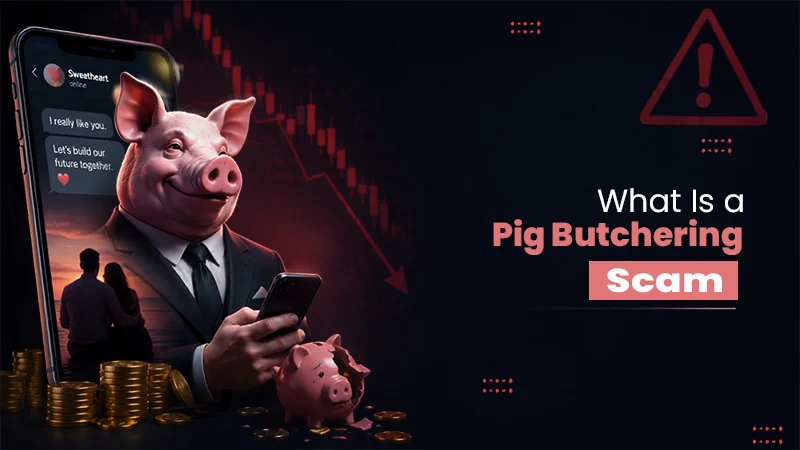
It’s a form of investment fraud where scammers build a relationship with a target over weeks or months before convincing them to invest money into a fake trading or cryptocurrency platform.


Americans lost nearly $16 billion to fraud schemes last year, with investment scams being the costliest for states. A growing share of those losses came from pig butchering scams, a sophisticated form of fraud that blends emotional manipulation with fake investment opportunities.
Traditional scams rely on urgency or fear, but pig butchering schemes are built on patience. Fraudsters spend weeks or even months building trust through dating apps, social media platforms, and unsolicited messages before introducing what appears to be a lucrative investment opportunity. Behind the polished conversations and impressive returns lies a carefully orchestrated plan designed to extract as much money as possible.
Victims of a pig butchering scam would turn to attorneys, fraud investigators, and recovery services after losing savings, retirement funds, or borrowed money to overseas criminal networks. The scam affects people of all ages and financial backgrounds, proving that even experienced investors can become targets when trust is weaponized. Here’s how the scheme works and why more people are falling victim to it.
KEY TAKEAWAYS
- Pig butchering scams rely on building trust over time before introducing fake investment opportunities.
- Criminal networks commonly use dating apps, social media, and unsolicited text messages to find victims.
- Fake trading platforms often display fabricated profits to encourage larger deposits.
- Reporting suspicious activity quickly can help protect others and support ongoing fraud investigations.
Many cases start with a stray text, a dating profile, or a message that seems harmless. After several friendly exchanges, the scam takes shape through steady praise, talk of easy profits, and polished account images that seem credible at first. The scammer’s goal is simple: build credibility first and discuss money later, making the eventual investment pitch feel natural rather than suspicious. Once they are confident, the victim is guided to a fake trading platform, then urged to send a small first payment. It is part of a planned effort to extract larger payments over time.
This fraud succeeds because it targets human attachment before it targets money. The scammer studies the target’s habits, worries, and hopes, then mirrors them with patience. That attention masks the underlying danger and fosters a false sense of security. A fabricated dashboard adds apparent proof, while early withdrawals may be allowed to build confidence. By the time victims are suspicious, many have already transferred large sums and shared their account details, identity records, or both.
Recent figures point to a broader victim pool, not just larger individual losses. Blockchain analysis firm Chainalysis reported that pig butchering revenue rose sharply in 2024, while deposit counts climbed even faster. The trend suggests scammers are expanding their target pool rather than simply extracting more money from individual victims. Cheap messaging systems, stolen profile images, and scripted chat routines let organized groups contact thousands of people every day. More exposure means there are more chances to find someone lonely, distracted, or financially strained.
The payment route often changes over time. A victim may begin with a bank transfer, then shift into cryptocurrency after pressure from the scammer. The Federal Trade Commission reported $12.5 billion in fraud losses during 2024. Investment fraud led all categories, reaching $5.7 billion. Scammer networks favor payment methods that move quickly, resist reversal, and disappear through layered wallets or accounts.
INTERESTING STAT
As per a Chainalysis report, scam revenue from “pig butchering,” a type of romance and investment scam, is growing nearly 40% year over year.
Several patterns appear with striking consistency. The contact pushes the conversation onto a private app very quickly. Reported returns look unusually smooth, even during market volatility. A website may show rising balances, yet withdrawals trigger taxes, service charges, or fresh deposits. Pressure rises when the victim is hesitant. Genuine investing carries uncertainty, while scammers present certainty, control, and access that sounds rare or privileged.
No single age group carries all the risk. Older adults may lose their retirement assets, while younger professionals are often approached through messaging apps they use every day. Some scammers pose as romantic partners, while others present themselves as mentors, traders, or successful entrepreneurs. The wider social reach helps explain the increase in cases. Anyone dealing with isolation, grief, or money stress can be more vulnerable to this scam.
The scammer does not usually ask for everything at once. The process begins with a modest payment, then displays fabricated gains on a sleek screen. That visual reward affects decision-making. Many victims start chasing a larger return or trying to recover an earlier transfer through another deposit. Credit cards, personal loans, and home refinancing can follow. Each added step deepens commitment and makes withdrawal feel emotionally difficult.
Victims should stop sending money, preserve messages, capture account screens, and contact their bank or exchange immediately. Any compromised password should be changed immediately, especially if financial accounts or email credentials were shared. A police report can help create a formal record. The Federal Bureau of Investigation has also warned that romance-linked investment schemes often move conversations onto private apps before the financial pitch begins.
Many people remain silent because they are ashamed, which allows scammers to avoid accountability. Reports to banks, trading platforms, consumer agencies, and law enforcement can expose repeated wallet addresses, copied scripts, or linked domains. Each complaint adds useful pattern data that may connect scattered victims to one organized group. Public reporting also strengthens prevention efforts, giving communities clearer warnings before another target sends an initial payment.
Pig butchering scams are growing because they combine emotional manipulation, sophisticated technology, and financial deception into a highly effective fraud model. What looks like affection, friendship, or guidance is often a calculated attempt to drain assets. Better awareness, earlier reporting, and skepticism around unsolicited investment advice can reduce losses and help more victims escape sooner.
It’s a form of investment fraud where scammers build a relationship with a target over weeks or months before convincing them to invest money into a fake trading or cryptocurrency platform.
The term refers to the scammer’s strategy of “fattening up” victims through trust-building and emotional manipulation before extracting as much money as possible.
Most modern pig butchering scams involve cryptocurrency because transactions can be difficult to reverse, but scammers may also use other investment themes.
Recovery can be difficult, especially when funds have been moved through multiple cryptocurrency wallets. Victims should immediately contact their bank, exchange, law enforcement, and relevant fraud-reporting agencies.
Common warning signs include unsolicited messages, rapid attempts to move conversations to private apps, promises of consistent returns, pressure to invest quickly, and difficulties withdrawing funds.
Anyone can become a victim. Scammers target people across all age groups, professions, and income levels by exploiting trust, loneliness, financial goals, or emotional vulnerability.