Just describe your legal situation in your own words. The AI will ask follow-up questions to gather any additional details needed.

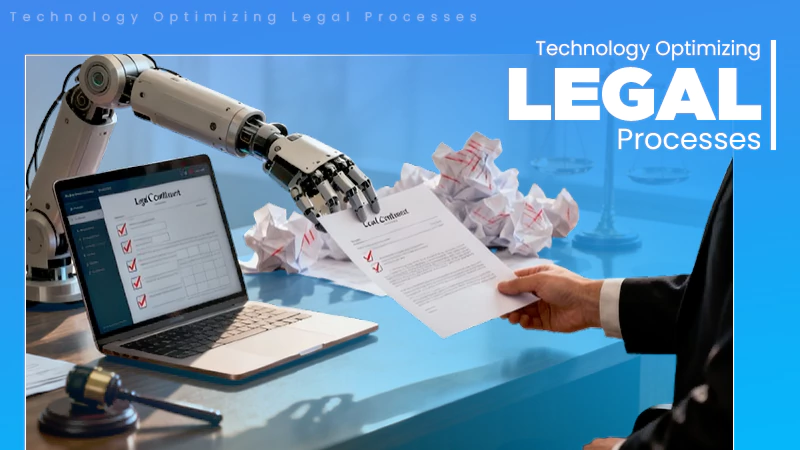
Legal paperwork no longer has to be confusing or time-consuming.
Thanks to modern technology, many legal tasks can now be completed online through user- friendly platforms that simplify documents, reduce paperwork and make legal services more accessible to individuals and businesses alike.
Some of the majorly rising digital legal tools are :
The most significant development, however, is the switch from the static paper format to an online template which responds to the inputs provided by the user. Enter “yes” to a certain question and get the relevant part shown to you; enter “no” and you are not even presented with those questions that do not apply to your case anymore.
This helps overcome the two most common flaws of any paperwork process – omissions and contradictions – while saving a lot of effort in the process.
Divorce is certainly a clear case, being traditionally one of the most stressful experiences associated with separating from one’s partner, as it involves filling out different documents, specific wording, and laws that vary by region. Today, however, some websites will help a couple go through all of that process.
For example, someone going through a divorce in Ontario doesn’t have to look for all the necessary forms and learn all the jargon on their own. Using an online divorce service, the correct papers will be created for you by providing information about your marriage, children, and property. It’s not a substitute for the legal process; it only helps you navigate through that process much more smoothly because everything is already settled between you two.
The same idea is showing up elsewhere too: simple wills, name changes, small claims filings, business paperwork, and more.
This shift is important for many reasons as stated below :
Legal expenses have stopped many individuals from seeking services, even when it came to relatively straightforward issues. In cases where a document requires only a review and not a drafting from scratch by a lawyer, costs are significantly lowered. This has enabled:
None of this replaces a lawyer for complicated matters. But for routine paperwork, it removes a barrier that used to stop people from getting things completed properly.
Forms depend completely on the person filling them out correctly. One single error – whether it’s the incorrect date format, absence of a signature, or failure to complete an important part – can cause a delay of several weeks. The digital solution identifies many of these mistakes on the spot. It will alert the user about blank fields and incorrect dates at the time of filling, not when the submission is rejected by a clerk. This immediate notification of errors is one of the less noticed features of legal technology.
The major role of AI and Automation is listed as follows :
Another area where the technology is currently used is contract review where risks in the form of missing clauses, strange terminology, or non-conformity to the norm are identified. The tasks that took hours for a paralegal to complete are now finished within minutes through AI.
Many legal portals have started providing chatbots to assist clients in answering procedural queries such as what happens after filling out a certain form. These bots are not to replace lawyers and legal guidance, but they can help people get the fundamentals of procedures without having to book a consultation each time.
The pandemic has pushed the adoption of electronic signatures and remote notaries, and these trends have continued because they simply work more effectively for practical purposes. Legal papers that had to be signed in person before can now be processed using a smartphone or computer, having the same legal as a physical signature in most cases.
Here are some of the major steps you need to take for ensuring legal tech :
As these applications continue to develop, look for greater personalization – documents that are based on particular jurisdictional laws or one’s own unique familial and financial circumstances, without the user even knowing which laws govern his or her situation.
Some jurisdictions are beginning to connect the online legal systems with the court filing process, allowing for electronic submission of documents without having to print out or mail any papers. This is not yet uniform, but it will probably continue to expand.
Maybe the biggest long-term effect isn’t the paperwork itself – it’s that people come away gaining their own rights and obligations better, instead of relying on guesswork or secondhand advice.
Paperwork in connection with legal documents will never be made fully due to the very nature of the law, but thanks to advances in technology, it has been reduced significantly. With the help of digital forms, the AI-driven review, and online signing of documents, people have gained greater over the processes which used to be difficult before. The process of dealing with paperwork has not only become much easier; it is now more available to everyone.
Just describe your legal situation in your own words. The AI will ask follow-up questions to gather any additional details needed.
Technology is transforming daily life by making everyday tasks easier, boosting independence, and connecting us in new ways.
The impact of technology on the modern legal profession is beyond doubt. Legal services have become faster, more accurate, and more accessible, as tech solutions are coming in every substantial manner.
ChatGPT can assist with legal tasks, but lawyers must supervise outputs to avoid ethical, factual, or legal errors.