A wallet with built-in technology — typically quick card access, RFID-blocking shielding, and optionally a Bluetooth tracker that pairs with your phone to help you find it.

A smart wallet is just like a regular wallet, but with a few extra features. It may let you reach your cards quickly, block RFID signals to help protect card details, or use a Bluetooth tracker to find your wallet with your phone. It sounds useful, but not every smart wallet is worth buying. Some have trackers that don’t work well, batteries you can’t replace, or features you may never use. Before spending your money, here’s what you should look for to make sure you’re getting a wallet that’s actually worth it.
Tracking is the headline feature of most smart wallets — a Bluetooth tracker, built in or as a slim card, that pairs with your phone and shows the wallet’s last known location.It can really help if you’re someone who often misplaces things. Still, before you buy one, there are a few things worth checking first.
Range: Bluetooth works within tens of meters, not miles. It helps you find a wallet lost in the house or left at a café — not one lost across town.Some trackers can also use nearby users’ phones to help find your wallet, making it easier to track even when it’s far away.
If you rarely lose your wallet, you might be paying extra for a feature you’ll never touch. Be honest about your habits.
RFID blocking is standard on smart wallets now. It shields your contactless cards from being skimmed by nearby readers. Worth having, but know its limits. It blocks the signals it’s made to stop, but it won’t protect you from every type of fraud.
A listing that just says “RFID safe” without details is waving a flag, not giving you information. Look for specifics about what the shielding covers.
This is the feature you’ll use fifty times a day, so it matters more than the marketing suggests. Most smart wallets let you get your cards in one of two ways. Some have a button that spreads the cards out, while others use a simple pull tab or slot to help you take them out easily.
Things to check:
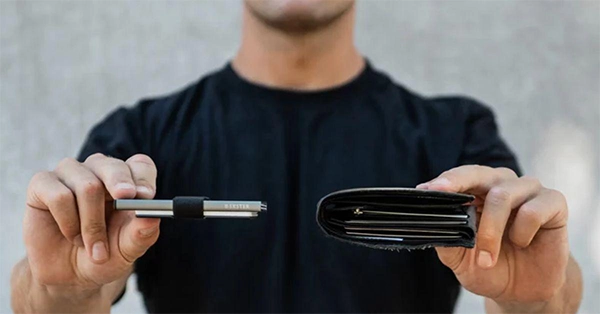
Ekster’s Wallet Pro is a good reference point here — its push-button ejection fans cards out with a single press, which is exactly the kind of one-handed access worth looking for.
Check how many cards the wallet can actually hold, too. If it claims to fit 14 cards but works best with only 8, you’ll likely get annoyed using it every day. Think about the cards you carry regularly, such as your bank cards, ID, travel card, and work badge. Then choose a wallet that fits them all without feeling too full or making it hard to take your cards out.
Smart features don’t matter if the wallet falls apart. The same rules apply as with any wallet: check the leather quality (or whatever the shell is made of), the stitching, the edges, and the closure. You open and close your smart wallet many times a day, so the joints and edges tend to wear out first.
Slim is nice, but not at the cost of durability. And if a button or clasp holds it shut, make sure it closes securely without a fight.
A smart wallet with a tracker inside runs thicker than a plain cardholder — that’s just physics. The main thing is whether the wallet feels comfortable in your pocket throughout the day. Check its size instead of relying only on the product photos. If you usually keep your wallet in your front pocket, pay extra attention to how thick it is. A wallet that fits fine in a bag might feel bulky and uncomfortable in your jeans.
Also consider cash. If you carry folded bills, make sure there’s a real spot for them — not an afterthought slot that barely closes.
If the wallet has any electronics, you’re signing up for one more device to maintain. Check three things:
A tracker is only useful if its app works well. If the app keeps freezing or has bugs, finding your wallet can become more of a headache than a help.
Tech products break. Before buying, check what the warranty actually covers — manufacturing defects? The mechanism? The electronics? And for how long? “Lifetime warranty” sounds reassuring, but read what’s excluded. Also check whether you can get replacement parts. A wallet you can repair is worth more than one you have to throw away.
Smart wallets usually cost more than regular ones because of their extra features. The key is to avoid spending extra on things you don’t really need. Before buying one, make a simple list of what matters to you. Do you want a tracker? Is RFID protection important? Would a button that pushes your cards out be useful? Do you prefer good-quality leather? Once you know what you need, compare prices based on those features instead of choosing a wallet just because it has the longest list of extras.
Want a real-world example? Ekster’s Wallet Pro shows how the best smart wallet features come together in one design: push-button card ejection, built-in RFID shielding, a slim Vachetta leather build that holds 1–14 cards plus folded bills, a secure closure, and an optional tracker card — each one solving a specific problem from the list above, backed by a lifetime warranty.
A smart wallet earns the “smart” label when its tech solves real problems — finding your wallet, protecting your cards, getting to the right card fast. Everything else is decoration. Check the tracking, the RFID coverage, the mechanism, the build, and the warranty. Then buy the one that fits your actual routine, not the one with the longest spec sheet.
A wallet with built-in technology — typically quick card access, RFID-blocking shielding, and optionally a Bluetooth tracker that pairs with your phone to help you find it.
Only the ones with electronic trackers. The wallet itself needs nothing; the tracker card may need recharging or a battery swap depending on the model. Check before you buy.
It’s a reasonable layer of protection for contactless cards, and it costs you nothing extra when it’s already built in. Just don’t treat it as complete fraud protection — it’s one layer, not a shield against everything.
Most can, but check how. Some have a proper cash compartment; others expect you to wedge bills behind the cards. If you carry cash daily, this detail matters.