Yes, camera-based systems can follow ball and player movement and classify some shot information, but the details available depend on the equipment and setup.

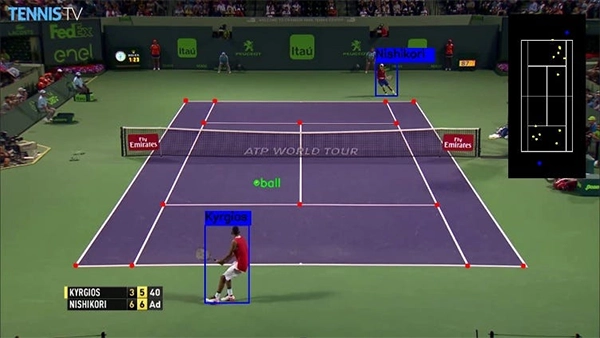
You might have noticed how the camera tracks the bounce of a yellow ball and traces it across a court diagram. A coach is there who checks the player’s recovery step on another screen.
Tennis is now getting reviewed through cameras, sensors, score feeds, and software. Rallies can now leave records of player positions, speed, and shot patterns.
AI can help here by turning the records into coaching questions, and live feeds keep displaying matches without any hindrance. Accurate inputs and clear rules define the value of player data collected during practice and competition.
A court-side tracking setup might combine high-speed cameras, radar, wearables, and scoreboard data. But there is something that each source captures a different slice of what happens during the same point.
| Technology | What It Can Capture | Useful For |
| Court cameras and optical tracking | Ball path, player position, shot direction and placement, where supported | Reviewing movement, spacing and shot patterns |
| Radar or sensor systems | Selected speed, impact or equipment readings | Adding a measurable detail to a technical review |
| Wearables and smart equipment | Heart rate, workload or racket data, depending on the device | Understanding training load and practice sessions |
| Score and event feeds | Sets, games, points, server and available match events | Connecting a rally to the score and match state |
Under Player Analysis Technology, the International Tennis Federation (ITF) groups tools that record, store, transmit or analyse player-performance information. The label actually covers more than cameras. A smart racket or heart-rate monitor may answer a training question that might be difficult for ball-tracking systems.
Different jobs are served by these data streams. A score feed cannot replace movement data, and a tracking clip may not confirm the official scoring event.
This difference is actually what saves time.
AI helps in answering real coaching questions.
It’s possible that a player might feel a wide forehand leaves them exposed. That’s why tracked points can show whether the recovery step often leaves the opposite side open.
The model flags the pattern; a coach decides whether it is a weakness or a deliberate trade-off.
This is actually better than just collecting a stack of graphs no one revisits. Always treat black-box scores with suspicion. If a vendor is not able to explain the inputs, validations, or failure cases, then avoid deciding only with the rating.
Digital features make that shift visible for fans at Wimbledon, IBM’s 2026. All have their own functions, such as Match Chat answering questions about a match, while Key Moments highlights plays that change its direction. They do not check for individual players, but definitely show facts that can become useful context instead of a wall of numbers.
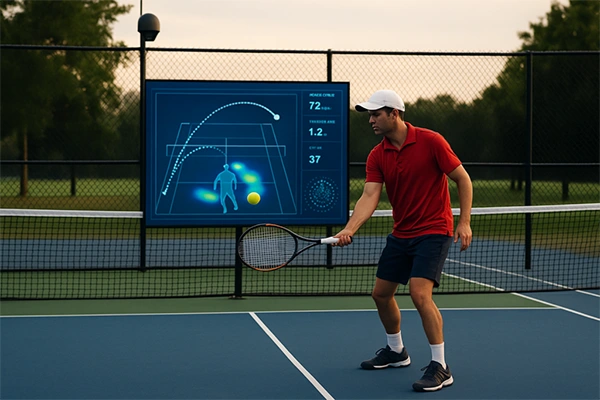
Movement data explains the action, and a live feed adds the score and timing that make it easier to interpret.
For a scoreboard or analysis app, Live Tennis API is one example of a feed that returns sets, games, points, and server status, with match events and streaming options depending on the product tier.
An API allows one program to request data from another. Scores are being carried in the dashboard, but it will not show footwork; a camera model may not be the official source for the score.
Tennis scoring isn’t as easy as it appears, as love, 15, 30, 40, deuce, advantage, and tiebreaks give software plenty of ways to go wrong. It seems small until the scoreboard jumps backward after a corrected point.
It’s really helpful, but incomplete, as well. A good pipeline records where the information came from and when it was updated, so stale or corrected data do not silently become a confident-looking graphic.
A good, clear animation might create false confidence: the ball may be obscured, camera angles can limit visibility, and a model can label an unusual shot incorrectly even when the output looks precise.
According to the ITF classification, it classifies electronic line-calling systems after testing accuracy, reliability, and suitability for specific uses. Approval relies on the setting, surface, and whether the system makes live calls or supports review. It is also important to know that a system cleared for one job is not automatically cleared for every court.
Everything, including lighting, calibration, and the view of the ball, is easy to ignore until a close call becomes a dispute. The same caution applies to performance charts: compare like with like, check what the device actually measures, and look at the original clip when a number seems odd.
Errors happen.
The footage can be converted into metadata by computer vision. It also includes player and ball positions, shot types, and direction. IBM’s AI tennis-commentary work explains that process. Models still need clean inputs and a clear target.
It’s possible that player footage is public and everyone can see it during a tournament. But it also does not make every derived record public property. Heart-rate readings and detailed training notes can reveal a lot about an athlete.
Tracking should be explained by youth academies in plain language to players and parents. Keep recordings out of public dashboards, marketing, or unrelated model training unless permission and rules cover that use. Privacy actually belongs in the product design, and not on a policy page added after launch.
To learn something important from training a club really doesn’t need a stadium-grade system.
Begin with easy questions and a tool that can perfectly answer them. To study a recovery position, a phone video is enough, whereas a larger system earns its cost when the team needs consistent measurements across sessions or players.
1. Select one question. It might be serve placement under pressure or recovery after a wide ball.
2. Record a baseline. Keep the court setup and definitions consistent for the next session.
3. Review video as well as score. If a metric looks strange, check the original footage before changing technique.
4.Keep data that someone will use. A report no coach opens is storage cost dressed up as insight.
The next technological advancement might be a clearer answer on the coach’s tablet, not another sensor clipped to a racket.
Yes, camera-based systems can follow ball and player movement and classify some shot information, but the details available depend on the equipment and setup.
No. ITF classifications can depend on the surface, setting, and whether a system is used for live calls or review, so check the current approval list.
No. A live feed can provide scores or match events; cameras, sensors, or wearables supply different kinds of movement and performance data.