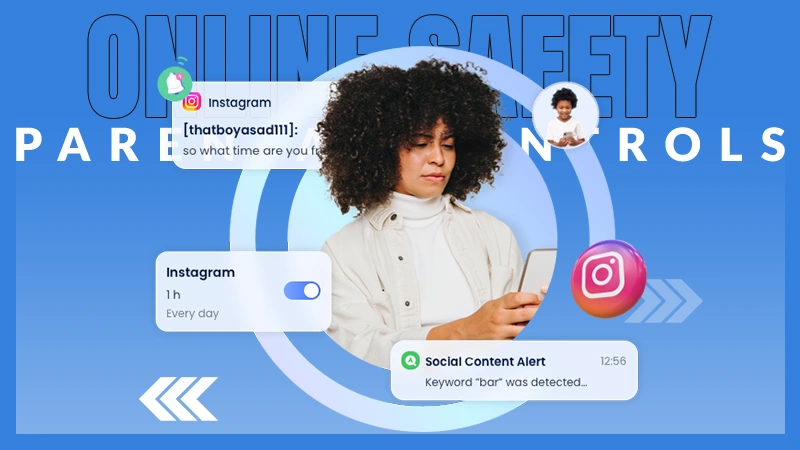
By using SafeSearch, browsing controls, parental controls and by spreading awareness – parents can protect their kids.

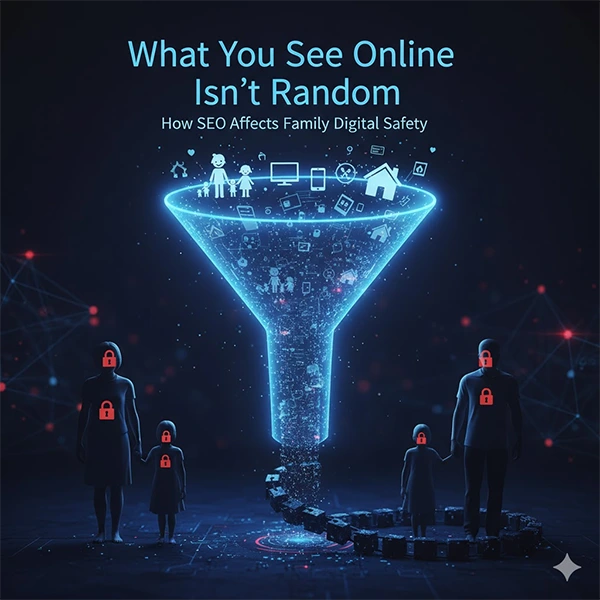
Do you know that “your family’s online world isn’t shaped by curiosity – it’s shaped by algorithms designed to capture attention”?
The results that you get on search engines are more dependent on bots and ranking algorithms than on relevance. Which is why “90% of the people never go beyond the first page of Google”. (Source: Backlinko) As their results are rarely accurate to what they ask.
And this doesn’t stop with search. Behind every video in your child’s YouTube feed hides a carefully crafted strategy called SEO (search engine optimization) – a so powerful system that studies show it can recommend disturbing content, even when the initial search is perfectly innocent. (Source: ACM)
In simple terms: A good SEO service can shape what we and especially our children see, click andobserve online.
Read on to understand how that invisible influence works, why it can be dangerous and how parents can protect their family in this SEO driven world.
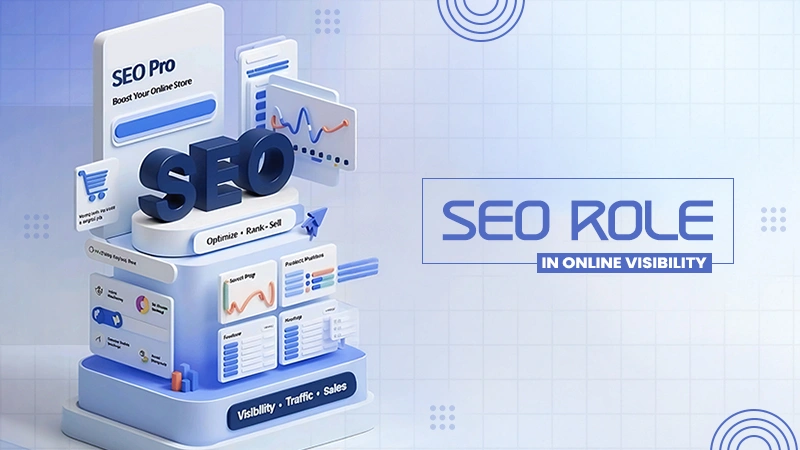
SEO is the invisible driving power for almost everything that appears on search engines – Keywords, backlinks, site structure and user engagement influence what pages will appear on the top. Surprisingly, “over 53% of total website traffic comes from organic search only” –showing the power of SEO for online visibility. ( Source: SEO Sandwitch)
Search engines prioritize optimized content, sharing the creators who know SEO can significantly influence what is seen.
This makes SEO not just a marketing thing – but a results filter managing almost every browsing, including your family.
In addition to SEO, recommendation algorithms widely manage what kinds and parents see – especially on social media platforms like Instagram. These algorithms analyze past searches (What you clicked, watched and searched) and decide future context.
Understand it as a library where the librarian (the algorithm) only shows you the books related to what you have read and bought earlier.
Over time, you will end up in a specific section of the library – that is called a filter bubble. And because most browsing happens on phones, mobile friendliness has become a major ranking factor.
Case Study
Once, Riktika’s 8 year old girl searched “cute animal videos” on YouTube. After a few minutes of watching, her feed started showing prank clips and even mildly disturbing content. Why? Those videos had a strong SEO base – better titles, keywords and more.
The algorithm prioritized those videos over safety. Riktika realized this wasn’t her daughter’s searching…it was decided by the algorithms.
Just because something ranks high means it’s safe and trustworthy. It can also be misleading, irrelevant to our needs or full of clickbait. A few of the websites even use spamdexing (SEO tactics) to show more reliability than they actually have.
Studies have shown that recommendations of platforms like YouTube can also show inappropriate content to young children. (Source: arxiv)
This means that SEO driven visibility does not equal safety or reliability.
The next question that arises is – why should parents care about SEO? Simply because it manages what their kids and family members will see.
When you know more about SEO, you realize that the “random” internet is not random at all – everything is planned, designed and set with some intentions.
Quick Insight
Algorithms can be very complex and parental control cannot be checked at every moment – but teaching kids to ask and verify content works every time.Asking ‘Why am I seeing this?’ works better than any software.
Pairing parental controls and filters with SEO can give you more control over what your kids and family members will see –
These practices can effectively help parents to manage and control the content their known ones are being recommended.
The internet will show everything that’s visible – you have to help your family choose what’s valuable.
In a world where the SEO decides what your families will see, awareness is your strongest filter. SEO may manage content visibility, but you shape what becomes a thing to watch for your close ones. A little digital awareness will not just protect your family but redefine what they pay attention to.
By using SafeSearch, browsing controls, parental controls and by spreading awareness – parents can protect their kids.
No, that is just optimization – doesn’t reflect reliability. Always look for safe content and verify before trusting everything you click.
Yes, strong SEO applied to unsafe content can show it to any child’s feed, even if the original search was innocent.
“Stop. Check the source. Then dive into it.” – This is basic but a strong habit for safe diving on the internet.