Smartphones already handle navigation, bookings, translation, photography, and communication, while newer technologies such as AI, eSIMs, and satellite connectivity are making these functions more powerful and accessible.

Quick Answer: Steve Jobs (Apple Co-Founder) said, “Technology is best when it brings people together.” This is becoming increasingly relevant to travel. The smartphone has already replaced the paper map, compact camera, boarding pass, and, in many cases, the travel guide. But the next wave of phone technology could fundamentally change how we experience unfamiliar places. From eSIMs and satellite connectivity to AI-powered translation, smarter cameras and on-device assistants, smartphones are moving beyond being travel tools and becoming travel companions. The result could be trips that are easier to navigate, less constrained by language or connectivity, and far more personalized than ever before.
Fast and reliable internet access is becoming common across the world for just leading a normal life. But it’s even more crucial to take full advantage of all the cool travel tech advancements coming to smartphones. Ensuring it is already becoming something people just set up and enjoy, rather than spend time arranging once they reach their destination. The future looks to be even more streamlined and less dependent on fickle local network availability.
Only a few years ago, expensive roaming or fiddly local SIM cards were the only alternatives to unsafe public Wi-Fi networks. Now, practically every smartphone has an embedded eSIM chip, and the technology has become a mainstay of independent yet connected travel.
eSIMs have gone mainstream across most of the world. And healthy competition means users benefit from competitive pricing. Along with plans for specific countries, forward-thinking providers are also offering a wide array of regional plans designed to streamline multi-country tours. Europe SIM cards, for example, can be particularly useful for travelers visiting multiple countries without needing to arrange a separate SIM or data plan for each destination. Accordingly, roaming and physical local SIMs will continue to lose relevance.
An overlooked aspect of eSIMs is that they are environmentally friendly. It’s really important to learn and teach your children to travel eco-consciously.
Today, you might face internet connectivity issues just in the remotest corners of the earth. That problem is about to get solved real soon. Satellite phones are still an expensive nice-to-have for people who enjoy hiking in the middle of nowhere, but they are poised to become much more widespread and accessible. Satellite infrastructure is still underdeveloped, but various telecom operators are partnering with satellite providers to remedy this.
It’s becoming more likely that internet access via satellite is something regular flagship phones are going to offer in the foreseeable future. eSIMs will likely remain more popular for a while due to better bandwidth. However, maintaining connectivity in truly remote areas and in the case of disaster is the lifeline that will let satellite connectivity shine.
Smartphone hardware keeps upgrading. It may not be specifically targeted at travel needs, but upgrades to core smartphone components will make for more reliable and enjoyable usage while away from home.
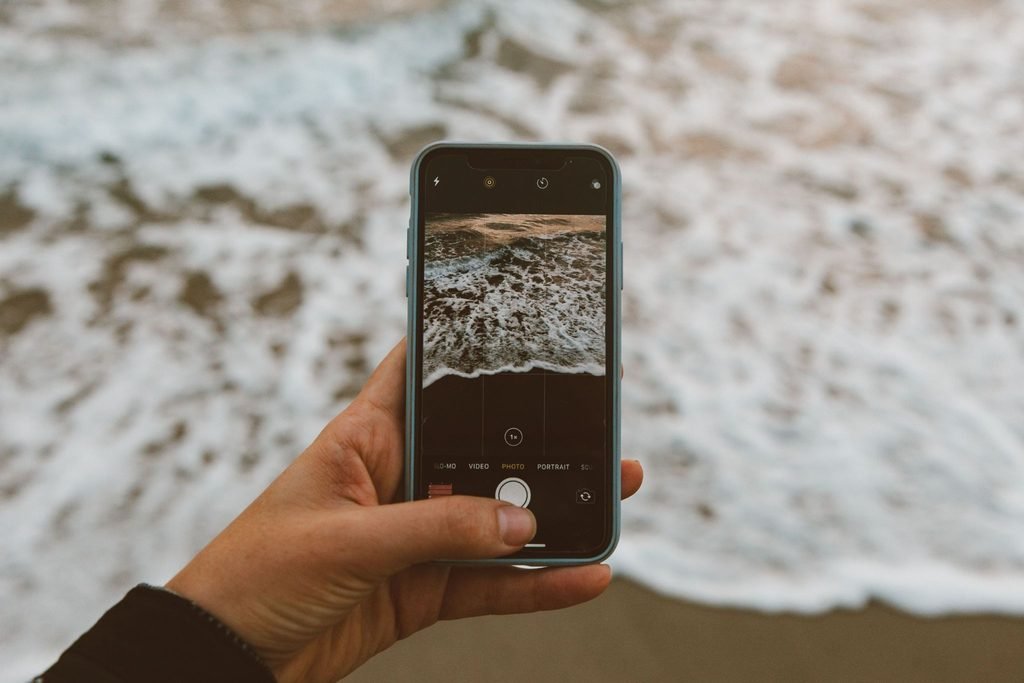
Even without the AI enhancements we’ll get to shortly, smartphone cameras are continuing to evolve. Larger sensors and better low-light performance make for excellent image quality even if conditions are less than ideal. Blurry and shaky video on their adventures have been a long-standing complaint of travellers. Better stabilization with EIS and OIS tech means you’ll be able to whip your phone out and instantly capture clear, stable, and smooth videos.
Essentially, smartphone camera development is letting ordinary people immortalize precious travel moments in high quality. Unless you’re a pro travel influencer or photographer that needs dedicated hardware to push your content to its visual limits, even an unremarkable smartphone will have you covered.
One problem many tourists face is their phones dropping in haste and the camera lenses being shattered by the impact. Invest in high-quality phone cases to avoid these mishaps.
SURPRISING STAT
In a survey, 63% of tourists said that they used their phones for photography.
With the development in Silicon-Carbon batteries, the capacities and standby time of smartphones have increased dramatically. Less power-hungry processors, better power management, and fast charging already make flagship phones capable of going through a day of intense travel use without charging becoming an issue. Meanwhile, several promising developments point to even better battery capacity in the future.
Unsurprisingly, the biggest and most visible impact comes from AI and its ability to augment almost every facet of phone operation.
AI/AR integrations in the smartphone cameras will make them super-cameras. We’re already seeing it in their ability to translate street signs or menus. In the not-so-distant future, cameras are going to turn into multi-functional sensors that provide context and information. The possibilities are endless, from interactive guidance and more intuitive navigation to more nuanced help, like interpreting cultural quirks.
Real-time translations are already here with the help of AI. And as AI gets smoother and more mainstream, so will the real-time translation tech. In no time it’ll be a travel essential we’ll take for granted. AI models already excel at providing accurate, natural-sounding translation. Their ability to do so quickly is also steadily improving.
The potential impact is huge. Ordinary people will feel more at ease traveling to places that language barriers have prevented them from visiting. They won’t be limited by the few phrases they picked up before the trip and will be able to have smooth, in-depth conversations with locals.
AI capabilities are progressing exponentially. And the more insane thing is, we can carry it in our pockets to our travel destinations. Our smartphones will soon turn into full-fledged travel assistants. AI can already do things like create itineraries and manage reservations. As systems become more integrated and reasoning capabilities grow, AI will also be able to renegotiate bookings if something goes wrong or provide dynamic, highly personalized recommendations as a trip unfolds.
Tools like LocationTool are already capable enough to locate your tour members if any of you get lost in a foreign land.
AI requires substantial hardware capabilities to run locally on any device. With rising smartphone capabilities, the day is not far when AI will be accessible to all without a constant internet connection. Rather than depending on a constant link to online services, phones’ optimized CPUs and GPUs will be capable of running AI models locally. This means tasks like translation, assistance, or image processing will get done even if data is too expensive or not available.
Smartphones are already a capable and versatile travel tool, but the developments we can look forward to will make them even more indispensable. Within a very reasonable timeframe, our smartphones will let us take trips that are more personalized. All of us will be able to communicate seamlessly with each other, regardless of the languages we know. Imagine how personal that would feel. The developments will also ensure we’re always reachable without being at the mercy of connectivity. Choosing the best eSIM for your travel needs can also help ensure that staying connected remains simple as these technologies continue to evolve.
Smartphones already handle navigation, bookings, translation, photography, and communication, while newer technologies such as AI, eSIMs, and satellite connectivity are making these functions more powerful and accessible.
They are particularly convenient for trips involving multiple countries as they allow travelers to activate mobile plans without purchasing or physically changing SIM cards. However, physical SIM cards will remain useful where eSIM support is unavailable.
Today it’s limited to messaging and emergency communication in areas without cellular coverage. Full-speed satellite internet directly to ordinary smartphones is more challenging, but improvements in satellite infrastructure could expand what is possible over time.