Access to the OpenAI API on a free tier might be possible via some platform or offer, but it would have some limitations and quotas applied to it.

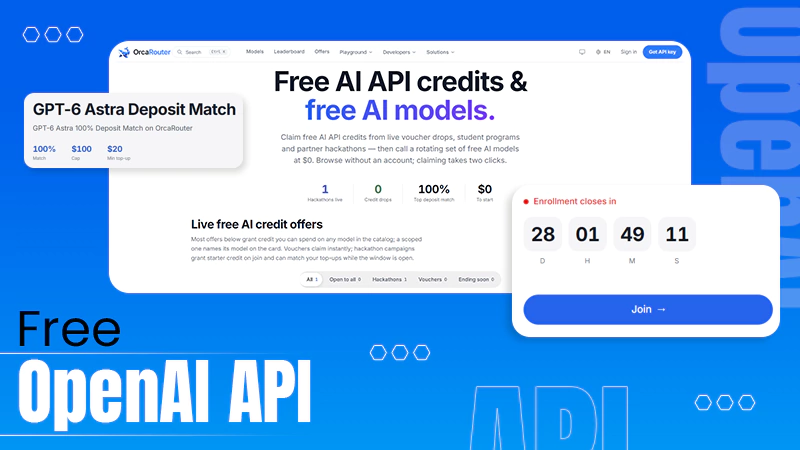
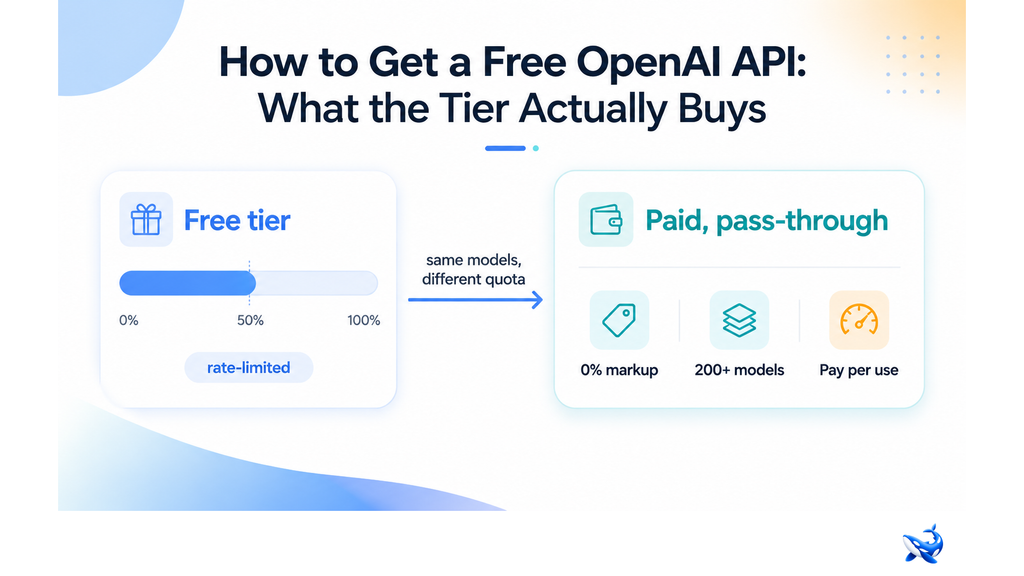
Quick Answer – Free access to the OpenAI API can help you test out prompts, prototype, and experiment with different models at zero cost. However, using the free tier will restrict you from making certain requests and using the full range of models available to you.
Do you want to experiment with AI without immediately adding another subscription to your budget?
Free OpenAI API access may help with trying out prompts, prototyping something, or just checking what certain models are capable of. You might also want to try models like GPT-5.6 Luna for your tasks.
But “free” does not mean unrestricted use, and knowing about the quota will help avoid being annoyed by rate limits later. It all comes down to what model you will have access to, how many calls per second you will be able to send, and how fast your free usage runs out.
For software developers, free access becomes an entry-level option but not the only one worth considering. Here is how far you can go with free API access.
The honest beginning would be that “free OpenAI API” is not one service. It is just a free prompt budget provided by a certain platform, and it always depends on the following three factors: number of requests per minute, tokens per request, and whether it is the full-fledged model available for free use or its cheaper version.
OpenAI itself has operated free and reduced-rate options over time, and third-party platforms bolt a free tier onto the same models. The practical effect is the same whether you hit the vendor directly or through an aggregator: the free tier exists to get you to a paid plan, so it is sized to let you try, not to let you run. For a prototype that is exactly what you want. For a workload with even a modest request rate, the quota is the constraint, not the model.
Hence, the real question is not “Does it have a free OpenAI API?” but “What can I do with a free quota and how often does it refill?” This perspective changes free tier comparisons from a scavenger hunt to simple calculations.
Did You Know?
Did you know? A free API tier is mainly designed for testing and experimentation rather than handling high-volume, production workloads.
Here’s a realistic picture of what a rate-limited free tier is good for.
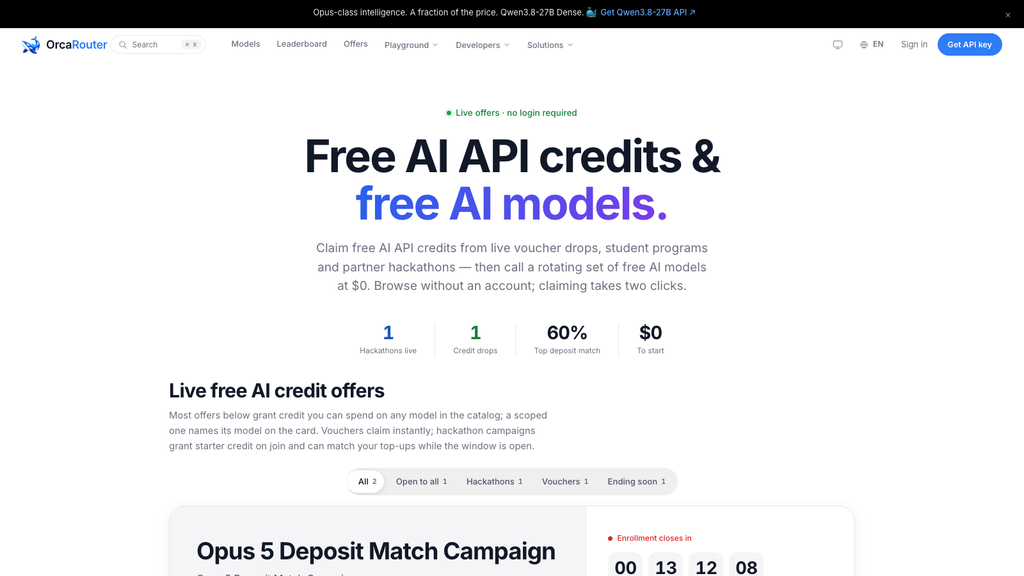
That last point is why the model list matters more than the price tag. A free tier that only lets you touch the cheap end of a catalog is still useful; a free tier that quietly swaps in a weaker model and calls it the same name is a trap. Which is why an aggregator that lists every model with its real price and exposes the model ID is the safer place to start — you know what you’re running and what it costs when you outgrow the free budget [OURS].
The purpose of going for free first is that you never want to rewrite your integration when upgrading. The endpoint remains the same, as well as the request format, and only the billing changes. Four tactics will ensure that this stays that way:
1. Isolate the key. Place the free-tier key in the env var, not in the source code, so that a quota exceeded or key change would mean a configuration update.
2. Pin the model ID you tested. If the free tier serves a smaller model, record it. Your prototype’s quality is only valid for the model you actually measured.
3. Log enough to price the upgrade. Note the token counts per request so that at the time of the upgrade, you can budget accurately rather than discover unexpectedly.
4. Point at a pass-through layer. If you start on a platform that adds a markup, the price you graduate to is not the price on the vendor’s rate card. A 0% markup route keeps the free-to-paid jump a pure quota change, with the vendor’s list price carrying through [OURS].
There comes a point where the cost of the free OpenAI API exceeds its savings, and it comes much sooner than most teams realize. Free tiers swap your valuable time for dollars: you watch the quota, you program around the cap, you manage the rate limit errors, and you build again everything you programmed around the free limitations. The minute the engineering effort required to overcome a quota becomes more expensive than the dollars saved by the free tier is when you have overpaid for the only thing that counts.
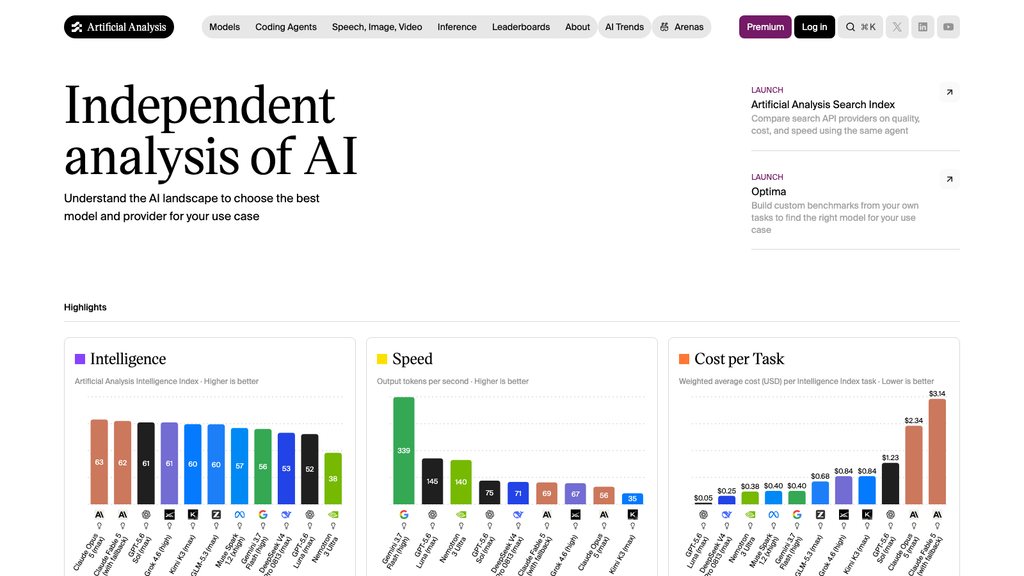
That crossover is the moment the cheapest option is no longer the free option but the cheap tier of the model you actually want — billed at the provider’s own list price, with no markup to distort the comparison. A router that passes the rate card through and routes to the cheapest qualifying model makes that jump a one-line decision rather than a rebuild [OURS]. And because it spans 200+ models, you are not upgrading to a single provider’s plan; you’re moving to the cheapest model that clears the bar on any vendor’s card [OURS].
An OpenAI API with zero cost is actually the way to go for prototyping at zero dollars, and it is the perfect place to begin building a prototype. Just be aware of what this actually is: a quota, executed against the proven model, sized for evaluation, not production. Start on a layer that exposes the real price and model ID, log your token counts, and when you outgrow the cap, graduate to the cheapest model that clears your bar at the vendor’s own price — a change to your quota, not a change to your code.
Access to the OpenAI API on a free tier might be possible via some platform or offer, but it would have some limitations and quotas applied to it.
Some of the most common limitations are the limits on requests, tokens, model availability, and lack of guarantees for production use.
Not really. The free tier might not give access to all OpenAI models, and you should always check the exact model ID and quota.
Think about upgrading when you experience difficulties with rate limits, your application needs constant access, and quota management takes more time than the free API usage.