If the platform has a no-minimum-traffic policy, along with other features like fast approval decisions instead of a week-long one with multiple options of ad formats, then it is considered the best platform.


The most common mistake publishers make is when picking a platform. Often, they pick a platform that is completely unrelated to their business or service and hence can’t generate the required traffic. This doesn’t mean the platform is bad; it just means the chosen platform isn’t a fit for your conditions.
Publishers try working with platforms like Adsterra or some similar network and never understand or even realize, for that matter as to why their revenue is still low. So instead of running behind ‘the best monetization platform’, try to chase a platform that works for you specifically.
Using an overhyped app or even an excellent app just because it works for one type of traffic doesn’t guarantee that it will also perform equally well for your traffic. This is because different kinds of traffic behave very differently.
For example a traffic which is more socially heavy behaves differently than search traffic, and even mobile-using traffic can vary in behaviour from desktop-using traffic. Thus, the question worth asking isn’t what platform is the best; rather, it is which one was built to handle traffic like yours.
What guarantees heavy traffic on your site is a match to a site that’s designed for your traffic instead of one that is proven to perform the best, but for a different niche. For example, if there are two blogs that exist within the same network, with one being review-heavy and including Native Banners and the other being entertainment-heavy with hardly any such banners, then the long-form blog will always win.
This isn’t because the entertainment format doesn’t work; it is due to the fact that this format is being published on the wrong site. Now, if you switch to Social Bar, the entertainment blog will always win over the long-form one.
A few things separate a genuinely strong option from one that just markets itself well:
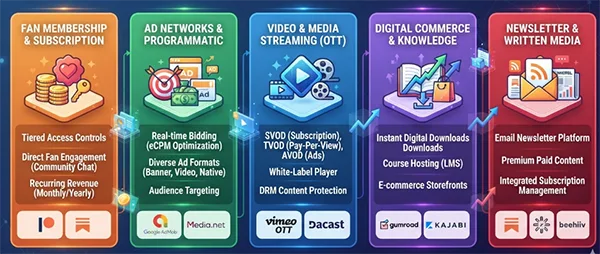
The most versatile and good option, which has the majority of these features, is Adsterra. This is also the reason why it’s so popular with almost everyone using it. It uses a no-minimum-traffic model with formats that range from Popunder and Social Bar to In-Page Push, Interstitials, SmartLink, Native Banners, and standard Banners.
Most beginner publishers don’t have access to a website with a good amount of steady traffic, but that is exactly what platforms like SmartLink are built for. SmartLink uses traffic from external sources and redirects it to your site, which helps in building real numbers and traffic with actual earnings included. This makes it a useful platform for publishers who are just starting out or those who are working with alternative traffic sources.
| Format | Works Best For |
| Popunder | Heavy volume traffic sites |
| Social Bar | Mobile-heavy and entertainment-engaged audiences |
| SmartLink | Social traffic and traffic sources where standard ad placements are difficult to use |
| Native Banners | Long-form content and blogs |
Numbers vary a lot, obviously. Smaller traffic sources tend to land around $50 a day. Bigger, better-optimized ones climb toward $800 or more. There’s no built-in ceiling either, so the earnings potential scales with the traffic rather than stopping at some fixed point.
If the platform has a no-minimum-traffic policy, along with other features like fast approval decisions instead of a week-long one with multiple options of ad formats, then it is considered the best platform.
No, platforms like SmartLink were built to avoid exactly this situation. Using SmartLink, you can directly earn from your traffic without ever having a website.
Usually, since eCPM reflects the total revenue generated per 1,000 impressions, your effective earnings can increase when your traffic performs better.
Usually, there is no fixed number of duration for approval. It varies from platform to platform, but some networks like Adsterra process approval quickly rather than in weeks.
No, not on platforms built for scale. Earnings tend to grow along with traffic rather than hitting an artificial limit.