Inspect your vehicle’s door weekly or during other maintenance checks, make sure to look for any cracks created by friction.

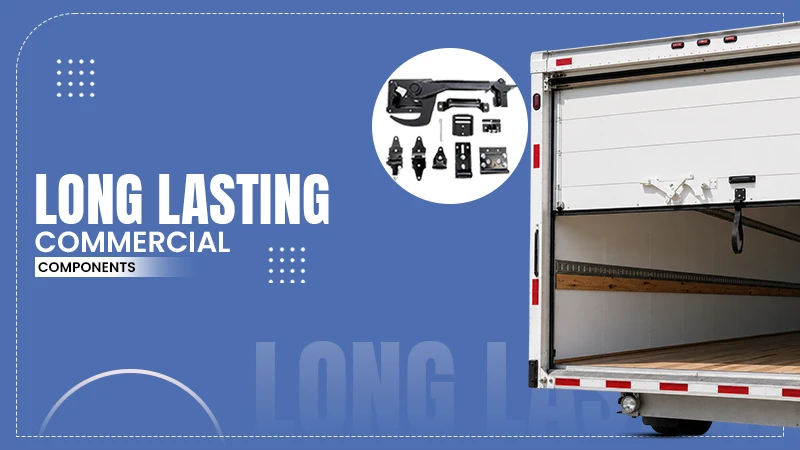
Most commercial vehicles are made for fast daily delivery, which puts a lot more pressure on them. Due to the daily delivery task, a truck door opens dozens of times, which can create friction, impact the door, and cause vibration. This can also involve too much mechanical stress as well. These things can result in a small part failure and delay the delivery.
To prevent the damage, a box full of good-quality door hardware is very important. It helps in maintaining the security, functionality, and faster deliveries.
Using strong materials, a good finish, suitable components, and correct dimensions is essential for hardware to last long and give good performance. Long-lasting hardware reduces the need for unnecessary repairs and small issues, which can turn into bigger ones if neglected.
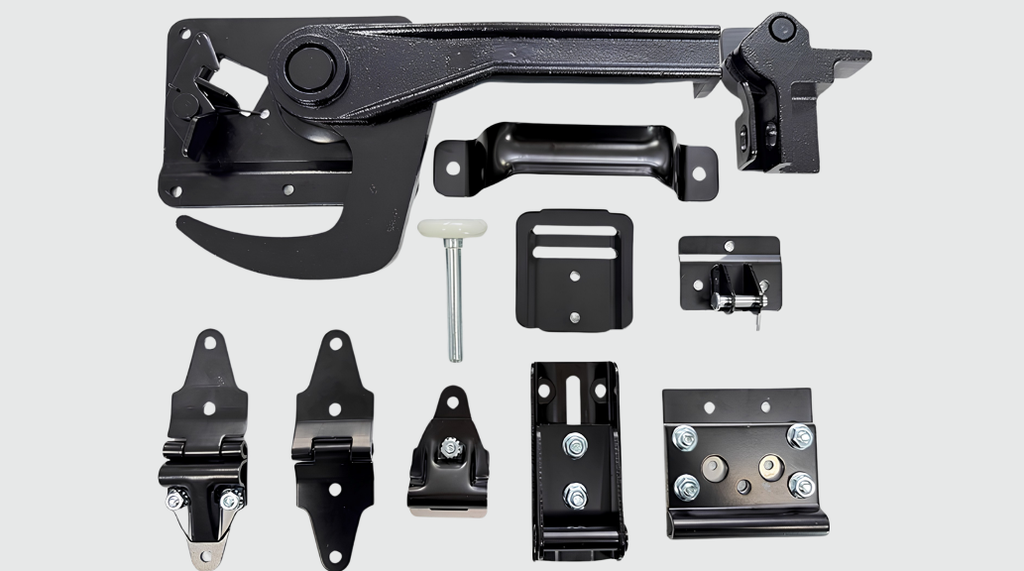
A roll-up truck door is not just a curtain or a series of panels. Several mechanical components are used to manage movement, alignment, security, and sealing. The door moves along tracks using rollers and is hinged between sections, which can move in a controlled manner during the operation. Cables and associated lifting equipment manage the movement of the door, and locks secure the vehicle when parked.
There are other components that make for reliable service. Door seals minimize unnecessary clearance at the door opening, and metal hardware can be finished to meet tough operating requirements. It is therefore important to choose the proper box truck roll-up door parts when replacing or repairing existing parts.
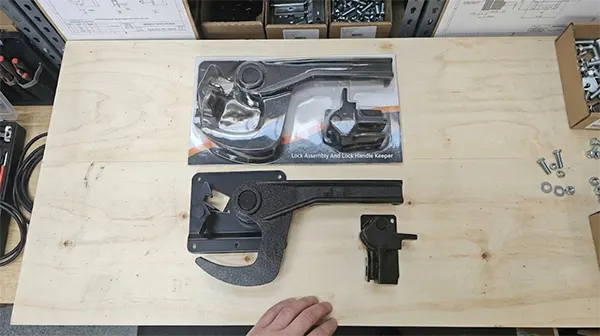
The type of door hardware materials used directly affects their ability to withstand daily commercial use. Steel is a popular choice for parts that need to be strong and withstand mechanical stress. Where environmental conditions need it, stainless steel can offer extra corrosion protection. Metal parts can also be protected from moisture and oxidation by surface treatments.
Suitable steel parts can be provided with an extra protective layer by zinc plating and other finishes. This is particularly important when vehicles are being driven in varying weather and are exposed to humid environments. But durability isn’t just about material. Precision in manufacture, clean edges, and correct hole location and size are also important.
Even a robust part, if not properly installed, may create operational issues. Precision manufacturing allows the components to work seamlessly together, eliminating any excessive friction or misalignment. Consistency is also crucial when replacement parts have to be the same as the parts already installed.
Box trucks used for commercial purposes have various types of roll-up doors that need to be compatible during replacement. The two very popular styles of commercial truck door systems are the Whiting style and the Todco style. Parts should match the door design and not just what looks good.
Whiting-style hardware consists of rollers, hinges, cables, locks, and other hardware components that are compatible with Whiting door systems. Todco-style hardware also includes hardware developed for Todco-style applications. Review of the original hardware design reduces installation issues and aids with door movement.
Before ordering replacement components, verify key specifications such as:
Replacement hardware should be able to replicate the necessary dimensions to a high degree of precision. It is important to note that even slight variations in hole location, thickness, or edge preparation can affect installation and operation. Precision is vital if parts are required to fit with existing tracks, hinges, panels, or lifting mechanisms.
Repeat purchasing is also enabled by manufacturing consistency. Fleet operators, distributors, repair companies, and door manufacturers all typically require the same type of components over and over again. If they are all the same size, it will be easier for future replacements since the specifications won’t be unpredictable.
Therefore, quality control must be carried out throughout the entire production process. Each of the stages of drawing preparation, sampling, prototyping, machining, finishing, and final inspection may impact the final component. A controlled production workflow helps to find dimensional or surface problems before parts are installed.
Not all commercial vehicles have the same setup hardware. There are some projects that need specific sizes, materials, finishes, logos, or packages. Custom manufacturing can be utilised as a practical solution if standard components do not match an existing specification in their entirety.
A manufacturer can be approached with technical drawings, samples, or defined measurements to create a suitable component. 3D sampling and polished prototypes can also be used to validate structural details prior to mass production.
Gemax can manufacture, prototype, inspect, and offer flexible production of standard and customized truck door hardware. This enables different applications to get the components they need based on their technical needs.
Even though components need the correct installation and periodic checking, rollers should roll properly in their tracks, hinges should operate smoothly, and fasteners should be in the proper position. Cables and lifting parts should be inspected for signs of wear or damage. Seals may also need to be replaced if they wear out or they are no longer able to fill the gaps properly.
By conducting early inspections, potential problems can be discovered before it impacts the entire door system. If the machine is unusually resistant, or the movement is not even, or if the machine is making excessive noise, or if there is noticeable damage to the hardware, maintenance may be required. When a component is worn, replacing it at the correct time will prevent other components from being put under further stress.
Installation is as important as the quality of the components. Replacement hardware should be identical to the original door system and meet installation requirements. Even if the part is made of sturdy materials, it can still affect the performance if it is not properly fitted.
Roll-up door hardware is an essential component for daily delivery operations, and it’s a must-have for commercial vehicles. Locks, seals, hinges, cables, and other components should interact and function repeatedly through the opening and closing of doors. Materials and finishes are durable, dimensions are precise, and designs are compatible, supporting dependable performance.
Whiting and Todco style options are available for different commercial door systems, and custom manufacturing can be used to cater to specific needs. Box truck doors can be smoother, safer, and more reliable throughout a busy delivery schedule if they are equipped with the proper replacement parts and checked regularly. Selecting components designed to handle multiple uses establishes a more robust foundation for efficient cargo access and fleet management.
Inspect your vehicle’s door weekly or during other maintenance checks, make sure to look for any cracks created by friction.
If the door is heavy or difficult to open, it usually happens because of broken or worn-out springs or a lack of lubricant in the side hinges. Do not use force to open it.
A non-stick, Teflon, or silicone-based lubricant works best for roll-up doors. Avoid using thick grease because it attracts dirt.
Well, both can work for a commercial vehicle, but using a commercial truck box is best as it contains good quality heavy-duty parts, which can last long.