A KYC platform allows businesses to verify customer identities, prevent fraud activities, and comply with regulatory demands.

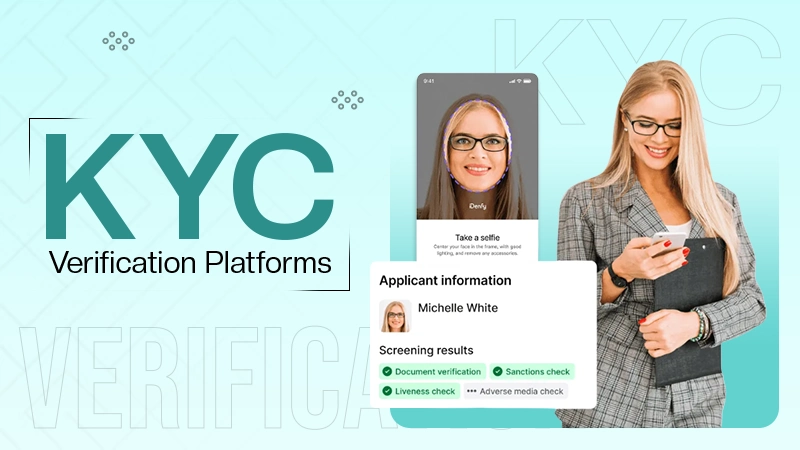
KYC (Know Your Customer) is not just a common way to verify documents, but can also serve as a strong medium to check with compliance, the onboarding process, and more when used the right way.
You might think now – what does the right way mean? It refers to relying on the right platforms that ensure matching with your requirements while preventing fraud and ensuring smooth operations.
Keep reading to explore the top 10 KYC and identity verification platforms to choose from.
A strong platform should demonstrate that an identity is legitimate and that the person presenting it is its rightful owner. Depending on your specs, this may involve document authentication, facial analysis, liveness detection, database checks, and sanctions or politically targeted person screening.
The Financial Action Task Force suggests assessing digital identity systems according to their assurance levels, reliability, and suitability for the risks involved in customer due consideration. Its advice on digital identity provides a useful framework, but businesses still need to consider local laws and sector-specific rules.
Before choosing vendors, define the countries you serve, acceptable identity documents, expected transaction volume, and any conditions that require manual review. Otherwise, awesome global coverage figures may hide weaknesses in the real markets that matter to you.
Also, learn how to stay secure while navigating the rise of crypto automation.
With a wide range of options available, choosing the right one might be a bit challenging. Below are the top ten to choose from:
PrivateID provides identity verification functions for businesses that need to confirm users remotely. Its plan can support workflows involving identity documents, biometric auditing, and fraud checks.
A configurable KYC identity platform may suit business entities that want verification to fit within an already established customer journey rather than forcing every user through the same process. When researching it, review the available checks, integration options, supported documents, and data management terms for your target jurisdictions.
Persona is known for flexible verification workflows. Businesses can merge different checks and apply them in relation to customer type, location, product, or risk level.
This adaptation can be useful for marketplaces and technology companies serving several user groups. A low-risk customer might execute a lighter process, while a higher-risk account may require an identity document, selfie, database check, or extra review.
The trade-off is operational complexity. Teams need clear policies so that a highly configurable system doesn’t become a collection of faulty workflows.
Jumio offers identity verification, document recognition, biometric checks, and supporting risk tools. It is commonly cited by financial services, gaming, mobility, and other businesses that need remote onboarding across diverse countries.
Its broad product scope may be attractive to organizations that want several identity and compliance functions from one provider. Buyers should still test document adoption and completion rates in their priority markets rather than depend on global averages.
Pay particular attention to picture quality on older phones. A technically capable verification system can still lose valid applicants when document photography is difficult.
Veriff offers document and biometric identity verification for digital onboarding. It supports businesses that need to compare a user’s face with an identity document and figure out signs of fraud or impersonation.
The platform may be a valuable option for fintech, online services, marketplaces, and mobility businesses. Its fit depends on the documents, devices, and customer numbers involved.
During a pilot, apart from fraud detection from the user experience. Measure how many legitimate users require a retry, how clear the directions are, and how quickly unresolved cases reach a human auditor.
Trulioo adds identity data, document verification, and business verification capabilities. It may suit companies entering several countries and looking for a service firm with both individual KYC and Know Your Business (KYB) options.
Data-based verification can reduce stress where reliable records are available. In other regions, document and biometric checks may play a stronger role. This makes country-level testing important because the strongest verification route can differ greatly between markets.
Companies onboarding organizations should also analyze beneficial ownership workflows. Verifying a company record is not the same as picking out the people who ultimately own or rule the entity.
Sumsub offers identity verification alongside AML screening, business verification, transaction monitoring, and case-management functions. It is often discussed by businesses that prefer a comprehensive compliance toolkit rather than a standalone identity check.
Having multiple functions in one environment may make testing and audit preparation easier. However, the value will hinge on how well the platform fits the compliance team’s actual policies.
Review how rules are configured, how alerts are defined, and whether analysts can trace a decision back to the actual evidence. A long feature list has limited value when reviewers cannot understand why a case was admitted or rejected.
IDnow offers automated and coached identity verification methods. Depending on the product and market, organizations may be able to mix document-based checks with video-assisted or electronic identity tests.
This range can be useful in European markets, where approved identification processes and regulatory expectations may vary. It may also help businesses provide an outlet when automated verification cannot adequately complete a case.
Assisted verification usually demands more and takes longer, so teams should decide when it is necessary. It can serve as an enhancement path rather than the default experience for every applicant.
AU10TIX focuses on identity document verification, biometric checks, and fraud oversight. It may suit organizations that struggle with high verification volumes or sophisticated attempts to reuse, alter, or fabricate identity records.
Buyers should consider more than document coverage. Ask how the system detects repeated identities, connected submissions, untrusting device behavior, and coordinated attacks across varied applications.
This is relevant because identity fraud is not always visible in a single transaction. Patterns often emerge only when the platform can connect items over time.
Shufti Pro deals with document verification, biometric verification, AML screening, and business verification services. Its range may be relevant to growing companies that want several verification tools through one integration.
When matching it with larger enterprise providers, review support responsiveness, manual review arrangements, pricing structure, and reporting detail. These operational difficulties often become more important once verification volume expands.
A low per-check price can become untrue when retries, manual reviews, or additional screening modules are charged individually.
iDenfy functions as identity document checks, biometric verification, AML screening, and related fraud-prevention tools. It may be ideal for smaller fintech companies, online platforms, and businesses looking for an easy route into automated verification.
As with any provider, buyers should test the entire customer journey. A controlled pilot should include clear documents, damaged documents, low-light captures, older devices, and trusted users whose shape has changed since their ID photo was taken.
These edge cases reveal far more than a test using ideal images.
Proceed with a small group of vendors rather than requesting demonstrations from all ten. Choose candidates based on geographic scope, required verification methods, regulatory fit, and integration structure.
Then run the same test set through each model. Compare completion rates, false rejections, average retries, manual review time, and the quality of decision support. Include genuine edge cases, but never upload real historical documents without permission and appropriate data defenses.
You should also study matters that rarely appear on product pages:
Finally, compute the cost of the full workflow. The quoted verification price may exclude AML screening, database checks, manual reviews, execution support, or minimum monthly commitments.
Also, explore the top 5 AI development companies for banking and financial services.
At the end of the day, there is no universal KYC platform that can match the requirements of every business or team. To make the best choice, it is essential to consider your industry, customer base and countries to operate in.
Before making a final decision, it is better to test features, including the real onboarding process, and compare aspects with other tools, aligning with your business requirements. This way, one can combine security, compliance and features while getting the right match for their business.
A KYC platform allows businesses to verify customer identities, prevent fraud activities, and comply with regulatory demands.
Industries including banking, fintech, cryptocurrency and other online marketplaces make use of KYC and verification processes.
Key factors include supported countries, document types, verification accuracy and other user experience features.