Corporate security is protecting an organization’s people, physical assets, information, intellectual property, reputation, and business operations from internal and external threats.


In today’s world, organizations face many kinds of threats. It can be a cyber attack, physical breach, supply chain disruption, or executive protection concerns. These have all become a part of the modern risk landscape.
Because of this, businesses are increasingly investing in comprehensive security and risk management, thereby protecting people, assets, information, and operations. So what is corporate security? And why is it essential for smooth business operations?
This article highlights its importance and the emerging trends that shape the future of enterprise protection.
The simple answer to it is: corporate security is protecting an organization’s people, physical assets, information, intellectual property, reputation, and business operations from internal and external threats.
Corporate security presents a much wider view of organizational risk, unlike traditional security services. It combines preventative measures, strategic planning, threat intelligence, and incident response to help companies function safely and efficiently.
Modern corporate security professionals operate across multiple departments. Such as IT, legal, human resources, compliance, facilities management, executive leadership, and operations. It identifies risks before they turn into expensive business disruptions.
Understanding corporate security requires looking beyond physical protection.
Corporate security includes every measure an organization takes to minimize risk and maintain business continuity. It includes policies, technologies, personnel, training, investigations, emergency planning, and strategic risk management.
Its primary objectives are:
Corporate security supports the organization’s overall business strategy by helping leadership make informed decisions about risk.
A comprehensive corporate security program consists of several interconnected functions.
Physical security is one of the most visible aspects of corporate security, ensuring protection of buildings, facilities, warehouses, offices, and other physical assets.
Common measures include:
These controls help prevent unauthorized access while ensuring employees can work safely.
Cybersecurity often falls under IT departments, but modern corporate security teams work closely with cybersecurity professionals.
Examples include:
Physical and digital security operate together efficiently, especially when safeguarding business-critical infrastructure and confidential information.
Corporate executives face elevated risks due to their public visibility and decision-making roles.
Executive protection programs may include:
These steps reduce personal risk while allowing executives to conduct business with confidence.
Corporate investigations help organizations identify misconduct before it causes financial or reputational damage.
Investigations commonly involve:
Professional investigations also assist legal compliance and internal governance.
Every organization should be ready for unexpected events.
Corporate security teams often coordinate responses to:
Planning before a crisis happens improves organizational resilience and recovery times.

Security has become a business enabler.
Organizations that invest in comprehensive security programs often experience:
Investors, insurers, regulators, and customers expect organizations to demonstrate mature security practices.
For many industries, such as healthcare, finance, aviation, energy, manufacturing, and technology, effective corporate security is a must-have.
The security landscape continues to change. Several important trends are reshaping how organizations approach enterprise protection.
Artificial intelligence is changing how security teams detect threats.
AI-powered platforms can gain insights from thousands of data points from surveillance systems, access controls, cybersecurity tools, and open-source intelligence, allowing them to locate suspicious activity faster than traditional monitoring methods.
Predictive analytics also assist organizations in anticipating potential risks before anything happens.
It is important to integrate physical security with cybersecurity.
Organizations increasingly handle security through unified risk programs that share intelligence, incident reporting, and response capabilities.
This combination provides better visibility across the organization while improving decision-making.
Many organizations are recognizing that internal risks can be as damaging as external attacks.
Insider threat programs combine:
The goal is to identify concerning behaviors while respecting privacy and legal requirements.
Global supply chains have become increasingly vulnerable to geopolitical instability, cyberattacks, and operational disruptions.
Corporate security teams now also access third-party vendors, contractors, and suppliers. Vendor due diligence has also become an essential aspect of organizational resilience.
Organizations are emphasizing preventing workplace violence through proactive planning.
Programs typically include:
Corporate security leaders depend on metrics rather than intuition.
Modern security programs measure:

Corporate security continues to transform into a strategic leadership role.
Chief Security Officers (CSOs) and security directors contribute to enterprise-wide decision-making by combining security initiatives with business objectives. They prioritize identifying emerging risks, strengthening resilience, and enabling sustainable growth.
Organizations are also investing more in integrated technology platforms, threat intelligence, automation, and cross-functional collaboration. This improves visibility across physical and digital environments.
As global risks evolve, successful businesses will increasingly rely on adaptable security programs. These support both operational continuity and long-term organizational resilience.
Planning an effective corporate security strategy needs expertise across multiple disciplines. Every organization has unique operational risks, regulatory requirements, and business objectives.
Working with experienced professionals who understand both physical and enterprise risk enables businesses to build proactive security programs. Whether implementing corporate security services, conducting enterprise risk assessments, or strengthening overall security and risk management, the right partner can help organizations identify risks, improve resilience, and protect long-term business success.
The true corporate security meaning includes the protection of people, information, operations, assets, and reputation through an integrated, risk-based method.
As organizations face increasingly complex threats, corporate security has become a baseline component of business resilience. Companies that invest in strategic security planning, continuous risk assessment, and modern preventive security measures are better aligned to safeguard their operations, maintain stakeholder confidence, and adapt to an evolving threat landscape.
Corporate security is protecting an organization’s people, physical assets, information, intellectual property, reputation, and business operations from internal and external threats.
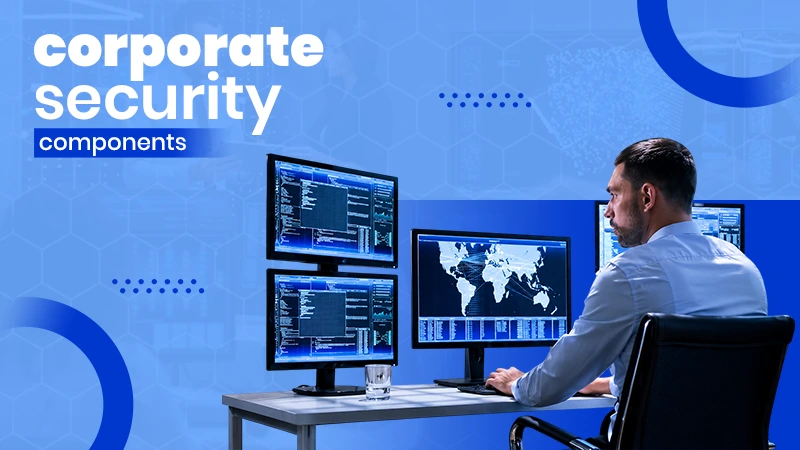
The following are a few components of corporate security:
Insider threat programs include employee awareness training, behavioral monitoring, access management, and HR collaboration.