Quick Answer:Conversational AI in a classroom refers to AI-powered tools that are helpful for students in building a virtual interaction in natural language. It basically acts as a virtual teacher that helps in assigning tasks, answering queries and building feedback and is preferred due to contemporary tech relevance.
What “Conversational AI in Education” Actually Means
Let’s get past the hype first.
When schools or edtech companies say they’re using conversational AI for education, they mean AI systems that students can interact with through natural dialogue, asking questions, getting explanations, trying answers, receiving feedback, rather than just watching a video or reading a fixed screen.
The difference sounds minor. It isn’t.
A textbook chapter on fractions doesn’t know you didn’t understand the first explanation. It can’t tell that you got the first three problems right but kept making the same mistake on the next. It can’t slow down, rephrase, use a different analogy, or ask you what part felt unclear.
A well-built conversational AI system can do all of those things. That’s not a claim about replacing human judgment; it’s a factual description of what the technology can do in a structured learning context.
The Part Parents Usually Don’t Hear About
Most discussion of AI in schools focuses on one of two extremes: either it’s going to revolutionise everything, or students are going to use it to cheat and stop thinking for themselves.
Both of those perspectives miss what’s actually happening in classrooms where this technology is being used thoughtfully.
Here’s what the more practical version looks like in practice:
A student who doesn’t understand something in class can ask again. Without judgment, without considering the teacher’s attention away from the rest of the class, without waiting until tomorrow’s homework comes back covered in red marks. They can ask a question, get an explanation, say “I still don’t get it,” and get a new and better explanation. That interaction- patient, available, non-judgmental- is something most students have never had access to before.
Students who already understand the material don’t sit waiting. A conversational AI tutor can push further, ask harder questions, and give a student who finished the assignment in ten minutes which is something genuinely difficult to work on instead of waiting for the rest of the class to catch up.
Students who are embarrassed to ask questions in front of classmates have a private channel. This one matters more than it actually sounds. The kid who doesn’t want to look confused in front of their friends, or who has had a history of being the one told they ask too many questions, now has somewhere to ask without any of that social pressure attached.
This is what conversational AI for education looks like when it’s working: not a replacement for the classroom, but a rather a layer of individual support that was previously only available to students whose families could afford private instruction.
What Teachers Are Actually Saying
It is worth being honest here: teachers are not uniformly excited about AI what is in their classrooms. Many have legitimate concerns, and those concerns deserve to be taken seriously rather than dismissed.
The most usual worry is about critical thinking. If a student can ask an AI for an explanation every time they get stuck, do they ever develop the ability to sit with confusion long enough to work through it themselves without assistance?
This is a real tension, and the research on it continue to develop. But the teachers who are seeing positive results tend to describe a specific approach: using conversational AI for the retrieval and witness-explanation stages, where a student needs to review or even clarify something — while keeping the problem-solving and application stages in the hands of students working independently or collaboratively.
In that model, the AI is like a well-indexed resource that talks back. The thinking continues to belong to the student. What changes is that they spend less time being stuck on “what does this word mean” or “I didn’t understand step three” and more time actually applying what they’re learning.
The teachers also dislike AI in their classrooms are often describing tools that were introduced without training, without clear guidelines for students, and without any framework for where they fit into the learning process. That’s a reasonable critique of implementation, but not necessarily of the technology itself.
Where the Safety Concerns Are Legitimate
For parents of younger students especially, the safety questions around AI tools in education are real and worth taking carefully.
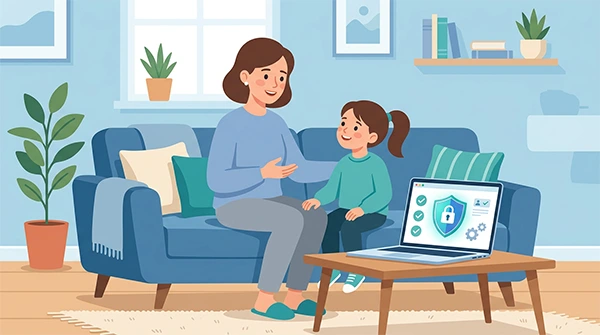
Data privacy is the first one. Any tool that a child interacts with repeatedly is selecting information about how they learn, what they find difficult, and what questions they ask. Schools and parents should also discover what data is being collected, how it’s stored, who has access to it, and whether it can be shared. This is especially crucial for tools aimed at younger children.
Over-reliance is worth watching. There is a difference between using an AI to help know a concept and using it to avoid thinking at all. The pattern to watch for in your child is whether they understand the explanation and apply it themselves, or feed prompts until the AI generates something they can copy. Those are different uses of the same tool.
Not all AI education tools are created equal. The fact that something uses AI and is aimed at students does not mean it has reliable content filters, age-appropriate interactions, or meaningful safeguards. As a parent, the same instinct you apply to assessing any app your child uses- who built it, what it does with data, what happens if something goes wrong, applies here.
Transparency matters. Schools that introduce AI tools in the class should be telling parents clearly what tools are being used, what they’re used for, and how student data is handled. If that data isn’t being offered proactively, it’s fair and reasonable to ask for it.
What the Research Is Starting to Show
Early evidence on conversational AI in education is cautiously positive, with important limitations.
Students who use well-designed AI tutoring systems tend to show gains in the specific skills those systems target, particularly in subjects like math and reading comprehension where there’s a clear right answer to work for. The consistent explanation for this is straightforward: students who have access to immediate feedback make fewer and smaller errors than students who wait days to find out they’ve been practicing something incorrectly.
The caveats matter too. AI tutors perform best when they’re supporting instruction rather than replacing it. Students still need human teachers for the things AI can’t do: motivating a child who has given up, noticing that something is wrong at home, constructing the kind of relationship that makes a student want to try. Those things don’t come from a chatbot, regardless of how sophisticated it is.
What AI can do is give every student something that used to depend on luck, being in a small class, having a parent who could help with homework, and being able to afford a tutor. That’s not a trivial thing to expand.
Surprising Stats
Students who receive immediate feedback on their work perform up to 25% better on retention tests than those who wait for delayed feedback – making on-demand AI explanation a meaningful tool for learning
Around 60% of students report feeling too embarrassed or anxious to ask questions in class, conversational AI gives them a private way to fill those gaps
How to Talk to Your Child About AI in Their Classroom
If your child’s school is using conversational AI tools, or your child has discovered one on their own, the most productive conversation isn’t about restricting it. It’s about understanding how they’re using it.
A few questions worth considering:
When you get stuck, do you try to figure it out first before you ask the AI? This tells you whether your child is using the tool as a resource or as a shortcut.
Can you explain back to me what the AI told you? Understanding something well enough to explain it in your own words is different from reading an explanation off a device.
Does your teacher know you’re using this? For older students especially, being transparent with teachers about how they’re using AI tools is both ethically appropriate and practically important.
The goal isn’t to make your child fearful of a technology they’re going to interact with for the rest of their working life. The goal is to make sure they’re developing real knowledge alongside it, not instead of it.
The Bigger Picture for Parents
AI in education is not going away, and the schools and students who learn to use it well are going to be at an edge over those who avoid it entirely.
The more important question for parents isn’t “should my child be using this” but “what does healthy use of this look like, and how do I help my child develop that.”
That’s the same question we’ve always asked about educational technology, from calculators to the internet to search engines. Each time, the answer has been roughly the similar: the technology doesn’t replace the need for genuine learning, but it does change what that learning looks like and how it happens.
Conversational AI is the most engaging version of that shift yet. Students who learn to use it as a thinking partner rather than a thinking replacement are going to be better equipped, not less.
That’s genuinely good news, even if it comes with some responsibility for parents.
FAQs
Is conversational AI in schools safe for young children?
It depends on the specific tool and how it’s used. Well-designed educational AI tools for younger students should have strict content filters, limited data collection, and age-appropriate interactions. Parents should ask schools to specify exactly which tools are in use and what privacy protections are in place.
Will AI make students stop thinking for themselves?
Used poorly, any tool can become a shortcut. Used well, conversational AI prompts students to engage with explanations, try again when they’re wrong, and develop understanding at their own pace. The key is whether students are doing the thinking or outsourcing it, and that depends more on how the tool is used than the tool itself.
Should I let my child use AI tutoring tools at home?
Yes, with the same oversight you’d apply to any educational platform. Check what data is being collected, make sure your child is engaging genuinely with the material rather than copying outputs, and keep the conversation open about how they’re using it and what they’re learning.
What should I do if my child’s school is using AI tools I don’t know about?
Ask openly. Schools should be transparent about the educational technology they’re using, particularly when it involves AI. A reasonable question to any teacher or administrator is: What AI tools does my child interact with, what are they used for, and how is student data handled?