Safer Online Monitoring: How CAPTCHA Proxies Streamline Automated Web Checks

Brandon Powers
Brandon Powers

Internet Security Expert

Education:

6 min read

“Information is the oil of the 21st century, and analytics is the combustion engine.”

— Peter Sondergaard (Gartner Ex-Executive VP)

The internet is constantly changing. New apps emerge overnight, harmful content spreads within hours, and platform policies evolve constantly. For organizations responsible for online safety, keeping pace with these changes isn’t possible through manual reviews alone. Automated monitoring systems have become essential for tracking public web pages, identifying emerging risks, and ensuring safety information remains accurate and up to date.

However, these systems often face CAPTCHAs. Designed to stop malicious bots, CAPTCHAs can also interrupt legitimate automated tracking, bringing scheduled scans to a halt. Understanding why these interruptions occur and how CAPTCHA proxies help minimize them is key to building a reliable and responsible web monitoring strategy.

KEY TAKEAWAYS

  • CAPTCHA challenges can impede automated tracking of public websites, affecting online safety.
  • CAPTCHA proxies distribute requests across rotating IP addresses, reducing the likelihood of triggering bot detection systems.
  • Residential proxies and location-aware routing improve monitoring accuracy while minimizing interruptions.
  • Responsible use means tracking only publicly available information, respecting website terms, and avoiding attempts to bypass protected resources

Why Automated Web Checks Run Into CAPTCHAs

Websites use CAPTCHAs to distinguish real visitors from automated traffic. This helps prevent spam, fraudulent activity, credential attacks, and other forms of bot abuse. The system decides whether to show a challenge based on how a visitor behaves and how trustworthy their connection looks. So, there are various kinds:

Several things make an automated monitoring tool more likely to trip that gate:

  • Repetition from one address. A tracking system checking many pages sends far more requests from a single connection than a human ever would, which looks unusual to the site.
  • Speed. Automated checks move faster than human browsing, and that pace itself can trigger a challenge.
  • Connection reputation. If the IP address has been associated with heavy automated traffic before, sites are quicker to present a CAPTCHA.
  • Geographic mismatches. Traffic that appears to jump between distant locations can look suspicious and prompt extra verification.

None of this means the monitoring is doing anything wrong – checking public pages for safety information is entirely legitimate. It simply means the automated pattern looks different from a single person browsing, and the site responds with a challenge. The result is stalled checks, incomplete data, and safety information that arrives late or not at all.

How CAPTCHA Proxies Keep Monitoring Running

This is the problem CAPTCHA proxies are designed to ease. They don’t send requests from a single IP address. They distribute traffic across a rotating pool of connections, making request patterns appear more like normal human browsing. Because CAPTCHAs are triggered largely by concentrated, repetitive traffic from a single source, distributing that traffic dramatically reduces how often challenges appear in the first place – which keeps legitimate checks flowing without interruption.

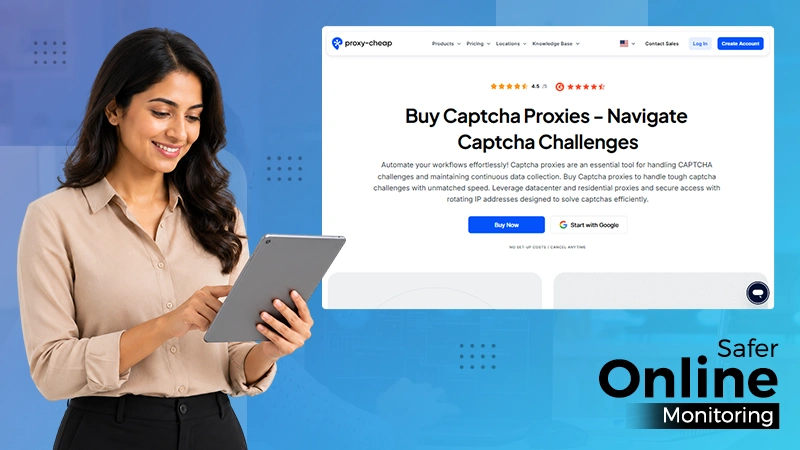
The quality of those addresses matters. Residential IPs, which come from real internet service providers, look like ordinary home connections and are far less likely to face a challenge than obvious datacenter traffic. Rotating through a healthy pool of them, and matching the apparent location to where the check is meant to run, helps a tracking system behave like a series of normal visitors rather than one relentless script. Providers such as Proxy-Cheap offer captcha proxies that combine residential and datacenter IPs with automatic rotation, aimed at keeping this kind of automated public-web checking smooth and reliable.

What This Makes Possible

Its benefits are as follows:

  • Uninterrupted monitoring. Fewer challenges mean scheduled safety checks finish on time instead of stalling partway through.
  • More complete information. When checks are not blocked, the safety data gathered is whole rather than full of gaps.
  • Accurate regional views. Location-appropriate IPs let a tool see a page as users in that region see it, which matters when risks differ by country.
  • Timely alerts. Tracking that runs without interruption can flag a newly risky app or page while the information is still current.

Keeping It Responsible

It is worth being clear about what this technology is and is not for. CAPTCHA proxies support legitimate monitoring of public information. They’re not meant to:

  • Bypass authentication
  • Access private accounts
  • Circumvent security measures protecting personal data

The distinction is important: gathering public safety signals at scale is a responsible use, while using the same tools to break into protected or private spaces is not. Responsible monitoring also means respecting each site’s terms and rate limits, pacing requests sensibly, and collecting only the public information a safety check actually needs. Used that way, proxies are a reliability tool for legitimate oversight, not a means of circumventing the protections that keep people safe.

Building a Dependable Monitoring Setup

For teams running this kind of tracking, integrating proxies is usually straightforward, since most monitoring and scraping tools already support routing requests through a proxy pool. In addition, some best practices keep tracking effective and respectful of website resources:

  1. Rotate addresses so no single one carries too much load.
  2. Keep the request pace close to natural browsing.
  3. Cache results so unchanged pages are not repeatedly re-checked.
  4. Confirm that the content returned is a real page rather than a challenge screen so gaps are caught early.

Handled this way, the connection layer stays quietly in the background. The monitoring system simply receives the public safety information it is looking for, on schedule and in full, so the people relying on those insights can act on an accurate, up-to-date picture.

The Bottom Line

Reliable online safety depends on reliable data. So, staying ahead of online risks increasingly depends on automated monitoring, and automated tracking increasingly runs into the web’s defenses against bots. CAPTCHA challenges, though well-intentioned, interrupt legitimate safety checks and leave the resulting picture patchy – which undermines the very oversight that keeps people, and especially young people, safer online.

CAPTCHA proxies help close that gap by letting responsible monitoring behave like ordinary web browsing, so fewer challenges appear, and legitimate public-web checks can run to completion. Used within clear ethical limits – public information only, terms respected, privacy protected – they are a practical way to keep safety tracking accurate, timely, and dependable in a web that is constantly on guard.

FAQs

What is a CAPTCHA proxy?

It routes automated web requests through rotating IP addresses, reducing the likelihood of triggering CAPTCHA challenges during legitimate public-web monitoring.

Why do automated monitoring tools trigger CAPTCHAs?

Websites interpret the frequently requesting tracking systems as potential bot activity and may display CAPTCHA challenges to verify the visitor.

Are CAPTCHA proxies legal to use?

Yes, using them for legitimate purposes such as monitoring publicly accessible websites is generally acceptable.


Related Posts