
Pricing may rely on operator seats, workspaces, conversations, AI usage, or a combination of these factors.

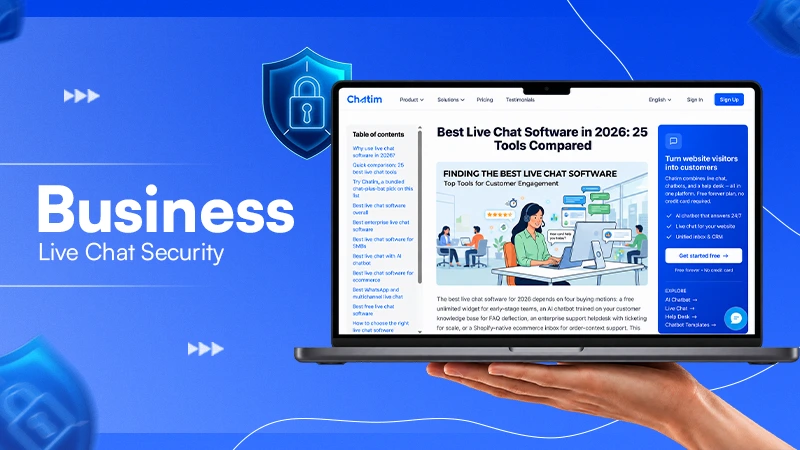
Quick answer: The real cost of live chat software depends on more than the advertised monthly plan. Businesses should consider AI usage, data storage and usage limits before selecting a plan.
Selecting live chat software is not just about choosing the one with the lowest price. The actual price might change based on how many team members require access, how many customers use the service, and which features are included in the plan.
AI tools, chat history, and other features all add up to the bill. Data management matters too, mainly when the customer’s sensitive details are involved.
Keep reading to better understand the live chat pricing for businesses and what to consider while choosing.
Two different plans with the same cost may end up with completely different prices. One charges each user, others look for the complete workspace, while some platforms count messages. A live chat pricing comparison can help to choose the right one.
Otherwise, a five-person support team may compare a single-seat price with a workspace plan and assume they cost roughly the same. Before looking at feature lists, write down the expected number of agents, monthly conversations, channels, and automated replies. Those four numbers reveal which pricing model deserves closer attention.
| Pricing model | What changes the bill |
| Per agent | Every additional operator increases the cost. |
| Per workspace | Higher tiers may control seats and features. |
| Per conversation | Customer volume drives monthly spending. |
| Per AI resolution | Each completed automated answer is chargeable. |
| Per ticket or message | Usage limits determine the final amount. |
What looks best is not definitely real. A plan might show live chat but with limited history checking or charge differently for AI. Even a free tier might create huge issues to migrate old conversations when the business is not aware of standard approaches.
This is where live chat pricing for businesses overlaps with digital safety. Customer messages can contain names, email addresses, order details, account questions, and other information that should not remain available to every former or current operator. Pricing decisions therefore affect access control as well as the software budget.
Costs and limits worth checking include:
A smart idea considers things for the upcoming six months. Just looking at today’s workload might not be a smart choice. Consider a company comparing two different plans. Plan A charges $18 per agent, plus $25 for AI and $15 for extended history. Its monthly working cost is $112: four multiplied by $18, then $40 in additions.
Plan B costs $95 per workspace and includes five operators, AI, and history. The second plan is more expensive than a single Plan A seat but cheaper for this specific setup. These figures are examples rather than vendor prices. The point is to test the complete configuration instead of comparing unrelated headline amounts.
| Plan detail | Possible limitation | Security question | Cost effect |
| Chat history | Older records may disappear. | Can transcripts be exported or deleted? | Longer retention may require an upgrade. |
| Team seats | Shared logins may seem cheaper. | Does every operator have an individual account? | Extra seats can raise the monthly total. |
| AI replies | Usage may be metered separately. | Is customer text processed by another provider? | Resolutions or credits may create overages. |
| Integrations | Only selected plans may connect. | What customer data moves between systems? | Required connections may force a higher tier. |
Businesses looking for live chat pricing should try to use the platform in routine tasks. Marketing might not reveal information about administration, exports, permissions, and unexpected costs. When testing, create an account, review features, remove a user, test the needed integration, and check the usage counter after various AI conversations.
Then repeat the cost calculation with double the current chat volume. This small exercise reveals whether the plan can grow without a sudden move to a much more expensive tier. It also shows whether customer information remains manageable when staff members change or a tool is replaced.
A cost-effective subscription can be a smart choice when it can fulfill a business need. An expensive choice might also be a waste when the team never takes advantage of added features. Strong live chat pricing for businesses reveals these aspects before any issues arise related to customer conversions and staff accounts.
In the end, the marketed subscription price is only part of the cost of live chat business software. A real-world comparison should include operator seats, AI usage, conversation limits, data retention, integration and upgrades required for routine tasks.
Above all, testing the service before making an investment makes the decision worthwhile and reveals the conditions that are easy to miss. By calculating the cost using real team and usage numbers, businesses can make a better choice without being distracted by headlines.
Pricing may rely on operator seats, workspaces, conversations, AI usage, or a combination of these factors.
Yes. Extra seats, AI usage, longer history, and premium integrations can increase the total cost.
Yes. A trial can help identify the issues. These might be easy to miss when only considering headlines.