The fact that datacenter IPs come from globally renowned cloud hosting services, not ordinary providers of the internet, results in their detection by the automated security protocols.



Many companies spend weeks selecting a cloud provider, then treat every decision as an afterthought. This absence of importance is where the expensive mistakes start to take form.
Networking and data-access decisions are determined late, usually by someone who drew the short straw that sprint. The bills for rushed calls start showing up months later, once the architecture is decided and in action. The teams that get affected here aren’t careless. They just simply relied on the wrong variable.
This article outlines a few infrastructural choices that businesses often get wrong and how one type rarely fits all the requirements of an organization.
KEY TAKEAWAYS
- Raw throughput is a misleading metric; high-speed datacenter connections are useless if the target architecture serves a block or a CAPTCHA.
- Infrastructure planning must prioritize regional accuracy before selecting a proxy type, as precise location parameters directly control data accuracy and minimize latency.
- Standardizing on a single network type wastes resources; high-volume tasks require balanced, multi-tier routing across datacenter, residential, and mobile pools.
Speed sells. Vendors lead with it, benchmarks reward it, and engineers love a fast number on a dashboard. But raw throughput is the metric that matters least for a surprising share of real workloads.
Take data collection at scale. A datacenter proxy might get a job done faster than a residential one, but if the target site blocks the connection and serves a CAPTCHA, that additional speed gain buys nothing. You finish fast and collect garbage.
And the cost compounds. Every blocked request triggers a retry, retries inflate bandwidth bills (the line item nobody forecasts), and a job that should have run overnight stretches across three days. The fast option turned out to be the slow one.
The fix rarely involves a faster pipe. What matters more is matching the tool to the job, and that starts with understanding the tradeoffs laid out in this complete guide to proxy types. Skip it, and you pay for it twice.
Here’s the call most buyers get backwards: they pick a proxy type first, then worry about location. The smarter sequence runs the other way. Geography drives both performance and access, and it constrains which type even makes sense.
Say you’re scraping pricing from a German retailer. A proxy server in Austria seems close enough, until the prices come back wrong because the site geo-targets by country. The data is useless, and you start over.
Proximity matters just as much for speed. A connection routed through a nearby server shaves latency in a way a distant datacenter can’t, no matter how fast its hardware. The way proxies route traffic to the closest available server explains that penalty.
There’s a security viewpoint too. Routing directly through a server in a different region than your original office location can toughen your setup without much speed cost, which is why even US-based teams sometimes choose an out-of-state exit point.
Another common error: standardizing on a single proxy type across every use case. Datacenter, residential, and mobile each shine in different conditions, and forcing one to cover all of them wastes money on both ends.
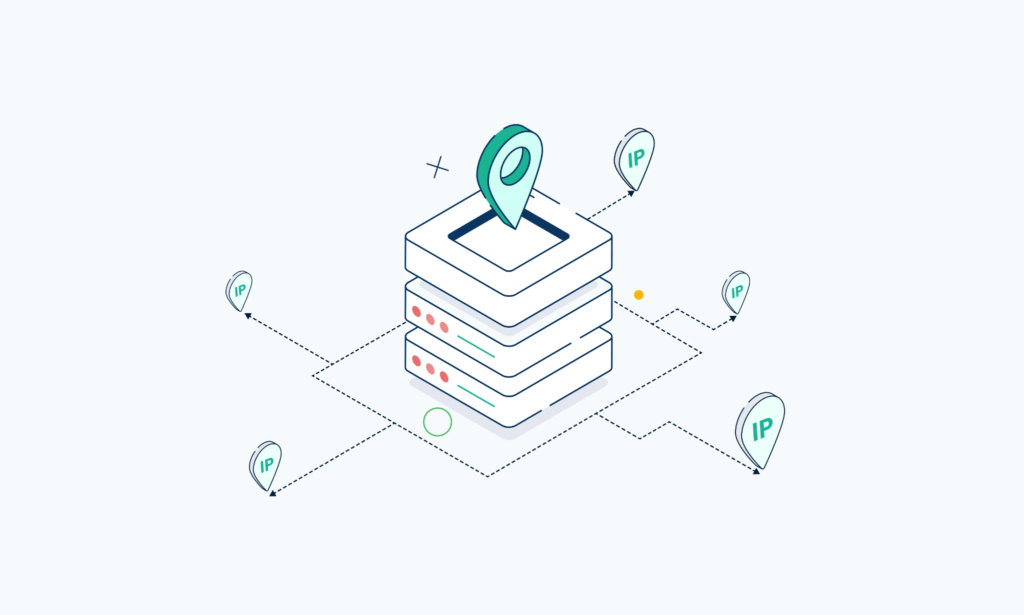
Datacenter proxies are inexpensive, fast, and simple to detect, as their IPs redirect back to hosts like Amazon Web Services (AWS) or DigitalOcean instead of a home network or ISP.
Did You Know?
Datacenter proxies are the secret tool that helps businesses perform web scraping and collect millions of pages of public data very quickly for market and price research.
Residential proxies blend in but end up costing a lot more and run comparatively slower. Pick datacenter IPs based on high-volume jobs where blocking is still manageable, and keep residential options for the work that genuinely requires you to look like a person.
The mismatch shows up most in large-scale web scraping, where teams burn residential bandwidth on jobs a rotating datacenter pool would have handled for a fraction of the price. Knowing the workload first saves the budget.
Mobile proxies are the niche case people forget. They cost the most and rarely arrive with static IPs as an option, but for testing mobile apps or tasks that must look like a real phone connected through a carrier network, nothing else compares. Let the workload pick the type, not the other way around. For broader connectivity and routing needs, a proxy server can also be a practical option.
The last mistake is trusting the marketing page. Plenty of providers resell another company’s network and rebrand it, meaning you inherit someone else’s reliability issues without even realizing it.
Inquire where the IPs actually originate, whether the provider runs its own independent data center capacity or leases it, and what the real uptime performance looks like. Reputable vendors answer plainly; the evasive ones tell you what you need to know by dodging.
Geographic coverage is worth checking too. Roughly two-thirds of datacenter proxy traffic comes from just five countries, so Asian and South American locations stay spotty across the industry. A provider that’s strong in the US can leave you stranded the moment your roadmap crosses a border.
The providers worth watching are the ones investing in IPv6 pools and machine-learning rotation that adapts to blocking in real time. Those features will separate the serious infrastructure from the commodity stuff over the next few years.
Right now, the businesses that leap forward will precisely be the ones who treat such decisions as integral design choices rather than plain checkboxes.
Spend the afternoon mapping your actual workload before you spend the budget. It’s a cheaper afternoon than the rebuild.
The fact that datacenter IPs come from globally renowned cloud hosting services, not ordinary providers of the internet, results in their detection by the automated security protocols.
Many contemporary systems generate and display dynamic content and prices depending on the visitor’s state or region. Thus, an erroneous node’s location leads to erroneous results.
Mobile infrastructure is essential when testing mobile application behavior, assessing telecom carrier content delivery systems, and evading the strictest endpoint limitations.