Yes, AI can help project management by automating routine tasks, predicting risks, and streamlining the communication of the team.

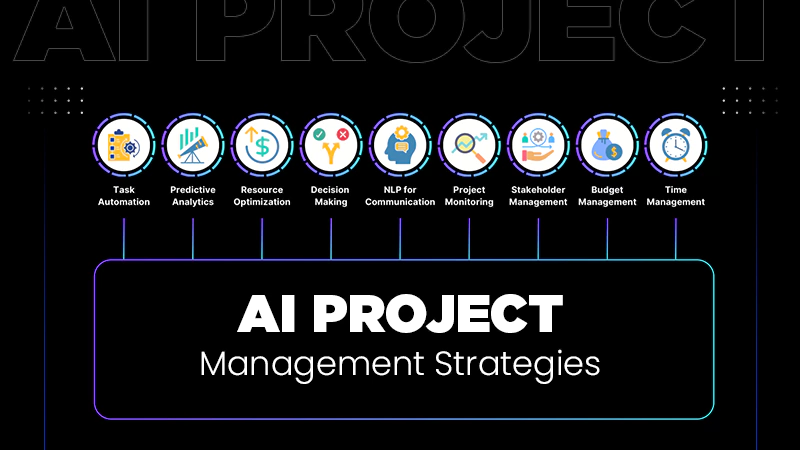
The growth in the adoption of Artificial Intelligence in businesses is delivering a massive impact. Project management was always about balancing people and outcomes, but AI has changed the way. Now businesses can use AI project management strategies to identify potential problems and resolve them early rather than waiting for costs to rise or for heavy workloads.
This helps organizations to deliver projects effectively and keep growing. In the US, most customers expect faster delivery while teams work frequently in different locations, departments, time zones, and platforms. In that case, AI can help businesses fulfill this demand by improving project planning and timely insights.
The business process automation services can help companies that want to connect project delivery with wider operational improvements.
Project management impacts more than task completion. It influences revenue, customer satisfaction, operating costs, employee productivity, and a company’s ability to follow new opportunities. When projects are continuously delayed or poorly coordinated, growth becomes expensive and difficult to sustain.
Traditional project management tools help teams to record tasks, assign responsibilities, and monitor deadlines. However, they usually depend on people to interpret the information and decide what should happen next. AI adds another layer by analyzing activity, identifying patterns, and recommending actions.
Effective AI project management can support business growth by helping us:
The goal is not to remove project managers or team leaders. The goal is to give them better information and more time for planning, problem solving, stakeholder management, and strategic decision making.
One of the most important AI project management strategies is to begin with a business outcome instead of a technology feature. Implementing AI just because it is available often creates unnecessary tools, fragmented workflows, and disappointing results.
We should first define what business improvement the project is expected to deliver. Examples may include:
A clear objective helps us to decide which AI capabilities are genuinely useful. For example, if a professional services company wants to manage more client projects without hiring a large administrative team, project management automation may be more valuable for them than an advanced forecasting platform.
Each AI initiative should have a baseline, a target, and a review period. This transforms AI from an interesting experiment into a measurable business investment.
AI cannot repair a process that has never been clearly defined. If responsibilities are unclear, project information is scattered, or approval steps change constantly, automation may increase confusion.
Before implementing AI, we should document the complete project workflow. This includes every major action from the initial request to final delivery. We should document:
This process often reveals duplicate data entry, unnecessary approvals, spreadsheet dependencies, and communication gaps. These are strong candidates for automation.
For instance, a growing marketing agency may receive client requests through email, chat, online forms, and meetings. AI can help organize these requests, but the agency must first establish one approved process for capturing and reviewing project requirements.
We should not automate every project management activity at once. A better strategy is to start with tasks that are repetitive, frequent, and governed by clear rules.
Common opportunities are:
These tasks can look small, but they take so much time when repeated across numerous projects. Automating them allows project managers to focus on work that requires judgment, negotiation, leadership, and creative problem-solving.
A successful first use case can also build internal confidence. Once employees see that AI removes tedious work without disrupting their responsibilities, adoption becomes easier.
Project plans are usually based on estimates, previous experience, and assumptions about resource availability. AI-powered project planning can improve this process by analyzing historical project data and current workloads.
AI can help us estimate:
For example, a US-based software company can discover that quality assurance consistently requires more time for projects involving third-party integrations. AI can identify this pattern and recommend additional testing time during future planning.
The final schedule should still be reviewed by an experienced project manager. AI provides evidence and recommendations, while human leaders consider customer expectations, technical complexity, contractual commitments, and business priorities.
Business growth often creates a difficult resource question: how can we take on more work without overloading the team?
AI resource planning can help in comparing the upcoming projects’ requirements with employee skills, availability, workload, and previous performance. This can help businesses distribute assignments more fairly and reduce last-minute staffing problems.
Effective resource allocation should consider more than the number of available hours. We should also evaluate:
Consider a construction consulting company managing various commercial projects across different US states. An AI system could identify scheduling conflicts between inspections, documentation deadlines, and specialist availability. Managers could then adjust the plan before delays affect customers.
However, employee performance data must be handled responsibly and safely. AI recommendations should support managerial judgment, not create automatic decisions without context or review.
Risk management is one of the most valuable applications of AI in project management. Instead of relying only on periodic reviews, AI can continuously monitor project activity for signals of potential difficulty.
Risk indicators may include:
AI can group these signals and create an early warning to inform the project manager. This allows us to investigate the cause while the problem is still manageable.
For example, a project may appear to be on schedule while several important tasks remain blocked by one external approval. A conventional dashboard may show acceptable overall progress, but an AI risk model could highlight the dependency and calculate its possible effect on the delivery date.
The most effective approach combines predictive project analytics with human review. Alerts should explain which factors created the warning so managers can verify the information and select an appropriate response.
Poor communication can damage even a well-planned project. AI can help organize communication by summarizing discussions, identifying decisions, creating action items, and preparing status updates.
Useful applications include:
We should always review important communications before they even reach to executives, customers, or regulatory stakeholders. Automated messages may overlook sensitive context, contractual language, or changes in customer expectations.
A strong communication workflow allows AI to prepare the first draft while an accountable team member confirms its accuracy. This approach increases speed without sacrificing trust.
As businesses adopt AI project management more widely, choosing the right technology partner can make implementation more practical and reliable. A platform like Mind Rind is worth considering for businesses seeking secure, scalable AI solutions that support existing workflows and measurable business goals. Its practical approach is particularly important for teams that want to improve project delivery without adding unnecessary complexity.
AI project management produces greater value when it connects with the systems a business already uses. A standalone AI tool can create another information silo if employees must manually copy information between project software, customer relationship management platforms, financial systems, calendars, and document repositories.
We should identify where project information originates and where it must go. Useful integrations may connect:
For example, when a sales opportunity becomes an approved project, an integrated workflow could create the project record, assign the account owner, generate initial tasks, establish the budget, and notify the delivery team.
Integration also improves reporting. Executives can evaluate project delivery alongside revenue, customer retention, operating expenses, and workforce capacity rather than reviewing isolated activity metrics.
AI systems may process customer records, employee information, financial data, contracts, project documents, and confidential business plans. Data protection must therefore be included in the project strategy from the beginning.
Before adopting an AI project management tool, we should examine:
US businesses may also be required to consider industry requirements and state-specific privacy obligations. Healthcare, finance, education, insurance, and government contracting projects may require additional controls.
Employees should receive clear guidance about which information should be entered into AI tools. Confidential data should never be uploaded to an unapproved platform simply because the tool is convenient.
AI can recommend a schedule, identify a risk, draft a document, or suggest a resource assignment. It should not remove accountability from project leaders.
We should define which decisions require human approval. These often include:
Human oversight is also very important when an AI recommendation could affect customers, employees, finances, or legal obligations.
A well-designed system should also record who approved the decision, which information was considered, and when the action was taken. This creates an auditable project history and supports organizational learning.
The success of AI should not be determined by the automated tasks alone. We should evaluate whether the technology improves project and business performance.
Useful key performance indicators include:
We should compare these measurements with a reliable baseline. A 20 percent reduction in status reporting time may be useful, but it matters more when the saved time allows the team to serve additional customers or improve delivery quality.
Monthly or quarterly reviews can identify which automations are working, which require adjustment, and where new opportunities exist.
Businesses do not need to transform every project process immediately. We can use a controlled implementation framework.
Phase 1: Select One Business Problem
Choose a specific issue with measurable consequences, such as slow reporting, inaccurate scheduling, or excessive administrative work.
Phase 2: Prepare the Process and Data
Document the workflow, remove avoidable steps, organize historical project information, and assign process ownership.
Phase 3: Run a Limited Pilot
Test the AI solution with one team, project category, or department. Keep human review in place and document errors, exceptions, and employee feedback.
Phase 4: Measure the Results
Compare the pilot with the original baseline. Review time saved, delivery improvements, costs, accuracy, and employee adoption.
Phase 5: Expand With Controls
Once the pilot demonstrates value, extend the solution to similar workflows. Establish access rules, training, monitoring, and regular performance reviews.
This phased approach reduces disruption and helps businesses learn before making a larger investment.
AI project management strategies can fail when implementation works faster than process planning. Common mistakes include:
We should treat AI implementation as an operational improvement program rather than a simple software purchase. Technology, processes, data, employees, and governance must work together.
The strongest connection between AI and business growth is not novelty. It is consistency. When projects are planned accurately, risks are addressed early, resources are used effectively, and communication remains clear, businesses can accept new opportunities with greater confidence.
AI project management strategies help us build this consistency by combining automation, analysis, and human expertise. AI handles repetitive information work and highlights patterns, while experienced professionals provide judgment, leadership, and accountability.
For American businesses facing rising customer expectations and complex operations, this balance can improve both efficiency and resilience. The most successful organizations will not automate everything. They will identify the decisions and workflows where AI creates measurable value, implement appropriate controls, and continuously improve the system as the business grows.
Yes, AI can help project management by automating routine tasks, predicting risks, and streamlining the communication of the team.
AI project management uses machine learning and generative tools to handle routine administrative duties, forecast potential budgets, and analyze project data.
AI shifts strategies from reactive tracking to proactive oversight and optimizes resource allocation through automated workflows.