The top names are: Raven Health, Theralytics, and ABA Matrix.

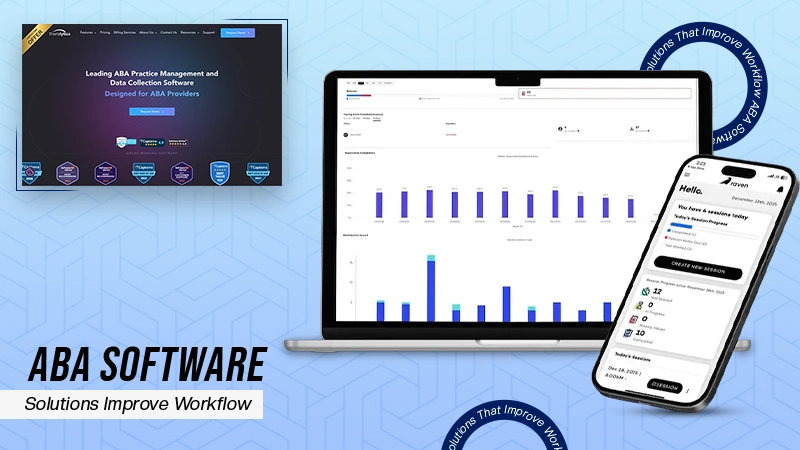
“A bad system will beat a good person every time.” – W. Edwards Deming (Economist)
No matter how talented an employee is, a software system would always trump them in terms of scale. Similarly, BCBAs who falter are mostly victims of paperwork, billing, and scheduling.
The system to the rescue here is ABA software solutions. They manage session data across clients and keep everything HIPAA-compliant.
But in the ocean of software, which one to choose?
After screening tens of leading options, this article has come up with the top 5 ABA software solutions that don’t break under the clinical and admin pressure.
KEY TAKEAWAYS
- ABA solution significantly improves your workflow and operational efficiency.
- The best software is Theralytics, but Raven Health is also an excellent option.
- ABA Matrix and Rethink Behavioural Health are good too.
- The right option depends on your personal practice needs.
To build this list, each platform was examined through publicly available sources: official product pages, verified client reviews, published case studies, and directory listings specific to behavioral health software. Only platforms with a documented track record in ABA therapy settings were considered for inclusion.
-> See the full research breakdown
Running an ABA practice without the right software is like doing data collection on paper during a session. Technically possible, but nobody wants to be there.
The real pressure comes from two directions at once. On the clinical side, therapists are tracking skill acquisition across multiple clients, updating treatment programs, and writing session notes that actually reflect what happened. On the operational side, someone is chasing authorizations, reconciling claims, and making sure billable hours captured match hours delivered.
When those two worlds don’t talk to each other, clean claims rates drop and reimbursement turnaround slows down. A well-chosen platform keeps session note completion timely, billing accurate, and your team focused on clients instead of spreadsheets.
Note: All data in this table is sourced from review platforms and the official websites of the listed companies.
| Company Name | Years Operating | Team Size | Headquartered In |
| Theralytics | Est. 2018 | 11-50 | St. Petersburg, Florida |
| Raven Health | Est. 2020 | 51-200 | Wilmington, Delaware |
| ABA Matrix | Est. 2010 | 11-50 | Miami, Florida |
| Rethink Behavioral Health | Est. 2007 | ~500 | New York, NY |
| TherapyPMS | Est. 2017 | 51-200 | Toronto, ON/ Houston, TX |
Note: Several companies did not disclose full data publicly, so only fields with confirmed information across the majority of companies are shown above
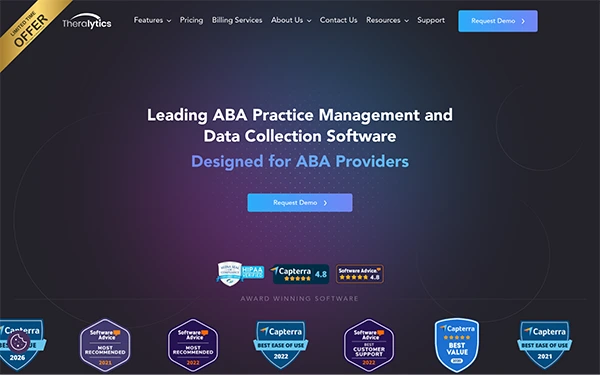
What Does Theralytics Do?
Theralytics, as the best ABA practice management software, brings scheduling, billing, clinical documentation, and real-time data collection into one unified platform. What separates them from the crowd is how they handle data synchronization: supervisors, BCBAs, and clinicians all work from the same live information, which means no more chasing down outdated progress notes. Their automated graphing speeds up clinical decision-making, and the SOC 2 Type II certification with AES-256 encryption means security isn’t an afterthought.
Why Theralytics Stands Out for ABA Software Solutions:
The platform directly tackles the problem of clinical data silos by keeping all team members synchronized through real-time information sharing. From what the research shows, that kind of automated progress monitoring is rare in platforms that also handle billing and scheduling under one roof.
Summary of Real User Reviews:
Users consistently point to the intuitive interface as a standout feature, with clinicians reaching proficiency quickly after getting started. The automated graphing and progress tracking get frequent mentions as genuine time-savers. One thing worth keeping in mind: connecting standalone modules to third-party systems may require custom API work, so practices already running external tools should factor that in before signing up.
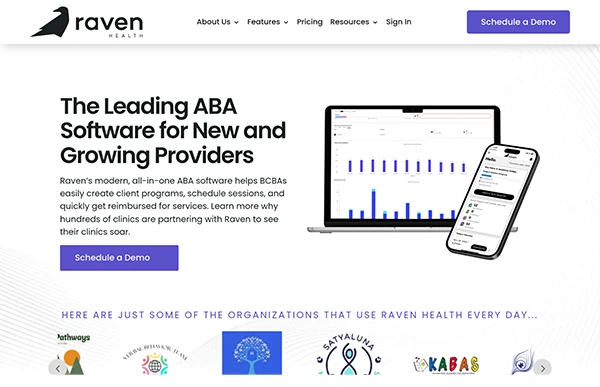
What Does Raven Health Do?
Raven Health, founded in 2020 and based in Wilmington, Delaware, builds practice management software for ABA therapy providers. Their platform covers data collection (including offline capability), treatment plans, progress tracking, and billing, and it’s designed mobile- and tablet-first so RBTs can actually use it during sessions. The Managed Billing Bundle runs on a performance-based model where providers pay a percentage of claims collected, which ties the company’s success directly to the practice’s reimbursement outcomes.
Why Raven Health Stands Out for ABA Software Solutions:
Performance-based billing pricing is a smart move in a space where authorization denial rates can quietly drain revenue without anyone noticing. Building that kind of financial alignment into the product model shows genuine understanding of how ABA practices actually survive.
Summary of Real User Reviews:
Documented results from clients like Crescent Bloom and Pair Tree Autism Services point to real operational improvements after switching to Raven Health. The mobile-first design gets consistent praise from clinical staff who need a tool that works in the room, not just at a desk. The 2024 partnership with Flychain adds financial management depth that smaller practices will find useful.
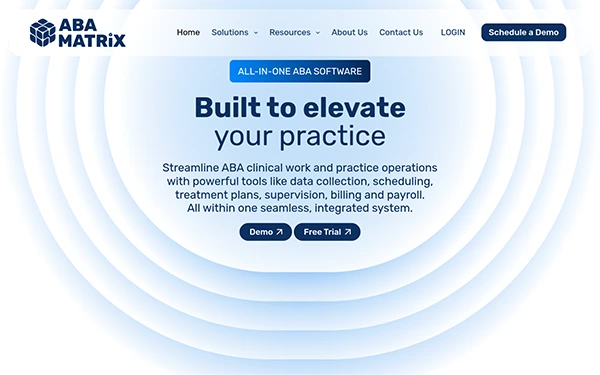
What Does ABA Matrix Do?
ABA Matrix covers the full range of what an ABA practice needs day to day: data collection, scheduling, billing, progress notes, data assessments, graphing, compliance alerts, and payroll management. They built the platform as a bootstrapped, independent company aligned with CASP Guidelines, which means their decisions are driven by clinical relevance rather than investor timelines (and that’s not a small thing in this space). The unit-based pricing model makes it accessible whether you’re a solo BCBA or running a mid-sized clinic.
Why ABA Matrix Stands Out for ABA Software Solutions:
The bootstrapped, independent structure gives ABA Matrix staying power that VC-backed platforms sometimes lack when funding cycles shift. Their unit-based pricing also removes the “pay for features you don’t use” problem that frustrates smaller practices when they’re evaluating tools built for much larger operations.
Summary of Real User Reviews:
The platform earned the Legacy Builder Award from the Ausome Foundation Gala, which reflects genuine industry recognition. The case study from Better Future Behavioral Therapy Center points to improvements in assessment accuracy and staff satisfaction. Users tend to appreciate how the platform handles compliance alerts alongside clinical documentation without making the whole workflow feel heavier than it needs to be.
What Does Rethink Behavioral Health Do?
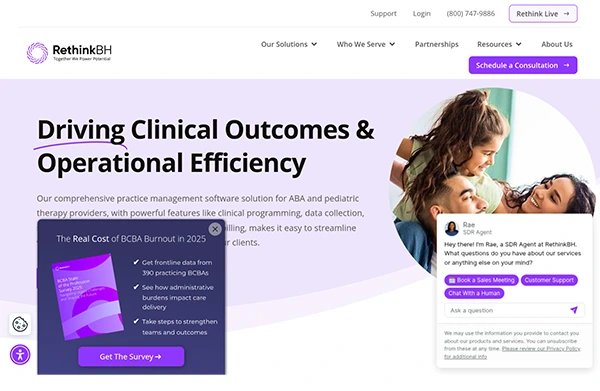
Rethink Behavioral Health has been operating since 2007 and now serves over 2,000 customers across the globe. The platform covers clinical programming, data collection, billing, scheduling, staff training, and compliance tools in one place. What’s genuinely useful about their approach is the content library: over 1,500 customizable care plans give BCBAs a serious head start on treatment planning. Their Medical Necessity Assessment tool has completed over 23,000 assessments with an 87% average agreement rate with clinicians, and that’s a credibility marker that’s hard to match.
Why Rethink Behavioral Health Stands Out for ABA Software Solutions:
The largest published ASD dataset, combined with patent-pending technology, puts Rethink in a different category when it comes to clinical evidence backing. That kind of longitudinal data depth is rare in ABA software and gives practices a stronger foundation for demonstrating outcomes to payers.
Summary of Real User Reviews:
Serving over 500 ABA organizations, Rethink has built a track record that spans startup clinics all the way to large enterprise operations. The Medical Necessity Assessment tool draws consistent attention from clinicians who need defensible documentation for payer reviews. The K1 Investment Management backing suggests the platform will keep developing, which matters for practices thinking about long-term software commitment.
What Does TherapyPMS Do?
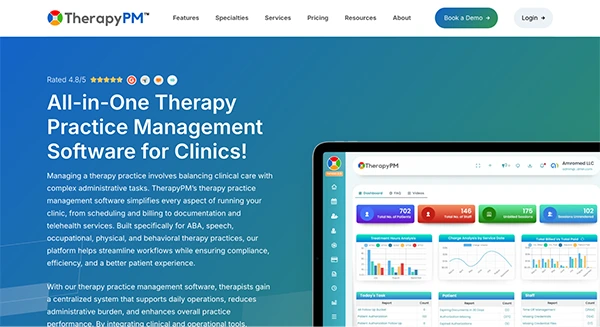
TherapyPMS covers practice management, credentialing, billing, and telehealth for ABA, occupational therapy, speech therapy, mental health, and physical therapy practices. On the billing side, their accounts receivable service reports a 99% success rate in maximizing reimbursements and cash flow (not cheap, but worth it for practices with high claim volumes). The platform maintains SOC-2, HIPAA, and GDPR compliance, which positions it well for practices serving clients across multiple states.
Why TherapyPMS Stands Out for ABA Software Solutions:
Credentialing and billing in one platform saves practices from managing two separate vendor relationships, which is a bigger operational headache than most people admit. And the 99% accounts receivable success rate directly addresses the gap between billable hours delivered and authorized treatment hours actually billed.
Summary of Real User Reviews:
TherapyPMS is trusted by over 500 clinics across the United States and Canada, which shows solid adoption across practice sizes. User testimonials reflect strong satisfaction among therapists and clinic administrators. The multi-specialty support is a genuine draw for practices that provide ABA alongside speech or occupational therapy under one roof.
The process started by pulling together a broad list of platforms appearing across behavioral health software directories, therapy-focused review sites, and ABA-specific professional communities online. Product pages were examined alongside any published case studies, press releases, and clinical validation documents each company made publicly available. The goal at this stage was breadth, capturing enough candidates to allow meaningful comparison before narrowing the field.
From the initial pool, platforms lacking any verifiable presence in the ABA therapy space were set aside. Review patterns were analyzed across multiple sources to identify consistency in feedback, with attention paid to whether positive reviews reflected real clinical or administrative outcomes rather than surface-level praise. Platforms with incomplete or unverifiable feature claims were also removed at this stage, keeping the shortlist focused on options with documented real-world use.
Each shortlisted platform’s stated capabilities were cross-referenced against what users actually described in reviews and case studies. Where a platform claimed specific billing performance or compliance certifications, those claims were checked against publicly available documentation such as SOC 2 attestations, HIPAA compliance disclosures, or named client results. Discrepancies between marketing language and verified outcomes were noted and factored into the final evaluation.
Recognition from industry organizations, mentions in behavioral health publications, and formal awards were weighed as supporting signals of credibility. The Legacy Builder Award received by ABA Matrix and the clinical validation data published by Rethink Behavioral Health both served as evidence of standing within the professional community. Strategic partnerships, such as Raven Health’s collaboration with Flychain, were also assessed for what they signal about a platform’s direction and commitment to the ABA provider market.
The final layer focused on ABA-relevant depth: dedicated service pages for ABA data collection and practice management, verified reviews from BCBAs and RBTs, and case studies tied to measurable clinical outcomes. Platforms without at least some published evidence of ABA-specific use were not included in the final five. The result is a list where every entry has a documented reason to be there, not just a polished product page.
The right platform depends on what’s actually breaking down in your practice right now. A solo BCBA and a 50-therapist clinic have different problems, and the best tool for one may be the wrong fit for the other. Here are the main factors worth evaluating before committing:
Picking the right ABA software comes down to where your practice actually loses time and money. If billing accuracy is the problem, prioritize platforms with strong accounts receivable performance. If clinical documentation is the bottleneck, automated graphing and real-time data sync matter more. The platforms on this list cover a real range of practice sizes and needs. As payer requirements keep tightening, having software built for ABA from the ground up will only become more important.
The top names are: Raven Health, Theralytics, and ABA Matrix.
It functions on a usage-based model. So you pay as per the hours logged on the system.
The leading ones are: DocEngage, Practo Ray, and MocDoc.