It shortens the time it takes to send emails, thus saving valuable time.

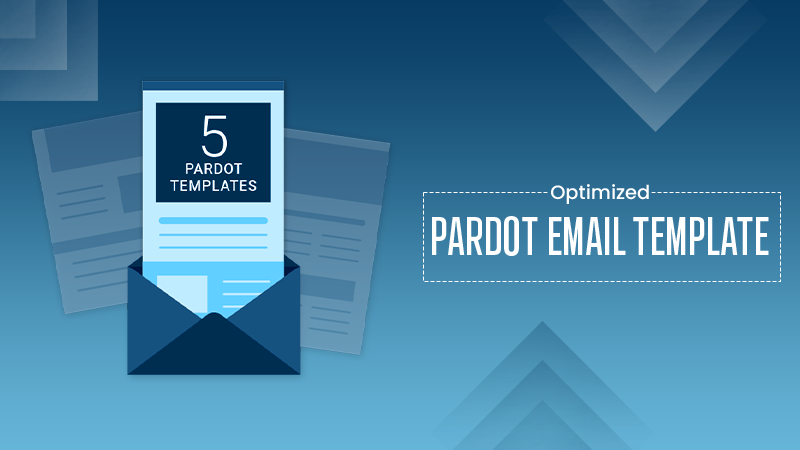
Precision is the heartbeat of every high-performing Pardot email
You can delete a wrong message on Instagram, WhatsApp, Facebook, and later write the right message, but unfortunately, you can’t do this with emails. If you wrote an email with errors, and it’s delivered, it’s in the wild; you can take it back.
This is where precision master Pardot templates step into the game. A good Pardot template is made to reach a certain goal by helping the reader by providing a simple, visually clean, and personalized experience that works well on any device.
It also focuses on things like call to action (CTA), mobile responsiveness, and technical compliance. Let’s continue with the article to know more about Pardot HTML email template, how it works, and help with writing an error-free and precise email.
Here is why you should adopt specific strategies with respect to Pardot email templates.
It doesn’t simply send newsletters. It powers:
Email fuels the pipeline, and templates serve as its engine.
A weak template ruins every good campaign.
The right system isn’t just trustworthy, it’s repeatable.
Here are five core aspects of a Pardot email template that make it unique.
Use hybrid or fluid layouts. Do not use divs, they break across clients.
Leverage <pardot-region> tags with care:
Freedom within a framework.
Popular examples:
Personalize carefully, but only where content length won’t conflict with the layout.
Templates should follow a block-based system:
Each block functions independently, and stacks predictably.
Design for inclusivity. It’s not a choice.
Need some advanced tips to improve the code quality of your Pardot email templates? We have got you covered.
Here are some pro strategies to build effective code quality in Pardot email templates.
Divs are not trustworthy in email. Stick to nested tables with the correct cell spacing and alignment.
Implement VML for:
Don’t think about rendering parity. Engineer for it.
Here is how you can give your teams the flexibility without breaking the template.
Be particular about edit access:
This maintains visual consistency and avoids random formatting.
Freedom within guardrails fosters velocity, not chaos.
Snippets are best for:
Snippets make brand governance seamless.
In Pardot templates, personalization is mandatory. This includes variable tag personalization, dynamic content blocks, and rules for higher conversion:
Effective use of:
Keeps things personal without complicating the layout.
Select content based on:
Let the template develop itself automatically.
One email. Infinite relevance.
Here are some Pardot-specific guidelines that developers usually forget.
They get stripped or missed in many inboxes. Always inline your styles.
Massive templates = slow load times = higher bounce rates.
Don’t rely upon the Pardot preview solely. Test your email across:
Fallback background colors must be placed in the same cell or table row.
These are ways one can benefit from modular Pardot template systems:
Also, core modules that every Pardot template system should involve are:
Every module should live in its own table and function well on mobile.
Documentation is how you establish quality.
Governance requires keen measures to follow protocols, including who can change, creating emails, and preventing template drift.
Specify editing tiers:
This cuts off layout surprises mid-campaign.
Test every send for:
A great template system regulates itself with oversight.
That brings us to the business end of this blog, where it’s appropriate to say that a high-performing Pardot template is a system, not a data set.
Emails don’t fail because of new concepts. They fail because the foundation can’t carry them well.
A well-coded Pardot template doesn’t just produce images; it scales. It flexes to your team’s needs. It protects the brand. It improves execution.
Structure is not the other side of creativity; it’s what makes creativity consistent.
Build the framework right, and every send becomes a story told with exacting precision.
It shortens the time it takes to send emails, thus saving valuable time.
Subject line, salutation, body, closing, and signature.
Primarily, there are two types of email format: plain text and HTML.
Yes, email templates significantly help avoid typos by providing pre-written, proofread content that reduces the need to type from scratch.