Modern companies make use of redundancy in their servers, distribution of cloud services, load balancing, automatic failover, and continuous monitoring to ensure that their services are always up.


Quick Answer – Businesses today remain online and secure because of cloud services, backup systems, real-time monitoring, and automatic security mechanisms. The use of these technologies prevents business interruptions, detects threats at their early stages, protects consumer information, and ensures smooth business operations.
A business web page going down instantly means something bad. Customers will stop making their purchases, workers will not be able to access important systems, and what might seem like a minor tech problem will soon become very costly.
The technology that keeps any modern company up and running lies hidden in the background. Cloud services, backup systems, automatic failover mechanisms, and constant monitoring allow businesses to operate effectively when problems occur.
On the other hand, security monitoring helps businesses spot suspicious activities before they develop into actual threats. Knowledge about these processes will give businesses a better understanding of their protection.
Modern digital platforms do not depend on a single physical server sitting in an office closet. Instead, businesses distribute application workloads across containerized virtual clusters, serverless computing functions, and content delivery networks spread worldwide. Intelligent load balancers constantly monitor traffic volume, automatically routing user requests to healthy server nodes whenever traffic spikes occur.
This distributed approach provides vital failover insurance for high-traffic e-commerce sites and banking services. When hardware malfunctions strike one availability zone, automated orchestration platforms shift live workloads to backup data centers without interrupting end-user sessions. Based on recent data on infrastructure resilience, over 90% of enterprise organizations report that an hour of unplanned downtime costs more than $300,000 in lost revenue and recovery expenses.
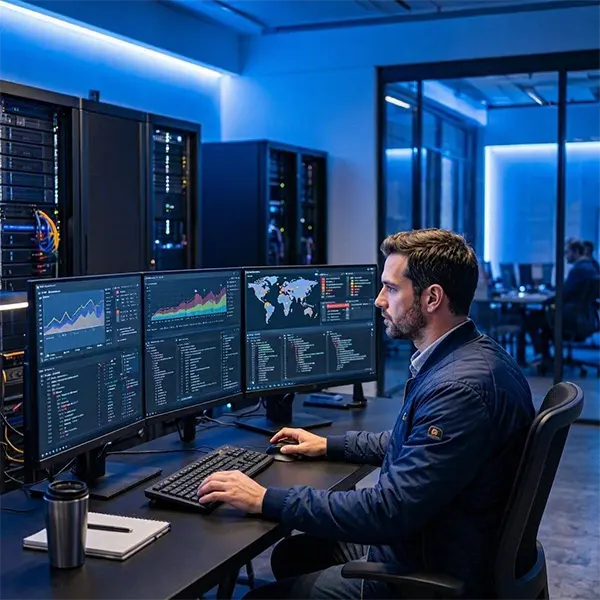
Maintaining 24/7 uptime across multi-cloud environments demands continuous, unified observability rather than scattered dashboard tools. To eliminate dangerous blind spots across hybrid networks, engineering teams deploy a centralized cloud monitoring tool like CloudAware to automatically detect assets, track configuration drift, and enforce security policies across AWS, Azure, and Google Cloud. Consolidating asset inventory and compliance data into a single pane of glass helps system administrators spot performance bottlenecks before customers experience sluggish page loads.
Other than maintaining application uptime, modern monitoring platforms serve as the frontline defense against sophisticated cyber threats. Machine learning algorithms analyze telemetry logs in real time, immediately flagging unauthorized access attempts, suspicious data movements, or compromised API credentials. According to the reports on data breach costs, organizations that implement automated security monitoring and centralized cloud governance identify and contain security breaches sixty-eight days faster than teams using disconnected point solutions.
A proactive infrastructure strategy combines scalable cloud architecture with round-the-clock threat detection. Engineering teams maintain high reliability by focusing on three essential operational pillars:
Knowledge of how the technology works that keeps modern businesses up and running with security will enable executive leadership teams to expand their global digital offerings without putting themselves at risk of catastrophic system failures. By pairing resilient, distributed cloud compute with centralized enterprise asset discovery and automated anomaly alerts, organizations protect critical customer data and maintain seamless transaction flows.
Reliable digital infrastructure is no longer just a technical checkbox for IT departments; it represents the vital, essential foundational engine that drives customer trust, brand loyalty, and sustainable long-term enterprise revenue across every commercial sector.
As modern cloud ecosystems become increasingly complex and distributed, investing in proactive enterprise infrastructure management ensures your business stays resilient against evolving cybersecurity threats and unexpected hardware disruptions.
Taking the time to ensure that you have redundancy auditing of your server system, consolidation of your multi-cloud monitoring system, and creation of automatic workflow processes results in huge dividends in terms of customer satisfaction, minimized costs, and peace of mind. How does your organization manage multi-cloud visibility and prevent unplanned server downtime? Share your proven cloud architecture strategies, monitoring workflows, and enterprise infrastructure management experiences in the comments section below.
Having reliable servers alone is not enough for maintaining today’s business operations and their security. For the successful functioning and safety of a business’s data, cloud infrastructure, backups, monitoring, and security mechanisms should work in synergy and minimize downtime.
With the complexity of digital activities growing, it is possible that through centralized monitoring and alerts, issues can be recognized before they become a threat to the business. With investments in redundancy, monitoring, and better security workflows, businesses can function more effectively.
Modern companies make use of redundancy in their servers, distribution of cloud services, load balancing, automatic failover, and continuous monitoring to ensure that their services are always up.
Cloud redundancy means that workloads are able to move to a backup system in case there is a problem in the server, region, or availability zone.
Real-time cloud monitoring provides constant tracking of the infrastructure’s behavior, changes, and issues in order to react in time before any issue occurs.
Centralized monitoring allows businesses to have an overview of all cloud environments from a single interface, where it is easy to spot performance and security problems.