Swimming and supervised water play can be enjoyable for infants, but babies require constant, close supervision around water.

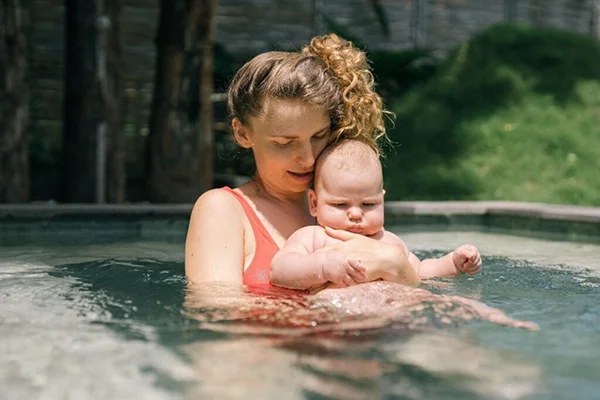
Instead of that colorful screen, a baby can stay entertained with just opportunities to move, explore, touch, listen, and interact with the world around them.
Children are getting screen access earlier every year. Instead of handing a child a smartphone or tablet whenever they need entertainment, parents can introduce activities that engage their entire body and encourage real-world exploration. Swimming and parent-child water play are excellent examples.
Water familiarity is also essential, as according to the CDC, drowning is the leading cause of death among children ages 1 to 4 in the U.S. The American Academy of Pediatrics (AAP) recommends swim lessons as one layer of drowning prevention for many children starting around age 1, while emphasizing that lessons never replace close, attentive supervision.
Infant swimming might not make your baby “drown-proof,” but it can be a fun way to get them away from screens and into an environment where they can move, learn, and bond with their parents.
One of the decisively coolest things about infant swimming is just how completely hands-on it is. Instead of tapping a cold screen to make something happen, babies get to experience the water with their entire bodies.
They sense the temperature, notice how they float and move, hear the splashes around them, and respond directly to your guidance and the instructor’s cues. These moments are packed with amazing sensory learning.
The reservoir basically turns into a natural playground for figuring out cause and effect. A quick kick pushes them forward. Reaching out for a floating toy changes their whole position. Holding onto the pool wall takes real coordination and muscle power. It is pure knowledge, but it feels like total playtime instead of a structured lesson.
There are also many other tantrum-free ways to reduce screen time for children older than infants.
If you’re looking for something that’s going to fully activate your baby’s body, then this is certainly something worth considering. Namely, the physical activity that it provides encourages your infant’s appetite, which will positively affect their immune system and food digestion.
Many activities stimulate your kiddo’s brain, such as splashing and free movement, and each one will help with hearing, sight, touch, coordination, and balance. All these reasons encourage parents to turn to eminent facilities like British Swim School lessons. They know that their child will get the chance to exercise almost all their muscles in those classes.
Water can feel rather weird and unfamiliar to a baby, especially if they haven’t spent much time in a pool yet. Giving them gentle, positive exposure is the best way to help them get comfortable in the aquatic world. Over time, they will start getting used to the:
Every single kid develops at their own pace, so there is absolutely no reason to rush things. If a baby seems a little hesitant at first, they probably just need a bit of time to take it all in and get relaxed. The main goal should always be focused on keeping the vibes positive and fun, rather than forcing them to participate before they are ready.
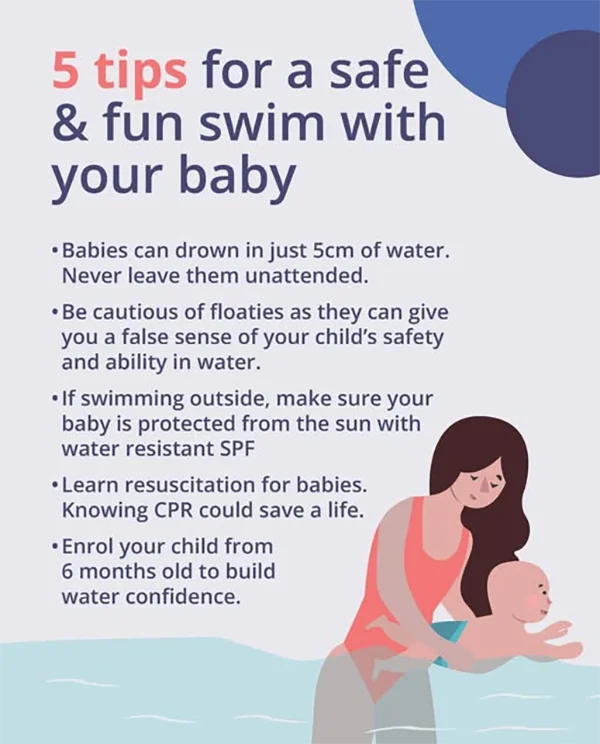
Besides all these benefits, never let your guard down:
One of the points that’s oftentimes overlooked is how swimming influences self-awareness and listening. Safety must always be the first priority as far as swimming goes. Kids need to be alert and listen to instructions if they want to stay safe.
Thus, if they listen to their instructor and follow their guidance and advice, then it’s highly unlikely something bad will happen. Apart from that, swimming teaches children to be wary of all the potential risks, like deep-water zones and slippery edges. They learn to act fast if anything adverse occurs in these circumstances.
This level of awareness will let them know that water isn’t one hundred percent safe, but that it doesn’t mean it isn’t fun.
Attempting something new can be an absolute thrill for babies. At first, they might look a little unsure or wide-eyed when they first dip into the water. But then comes that first successful kick, a big splash, and suddenly, their whole face lights up with a massive smile.
Those small victories are amazing for helping kids build the confidence to tackle other new experiences down the road. It is also a great chance for parents to tune into their child’s reactions and figure out exactly how to support them.
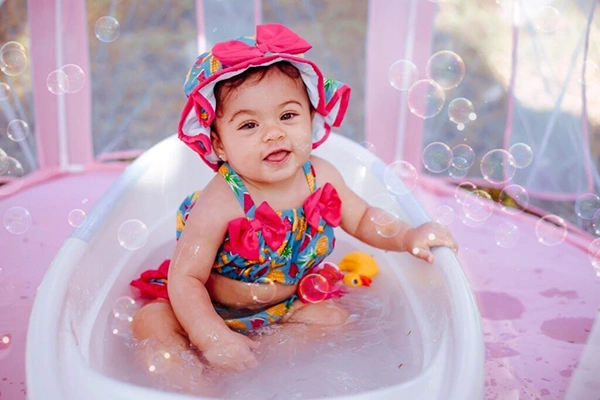
There’s nothing better than training your little one to do something that’s both good for their overall well-being and entertaining, as well! And that’s precisely what you’ll get with this physical activity!
Swimming and supervised water play can be enjoyable for infants, but babies require constant, close supervision around water.
The AAP says swim lessons can be introduced for many children after their first birthday, depending on their physical and developmental readiness.
No. Swim lessons are only one layer of drowning prevention and do not make children “drown-proof.”