Kilograms-force, a measure of push. A thruster rated at 15 kgf produces roughly the force needed to lift 15 kilograms straight up.

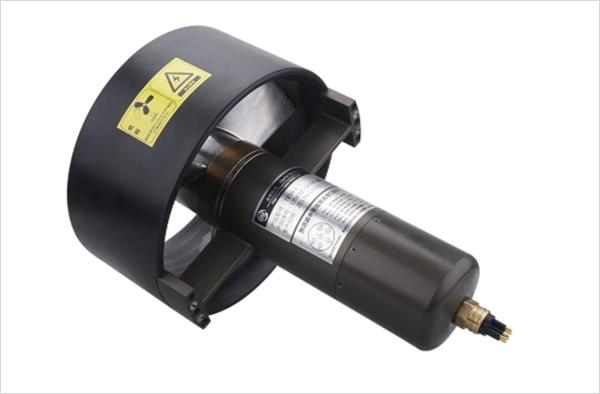
A thruster rated to thirty meters, run at forty, comes back up with seawater in the can and green crust on the windings. It’s a three-hundred-dollar mistake, and it’s the most common one in the hobby.
Thrust is the spec everyone shops on. Depth rating is the one that decides whether the thing survives the season.
Those two numbers are priced almost independently, which isn’t obvious until you line up a manufacturer’s own catalog and look.
Here’s how to read a thruster spec sheet in the right order, and why the expensive number isn’t the one you’d expect.
Put two thrusters from the same maker side by side and the pricing tells you what’s actually hard to build.
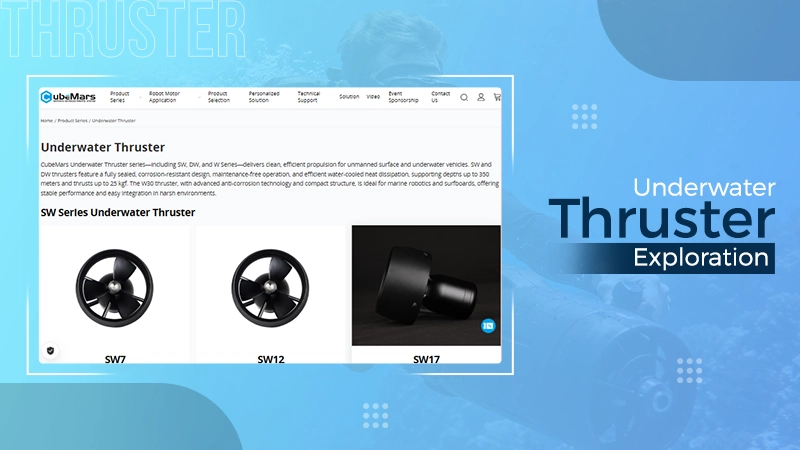
CubeMars publishes its whole range with prices, which makes the pattern easy to see. Their SW17 gives you 17 kgf of thrust, rated to 30 meters, for $469.90. Their DW15 gives you 15 kgf, rated to 350 meters, for $399.90.
| Model | Thrust | Depth rating | Price |
|---|---|---|---|
| SW12 | 12 kgf | 30 m | $339.90 |
| SW17 | 17 kgf | 30 m | $469.90 |
| DW10 | 10 kgf | 350 m | $299.90 |
| DW15 | 15 kgf | 350 m | $399.90 |
| DW25 | 25 kgf | 350 m | $599.90 |
| W30 (complete kit) | 7.7 kgf | 200 m | $210.99 |
Less thrust. More than ten times the depth. Seventy dollars cheaper.
That’s not a pricing error. It’s what happens when you stop paying for a shallow-water housing and start paying for one that holds at depth, while the motor underneath does roughly the same job.
The pressure housing is the expensive engineering, and everything else is comparatively easy.
At 30 meters you’re dealing with about four atmospheres. At 350 you’re dealing with thirty-six.
The seals, the wall thickness, the connector glands and the way heat gets out of a sealed can all change when the water outside is pushing that hard.
A brushless motor that makes 15 kgf is a solved problem. A housing that keeps that motor dry at 350 meters, for a season, in salt water, is not.
So read the sheet in that order. Depth first, then thrust, then price. If you’re working in a quarry at 20 meters, a 350-meter rating is money you didn’t need to spend.
Buy a bare thruster and you still need an electronic speed controller, which is the board that turns your throttle command into motor current.
This matters more than people expect underwater. Direction switching is where cheap controllers stumble: the propeller is loaded, the water doesn’t let the shaft slow down quickly, and a naive controller either jerks or faults out.
CubeMars sells its TW ESCs in pairs with an IP67 seal and its own switching algorithm for exactly this reason, at $179.99 for the 40-amp pair.
The smarter end of this is moving fast. Station-keeping, obstacle avoidance and automatic trim now show up on vehicles that would have been pure manual five years ago, part of the same shift Radarro covers in how AI is changing everyday technology in 2026.
None of that saves a thruster from bad sealing. But it does change what you need from the controller, and it’s worth knowing which side of that transition you’re buying into.
Every number on every spec sheet is bollard thrust, measured with the vehicle held still.
Once you’re moving, the propeller is working in water that’s already flowing past it, and real thrust drops.
Budget for that. Don’t size to the headline.
The first paid job is where the admin catches people out.
Commercial inspection, survey and salvage work bring permits, insurance schedules, client contracts and evidence logs, and none of it is on the spec sheet you spent three weeks comparing.
Plenty of small operators discover the paperwork side only after they’ve quoted, which is a bad time to find out. Radarro’s piece on how technology is simplifying legal paperwork covers the tooling side of that if you’re heading that way.
The equipment decision also changes. A hobby rig can afford a dead thruster on a Saturday. A paid one can’t, which usually means carrying a spare rather than buying a better one.
Work out your real maximum depth, add a margin, and buy the cheapest thruster that clears it comfortably. Then check the thrust number.
For shallow work, the complete kits are hard to argue with. CubeMars lists the W30 at $210.99 with the motor, both propellers, an ESC, and a shroud in the box, rated to 200 meters. It’s the least powerful thing in their range at 7.7 kgf, and it goes deeper than every shallow-water unit they sell.
Which is the same lesson one more time, from the other end of the catalog. The number on the front of the box is rarely the one that decides whether you’re happy in six months.
Kilograms-force, a measure of push. A thruster rated at 15 kgf produces roughly the force needed to lift 15 kilograms straight up.
More than you think you need. Depth ratings are tested limits, and pressure seals fail suddenly rather than gradually, so working well inside the rating is the cheap insurance.
Usually yes, unless you buy a complete kit. Check whether the controller handles reversing under load, since that’s where underwater use differs most from aerial.
Yes. Salt accelerates corrosion on any exposed metal and finds every imperfect seal, which is why anodized or coated housings and freshwater rinsing after use matter more than they sound.