Not usually, if you confirm your activity with the site. Fraudulent mirrors impersonate the company’s legal procedure without security. Be prepared not to share information; the purpose of the visit is fulfilled.


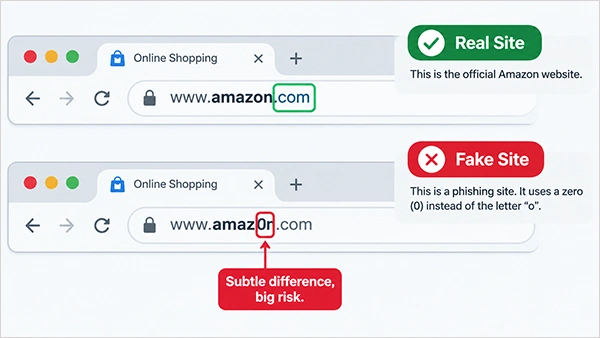
A website you visit may be fake or real. The site description may look familiar than the real site, including the colors, logo, style, or even patterns.
You may notice that a website uses HTTPS and still be fake, which means that security can also be compromised. Promising sites may steal your personal information and sensitive data that can harm you. Online streamers like Jalalive Resmi, a live broadcaster who streams on social media platforms– Facebook, TikTok, and others may face copyright drawbacks.
Let’s take a tour, you’ll understand the safe mirror links and avoid sharing details onunknown sites. Also, you’ll learn what to do when you or someone nearby accidentally clicks a suspicious link.
Mirror sites are generally a lawful replica of a website to provide a safe place for an organization to host distribution files and try to reduce server load and improve availability. You had misconception that every site is hazardous, but it is not.
Some authorities simply place several domains at multiple locations to improve technical integrity. When scammers forge the site and make duplicates to steal information, the real problem arises.
Example: a thief copies the legal design with a little infringement, like a hyphen, a word, or a typo; a genuine address is attached, and they create a fake e-commerce site with the intention to steal login credentials, account creation, downloads, and malicious payments to fool the consumer.
So, you should keep in mind that appearance should not be the only option for legitimacy.
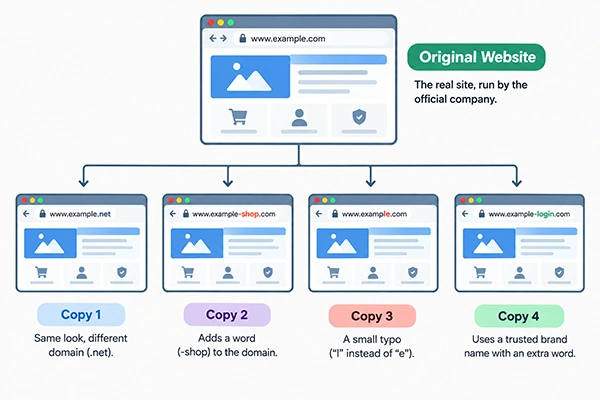
This is the exact gap where attackers focus. When you suspect the real address changes and a fake address arises instantly eliminates the suspicion.
SURPRISING STATS
Published in the FBI’s IC3 in 2025, Phishing and spoofing is the most recorded crime type, with 191,561 complaints compared with an overall 1,008,597 IC3-filed cases. In this session, losses totaled $ 20.877 billion, an increase of 26% from 2024. Under-20 report found 31,254 complaints involving $67.1 million in registered losses.
Run these in order. The whole thing takes under two minutes.
Any one of these is enough. Close the tab.
If you want something that is supposed to be free and demand it for a price. This pattern resembles scams.
The main examples of such websites you’ll see are streaming or sporting sites where they charge you for a service that is not chargeable; they usually target the audience who wants free downloads and free access to such services. A mirror domain works on such sites, which are often banned and use different names and addresses to stream. Unlike gaming cheat codes, tools follow the same pattern.
Your family member can easily fall for package offers or text scams through email that offer you a free service and a timely subscription. AI-enabled services are common and access the tokens on this model. Top AI video tools have genuine prices and are often searched for free downloads, and people access the versions available, assumes to be clone.
Your children or teenagers often fall for easy money to earn on these websites and deliver the services for a chargeable amount, which they never intended. Set up parental controls and instruct them with a simple rule that unexpected links to a payment or login are dangerous.
You find it hard to get rid of duplicacy around online. If so, this results in the following things:
Your best approach to handle this situation is to slow down activities which are happening like downloading, visiting link extensions, and responding to unknown messages received. Try to obtain the address domain from the authority and recheck the details from trusted sites.
It only matters to you to visit genuine sites and not to click such link to be happened again. Make it clear to stop unnecessary behavior that traps you in a situation where you are not supposed to be.
Not usually, if you confirm your activity with the site. Fraudulent mirrors impersonate the company’s legal procedure without security. Be prepared not to share information; the purpose of the visit is fulfilled.
Absolutely not. The padlock is just to secure the website traffic, not a security measure anybody can achieve; HTTPS is generally for website encryption.
You must check the details thoroughly with official handles like name, address, and history of creation. Do not rely on displayed features before confirming.
You must create a proper, controlled, and secure environment where restriction through default permissions, and maintain parental controls for sharing individual identities in the official domain. Teach them about security measures and aware them from phishing.