Longer than most proposals imply. Meaningful compounding usually takes several quarters, and anything promised faster is worth questioning closely.

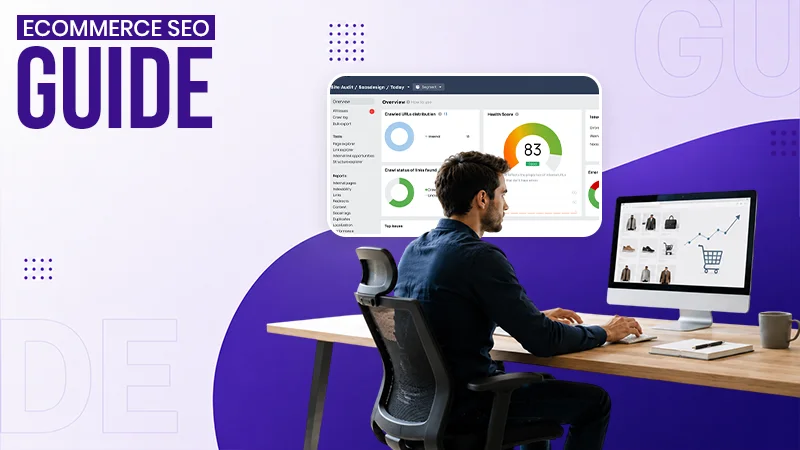

A parent who’s searching for their kid’s stair gate is not just browsing; they are actually checking and comparing simultaneously. They will not buy instantly but, in fact, come back three days later to your site again after they have read the reviews, forum threads, and compared multiple different options together.
That is not a customer that can be convinced only on the basis of your products; this customer will turn into a paying one only through your SEO, and that’s a harsh truth most ecommerce accounts don’t realise.
Here’s what growth actually looks like when your buyers are parents, and your site sits within reach of children.
Most ecommerce brand owners think that when someone searches for your product or a product similar to yours, you can win that fight and gain a customer simply by having better SEO. That’s true for most cases except when the customers are parents.
Parents are very specific and tend to spend a lot of time comparing options, especially related to products a child will sleep in, ride in, or put in their mouth. They tend to get down on the specifications of a product in depth and make the actual purchase days later, which is something your SEO cannot win for you.
So this technically means that a page from your website which is optimised for high volume will only pull traffic; it won’t answer specific questions that your customers- that is, the parents might have regarding the safety of a product when used by a child.
Brands that win these categories tend to publish the boring, specific material nobody else bothers with. Weight limits. Fabric certifications. What happens when the child outgrows it.
This is the section I’d read twice.
According to the Age Appropriate Design Code, formally known as the UK’s Children’s Code, it states that even if your intended customer weren’t minors, if they can still come across your site because of your products like toys, then that particular online service like apps or websites or marketplaces must be designed to protect these young users.
A family e-commerce site is exactly the kind of service that gets affected the most by it, because even if your checkout form requires an adult, a child can still browse on your site.
The Code sets 15 standards, and among them are some key requirements:
Industry Insight
The ICO’s own research found children describing routine data practices in blunt terms, one of them “a bit freaky”. The Commissioner’s national survey ranked children’s privacy second only to cyber security among the public’s biggest data protection concerns. (Source: Information Commissioner’s Office)
Why does this belong here? This is because the majority of e-commerce sites use use of personalization stacks like cookies on a site to collect data from users, but this is exactly what the Code doesn’t allow, especially with minors involved. So, checking your SEO standards in reference to Code eligibility after you’ve already built the site can be expensive to replace.

Google publishes its own guidance, and it’s more useful than most of the commentary about it.
According to the documentation of Search Central, the framework that is rewarded the most by Google follows an exact set of structures, which is more commonly called the “E-E-A-T” structure. Here, this stands for experience, expertise, authoritativeness, and trustworthiness. This typically means that content that is made to manipulate or divert Google’s ranking system will always underperform in comparison to content that’s built on actual reliable information, which is useful for users.
For an e-commerce brand primarily focusing on family or kid products, that’s the fastest way to win because a founder designing a product because he faced some issues with the pre-existing products in the market for his child is a story that hits closer to home than the ones fabricated by a marketing agency and hence sells better.
So, to make sure your content performs well in Google’s ranking system, make sure your content answers two important questions. First, is this page made to attract traffic? And second, are you publishing across many topics in hopes that one or two of these will land?
Google’s guidance asks whether content presents itself in a way that makes a reader want to trust it. Parents apply the same test, harder.
None of that is technically SEO. All of it moves rankings, because it moves the behaviour Google measures.
With all the new regulations and ranking systems coming on, most founders fall behind with SEO, and that’s when they decide to bring outside help.
Usually, agencies positioning themselves as ecommerce search optimisation specialists tend to directly work on technical audits, category page work, product keyword mapping, and link acquisition, and while all of this matters in helping to upgrade a site’s ranking across Google so that your site is accessible to more people, it doesn’t necessarily guarantee that it will solve the above two problems.
So the question worth asking these agencies isn’t whether they know how the work is done, but if they have ever handled a business like yours, which will tell you everything you need to know about whether they understand a business subject to children’s data rules.
Judge proposals on timeframe too. Anyone promising meaningful movement inside a quarter is selling something other than SEO.
Sustainable growth in this category is unglamorous. You publish the specific, checkable material parents need, you handle children’s data properly because you have to and because they’d want you to, and you let the compounding happen over quarters.
That’s slower than the case studies suggest. It’s also the version that survives an algorithm update and a regulator’s attention.
So essentially the only thing a family brand has is the trust it gains over a long period of time, and that trust is the hardest thing to lose once you have it. This means you only ever have to retain a customer once and not keep trying to retain them for the rest of your life.
Longer than most proposals imply. Meaningful compounding usually takes several quarters, and anything promised faster is worth questioning closely.
Possibly. It applies to services likely to be accessed by under-18s, even where children aren’t the intended audience, so it’s worth a proper assessment.
Yes, though the value comes from genuine ones. Curated all-positive review pages tend to read as filtered to both shoppers and search engines.
The specific safety and sizing detail nobody else covers properly. It ranks slowly and converts unusually well.