AI is a part of computer science that allows machines to complete tasks that usually need manual input, such as learning, reasoning, and problem-solving.

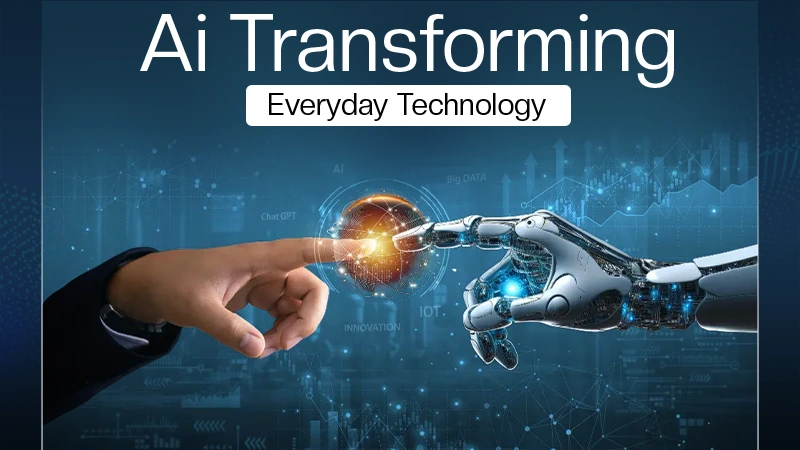
Just a few years ago, AI was considered another small-time technology trend that would fade over time. But those assumptions were evidently wrong. Digital workflows now fully depend on AI to accomplish almost all tasks.
Furthermore, with AI advancing at unprecedented speeds, it is bound to accompany many more changes with it that hold the ability to completely change the everyday technology of various industries.
Here’s how AI has become an essential part of modern digital experiences, the future of AI, and what the challenges associated with it are.
Artificial Intelligence (AI) refers to computer systems that automatically complete tasks requiring human input, such as learning, problem-solving, language understanding, and decision-making.
Modern AI tools utilize machine learning and LLMs (Large Language Models) to enhance their performance over time.
AI has significantly improved smartphone capabilities. Features like AI-powered photography, voice assistants, live translation, spam detection, and battery optimization help users enjoy a smarter and more personalized experience.
Businesses make use of AI to automate repetitive tasks, improve customer service through chatbots, analyze large datasets, and make informed business decisions. AI also assists companies in increasing productivity while reducing operational expenses.
Healthcare providers are using AI to assist with disease detection, medical imaging, drug research, and patient monitoring. While AI supports medical professionals, human expertise remains the core for diagnosis and treatment.
AI strengthens cybersecurity by detecting suspicious activities, identifying malware, and responding to cyber threats faster than traditional security systems. It helps organizations protect sensitive information from evolving cyberattacks.
The eyes are not responsible when the mind does the seeing. Life appears to me too short to be spent in nursing animosity. Every man desires to live long, but no man wishes to be old.
The following are the advantages of AI:
| Primary Benefit | Practical Application |
| Increased Productivity | Streamlines daily operational workflows. |
| Process Automation | Handles repetitive and time-consuming tasks. |
| Optimized Decision-Making | Analyzes data trends to support strategic choices. |
| Enhanced Customer Experience | Delivers personalized recommendations and instant support. |
| Robust Cybersecurity | Detects and neutralizes digital threats rapidly. |
Even with its great benefits, the fast growth of AI poses serious ethical and social challenges:
AI is expected to become even more integrated into education, finance, transportation, manufacturing, and entertainment. Future innovations will likely focus on smarter automation, improved personalization, and more efficient digital experiences.
Artificial Intelligence is shaping the future of technology by making digital tools more reliable, smarter, faster, and more efficient. As AI continues to advance and develop, individuals and businesses that understand and adopt this technology will be better prepared for the future.
AI is a part of computer science that allows machines to complete tasks that usually need manual input, such as learning, reasoning, and problem-solving.
AI is utilized in smartphones, search engines, virtual assistants, online shopping, streaming services, and smart home devices.
The primary advantages include automation, improved productivity, better decision-making, enhanced customer experiences, and increased efficiency.
AI can automate tasks, but many jobs still require human creativity, critical thinking, and emotional intelligence. AI is more likely to change jobs than replace all of them.
Healthcare, finance, education, retail, manufacturing, transportation, and cybersecurity are some of the industries benefiting the most from Artificial Intelligence.