A naked-eye 3D LED display creates the illusion of depth and three-dimensional movement without the use of any special glasses. This type of display creates an immersive experience using well-designed images and screen geometry.

The city center is cluttered with various advertisements, cars, and activities, thus making it increasingly difficult for brands to grab the attention of the masses. While the conventional digital billboard may simply go unnoticed amid the environment, a naked-eye 3D LED display will make a regular building façade come alive.
Through the creation of depth and movement through the use of no special eyewear, this type of display offers advertisers a new way to interact with their viewers. But just the presence of a striking display does not equate to success.
Strategic planning in terms of the location, viewing angles, display quality, creative content, installation safety, and operational costs is required for a worthwhile investment.
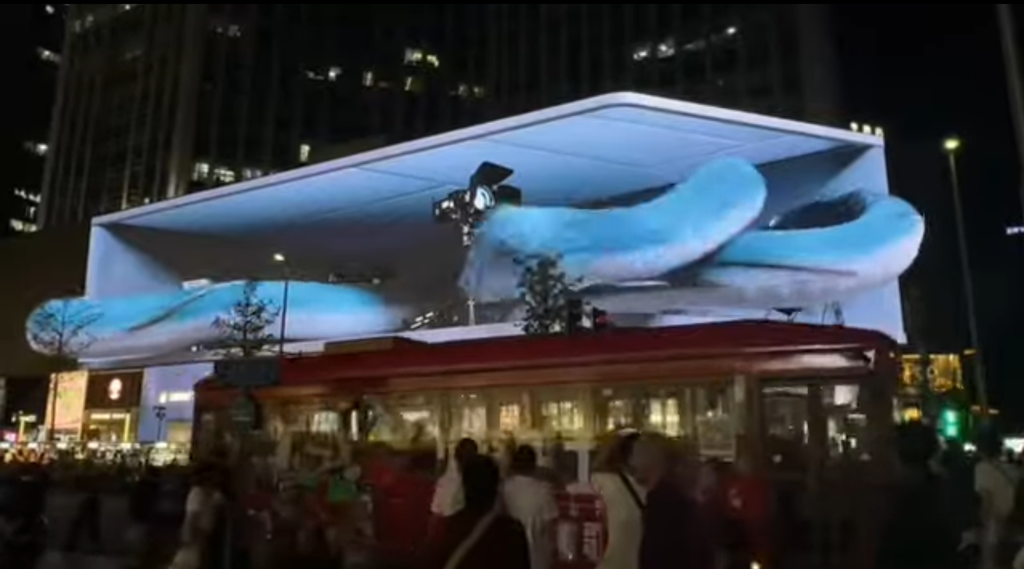
The placement of the 3D LED billboard is essential to the performance of the billboard to capture attention and convey information. At intersections, shopping areas, pedestrian plazas, and corners of commercial buildings, good visibility can be obtained. But exposure doesn’t necessarily come from a lot of foot traffic. Prior to selection, consider pedestrian traffic flows, traffic patterns, neighboring structures, and any visual barriers.
One of the things that should be considered is corners, where the geometry lends itself well to a convincing forced perspective effect. Digital objects can be made to seem like they are outside the bounds of the display if carefully positioned. Discuss viewing distances, sightlines, local advertising codes, and glare from other surfaces. A proper site should be located so as not to interfere with traffic signals or create safety hazards, but to have good viewing opportunities.
The layout of the display is directly tied to the visual experience. If the display is larger, perhaps a more elaborate product animation could be done, but if smaller, perhaps a simpler animation would be more appropriate. Consider building facades, installation room, structure, and the distance of the viewers to the screen.
Seamless viewing space for anamorphic content can be achieved with L-shaped and curved corners. But the geometry of the screen has to correspond to the viewing position and video composition that is desired. The size of the cabinet, the alignment of the modules, and the pixel pitch also have an impact on the installation accuracy and the continuity of the image. EXCEL LED displays are available in outdoor configurations, such as the A960 and A1000 series, which can cater to the project requirements. Specifications must be decided by a professional evaluation of the site, not “because it looks nice.”
The outdoor advertising screen must display sharp images in different weather and lighting conditions, as well as remain active for extended periods. Brightness, contrast, refresh rate, pixel pitch, and environmental protection will influence the performance. The right specifications depend on various factors such as visibility, image details, installation distance, and energy consumption.
By combining specially designed anamorphic visuals with screen geometry, a Naked-Eye 3D LED Display can produce a 3D image without the need for glasses. Therefore, it is crucial that the hardware selected will not only allow for visibility outdoors, but also the desired perspective effect. Brightness levels around 6,500 nits or greater can be considered for direct sunlight installations (this will depend on the site conditions). The weather-proof protection, reliable connections, and maintenance access are also critical. EXCEL LED indicates the models with high brightness options and weather ratings for outdoor models, giving options to consider these.
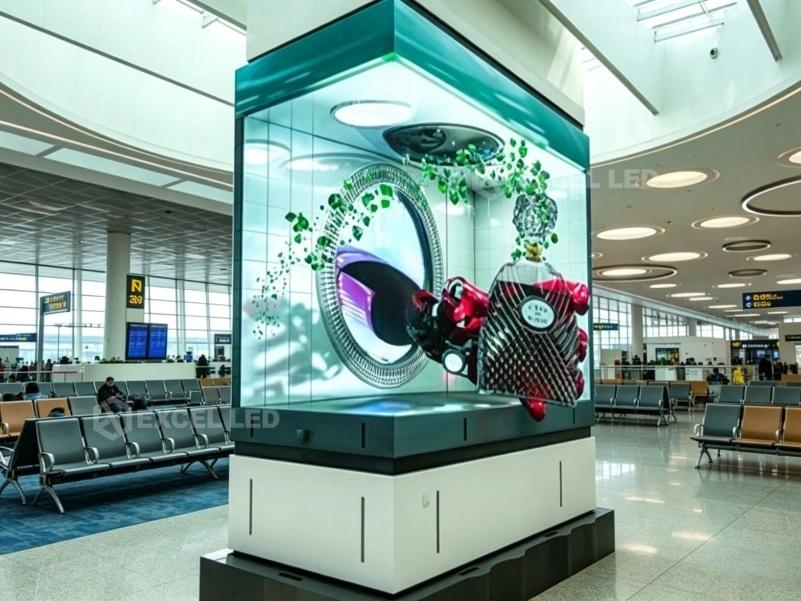
The first thing needed for 3D advertising is to know the size of the screen along with the viewing angle. Forced perspective is a method for the content creator to make an object appear to be farther away, larger, or closer to the display surface than it actually is. It is possible to make the product appear to be emerging from a corner of a building, and animated scenery can be created to make the surrounding space appear to be moving.
There is one area that is clear, and it is not difficult to fit on the screen: creative planning. The use of big objects, clear silhouettes, controlled movement, and contrasting colors allows people to easily see the illusion as it is created. Animations should also take into consideration the short time that the audience has to view them. Decide what the main part of the visual should be, so that it is understandable during the split second, and then develop the other parts of the sequence.
Installing a city-center display requires coordination between the advertising team, content creators, structural engineers, electrical contractors, and local authorities. Each group is dealing with distinct needs but must agree on their decision prior to manufacturing and installation. Early coordination helps prevent mismatched screen dimensions, unsuitable mounting arrangements, and content that fails to match the final display geometry.
Installation plans should include provisions for commissioning and emergency access as well. Manufacturers such as EXCEL LED can provide display customization and technical guidance, while qualified local professionals handle site-specific engineering and regulatory compliance.
Leasing an outdoor LED screen that’s huge is not a cost that’s set up in advance; rather, it means a steady expenditure. The screen size, screen brightness, type of content, hours of use, and hardware efficiency all impact electricity usage. When the ambient light level allows, dynamic brightness control can lower power usage for unnecessary brightness levels. Energy-saving drivers can also increase the overall operating efficiency.
Scheduled inspections and unforeseen faults have to be considered in the maintenance program. Reliability may be impacted over time due to exposure to the elements, dust build-up, electrical connections, and thermal conditions. Front or rear access servicing may be needed depending on the building configuration, which will impact the selection of the cabinet type. Set a reasonable service program and budget for replacement modules, technical support, and equipment downtime. These measures are taken to ensure that the continuity of adverts is maintained, but it is not assumed that all parts will work for a very long time without human intervention.
It should have measurable business goals if it is to make an impact visually. Prior to launching a campaign, decide whether it’s for brand awareness, product recognition, social interaction, or traffic to a local business. These objectives provide a statement of focus for performance indicators.
Estimated audience reach, viewing opportunities, how many campaigns are run, and (if applicable) QR-code interaction and changes in relevant website traffic are good metrics. Further exposure may be warranted by social media mentions and shared videos. But please keep in mind that online sharing does not necessarily mean sales; you also need to consider your digital presence.
The 3D billboard located in the center of the city needs to be incorporated into the entire advertising campaign. Match its messaging to social media videos, online ads, product launches, and local in-store marketing. This guarantees that when the audiences encounter the campaign on different channels, they will understand that it is the same campaign.
Similarly, the display can be used for anamorphic 3D as well as 2D advertisements depending upon the playback system and workflow. This flexibility means advertisers can make changes to campaigns with changing objectives without worrying about each message being a 3D production. Manufacturers with different lines of displays and customization options (such as EXCEL LED) can help evaluate what hardware is best suited for different environments.
As for naked-eye 3D LED display applications in city center advertising, it is necessary to coordinate carefully in the aspects of location, screen geometry, outdoor specifications, creative production, installation, and maintenance. Every decision affects the effectiveness of the display and the message being conveyed through the advertising campaign.
If a project is successful, it’s a balance of visual impact, engineering, regulatory, operating costs, and measurable goals. These priorities are already in place before installation so that advertisers can create unique urban displays.
A naked-eye 3D LED display creates the illusion of depth and three-dimensional movement without the use of any special glasses. This type of display creates an immersive experience using well-designed images and screen geometry.
L-shaped screens and screens with curved corners are commonly used for creating forced perspective effects. But the best screen shape depends on the building design, viewing distance, and other factors.
Critical specifications include brightness, contrast, refresh rate, pixel pitch, weather resistance, and energy efficiency. The appropriate combination will depend on the amount of sunlight, viewing distance, image quality, and environmental conditions.
Companies need to take into account structural strength, wind load, electrical power capacity, mounting system, maintenance, compatibility of the content, permits, and local restrictions on brightness before installing an LED display.