Digital verification connects driver identity, vehicle assignment, boarding, route activity, and drop-off information. It creates a more complete record than relying solely on paper manifests or GPS.

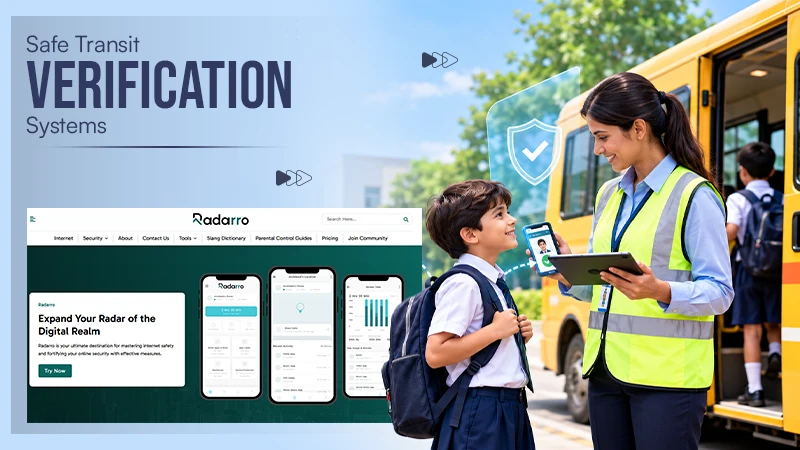
Quick Answer – Digital verification processes make it easy for NEMT services and school bus companies to manage driver, vehicle, boarding, routing, and drop-off activities all in one place. It helps to create better documentation and visibility without removing the trained driver.
When taking children from one destination to another, such as school or a doctor’s visit, every aspect of the journey must be documented. While a transportation provider knows the scheduled pick-up time of the child, how do they verify the driver, the vehicle, the boarding process, the route, and the final delivery of the child?
These may become increasingly hard to verify if they are stored on different documents, in different programs, and manually entered into different databases. Digital verification can ensure that all of this information is available in one spot.
Driver IDs, vehicle allocation, trip details, locations, and authorized drop-offs are just some of the things that this technology verifies without replacing anything in terms of safety procedures.
Digital verification connects several pieces of transportation data into one record. A trip might link a verified driver with an assigned vehicle, passenger manifest, boarding event, route, and drop-off confirmation.
For businesses also handling children’s digital safety, parental controls and location tracking can provide another layer of visibility around a child’s device and location. Transportation monitoring and digital-device monitoring serve various purposes, but both depend on accurate information and appropriate access controls.
A practical system typically covers five areas:
| Layer | What it verifies |
|---|---|
| Driver identity | The approved driver is assigned to the trip |
| Vehicle assignment | The correct vehicle is being used |
| Boarding | The child entered the vehicle |
| Route and location | The journey follows the expected route |
| Drop-off | The child was released appropriately |
These functions work best together. GPS alone can show where a vehicle traveled, but it cannot necessarily specify which child was onboard or who received the child.
Technology cannot compensate for weak driver screening. Before a digital system tracks a journey, the underlying driver details should be accurate, current, and connected to the correct vehicle.
Training is equally essential. Organizations developing internal transportation training capacity can review an NEMT train-the-trainer program in Illinois as one example of a structured training approach.
School transportation has similar requirements for driver preparation and ongoing training. The school bus driver training curriculum covers areas including student management, loading and unloading, emergency evacuation, and transportation of students with special conditions.
Real-time GPS can help staff identify route deviations, delays, or unexpected stops. However, location data should be viewed as one part of the transportation record instead of proof that the entire trip was completed correctly.
A stronger workflow incorporates GPS with boarding, arrival, and authorized-release events. This creates a series of records that can be reviewed when a delay, missed pickup, route change, or other incident occurs.
Individuals who use medical or special transport could have certain requirements related to mobility, communication, behavior, etc. The digital system should support the transportation plan rather than assume every passenger follows the same process.
For students with disabilities, transportation arrangements may also form part of an individualized education plan. This makes accurate assignment, specialized instructions, and staff awareness particularly important.
The technology should record the information critical for the trip without attempting to decide what medical or personal support a child needs.
The physical journey and digital activity of a kid are independent domains, but they can overlap. For example, a parent may use a device-management system to understand location information while a transportation provider maintains its own trip records.
Families researching parental control apps for children should make the purpose of each monitoring tool clear. A device-monitoring application should not be treated as a replacement for transportation records, driver verification, or direct supervision.
A practical workflow can follow these steps:
The important point is that verification should continue throughout the journey rather than stopping after driver assignment.
A third error involves assuming that GPS technology can ensure comprehensive safety for children. It provides location information but does not independently verify the passenger, driver, or authorized recipient.
Another is collecting excessive personal information. Transportation systems should be designed around the information staff genuinely need rather than storing every available data point.
Driver substitutions without documentation are an additional possible weakness. When a scheduled driver changes, the replacement should be verified and the trip record updated so the final record reflects what actually happened.
Before adopting digital verification technology, ask:
A useful technique should make ordinary trips easier to verify without creating unnecessary administrative work.
Safe transit technology works best when it strengthens existing safety procedures instead of attempting to replace them. Driver verification, vehicle assignment, boarding records, GPS, authorized drop-off, staff training, and relevant data controls can create a clearer chain of accountability from pickup to arrival.
For organizations reviewing their current process, a helpful starting point is to identify every point where responsibility changes hands and determine which circumstances are difficult to verify. The right digital system can then be selected around those real operational needs.
Digital verification connects driver identity, vehicle assignment, boarding, route activity, and drop-off information. It creates a more complete record than relying solely on paper manifests or GPS.
No. GPS can show where a vehicle traveled, but it does not by itself verify who was driving, which child was onboard, or who received the child.
Providers should follow applicable requirements for driver qualifications, licensing, screening, and transportation procedures. Digital tools can help keep those records organized and connect them with individual trips.
The replacement driver should be verified and recorded, and the trip assignment should be updated. This ensures the final transportation record accurately reflects who actually completed the journey.