The changes to the guidelines remove the strict requirement for limiting screen use for children to only one hour. Instead, the updated guidelines now focus on the quality of the time spent on the device.

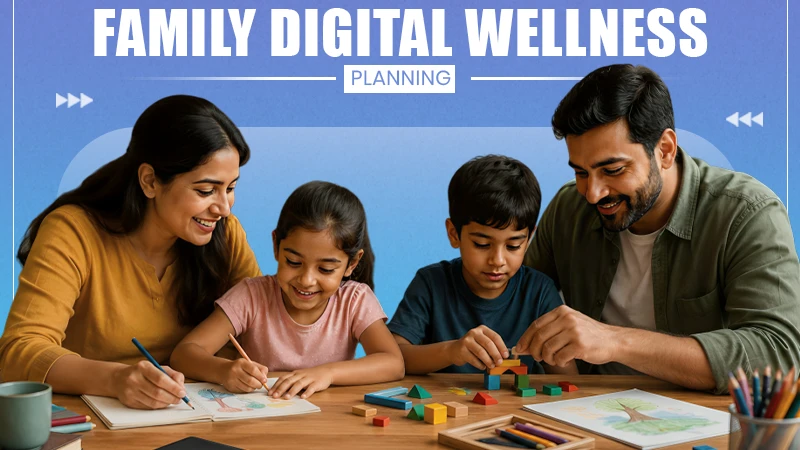

Even if you’ve set up parental controls on all the devices. Everything seems to work just about, but now what? A blocked app doesn’t fill an empty afternoon. It only creates a gap, where if nothing meaningful happens, kids drift right back to their devices.
The question of parental control has changed over the years, with parents asking a different, harder question, not “how much”, but “with what”.
This article discusses what the 2026 AAP guidance actually says, the real cost of passive screen time, and how offline activities are integrated into the regular lifestyle.
Key Takeaways
- Instead of watching the clock, the new guidance asks parents to look at what a child is actually doing on a screen and how it fits into the rest of their day
- Simply reducing screen time isn’t the whole solution. What children do instead matters just as much, if not more
- Turning a family photo, a pet, or a favorite vacation shot into a custom canvas provides a kid with a reason that they actually care about finishing it
- Paint by number just so happens to check every box the new guidance cares about: it’s hands-on, grabs attention, and ends with something a kid is proud to hang on a wall
In January 2026, the American Academy of Pediatrics updated its media guidance and dropped the flat one-hour daily cap for kids over two years old. In its place is a “quality and context” framework. Instead of watching the clock, the new guidance asks parents to look at what a child is actually doing on a screen and how it fits into the rest of their day. Passive scrolling gets flagged as higher risk. Creative, collaborative, or educational use gets treated differently.
The catch is that “quality” is vague until you make it concrete. Parents don’t need another abstract framework. They need actual things to hand a kid instead of a phone.
This is where hands-on, low-tech hobbies come back into the picture, and where something as straightforward as a paint-by-number kit is given a lot more importance than a rainy-day craft.
For parents looking for a genuinely creative, screen-free option, custom paint by number kits that transform an actual family photo into a guided art project hit the exact criteria that the AAP is now indicating toward: structured, hands-on, and something that actually interests a kid.
The AAP’s own consumer platform, HealthyChildren.org, spells out the reasoning behind this shift in its piece on the “quality and context” framework. CHOC’s Children’s Health Hub summarized it bluntly in its own coverage of the updated AAP recommendations: the old model treated all screen minutes as equal, and the new one doesn’t. A child editing a video with a parent looks nothing like a child passively watching an algorithm-fed feed, even if the clock says both took thirty minutes.
The urgency behind this shift isn’t abstract. A 2025 meta-analysis published in JAMA Network Open, covering 45 studies and more than 335,000 children, reported that each additional hour of daily screen time was associated with a 21% jump in myopia risk.
For kids between two and seven years old, that risk leaped to 42% higher odds per additional hour. That’s not a small correlation buried in a footnote. It’s a meaningful jump tied directly to time spent staring at a screen, regardless of what’s on it.
And screen time keeps climbing. Among tweens aged 8 to 12, average daily screen use rose from 4 hours and 36 minutes in 2015 to 5 hours and 33 minutes by 2021. Interestingly, 63% of teens say they actually want less screen time and are actively looking for offline alternatives. Kids aren’t necessarily choosing screens over everything else. Often, screens are just what’s available when nothing else is.
It begins early, too. A 2025 Common Sense Media report found that 40% of children own their personal tablet by age two, and that number creeps to 58% by age four. The same report found that 75 to 80% of parents with kids ages 0 to 8 report ongoing concern about screen media, letting you know that isn’t just a minor worry.
Most parents already feel this. If you’re one of them and you’ve already worked through setting healthy screen-time limits on platforms your kids use most, the natural next step is figuring out what actually competes with a screen for a child’s attention.
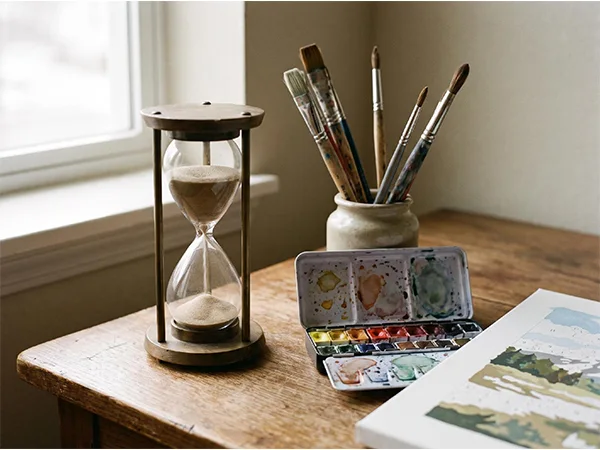
Simply reducing screen time isn’t the whole solution. What children do instead matters just as much, if not more. The strongest offline alternatives aren’t just distractions to fill an empty afternoon. They’re activities that encourage creativity, concentration, and a sense of accomplishment, giving kids many of the developmental benefits that experts now associate with higher-quality engagement.
A 2026 editorial published through the AAP’s own journal blog examined preschoolers specifically and found that the type of digital engagement mattered more than total duration for predicting a child’s well-being.
Entertainment-focused screen use was linked to higher-risk behavioral profiles. Creative activity, on the other hand, functioned as a protective factor, even among kids who still spent time on devices.
That distinction aligns with what the broader journal blog on rethinking digital media guidance argues: pediatrics is transitioning away from treating screens as a monolith and toward evaluating what a child is actually building, creating, or practicing.
That’s a useful reframe for offline time too. It’s not enough to just take a device away and hope boredom does the rest. The replacement activity needs some of the same qualities that make “quality” screen use protective in the first place.
Structure, focus, and a visible result. Those are the three things researchers keep circling back to, whether they’re looking at screen use or hobbies. A child who spends forty minutes building a puzzle or working through a paint-by-number canvas is practicing sustained attention, small motor control, and delayed gratification, none of which happens during a scroll session. There’s also something to be said for finishing something. Kids don’t get a lot of chances to sit with a project until it’s actually done. A completed canvas on the wall does something a completed level in a game doesn’t quite manage: it stays visible, and a kid can point at it.
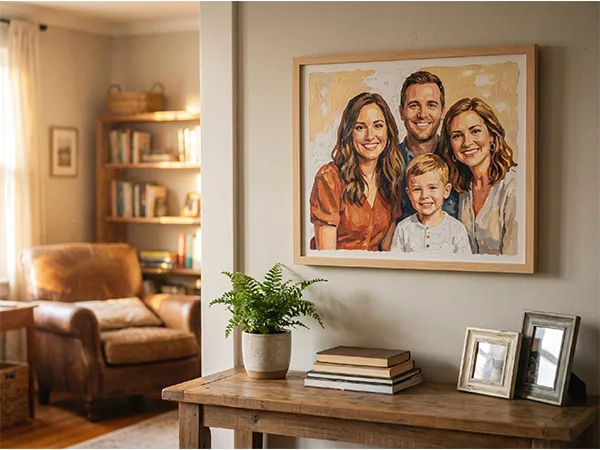
Start small. A basic kit with a simple design and a handful of color sections is enough for a first try, especially with younger kids who might lose patience with anything too detailed. Make it a table activity rather than a solo one. Sitting down together, even for twenty minutes, turns it into a shared routine instead of another item on a chore list.
Personalizing the project increases the buy-in considerably. Turning a family photo, a pet, or a favorite vacation shot into a custom canvas provides a kid with a reason that they actually care about finishing it, rather than working through a generic design.
It also makes the end result something worth hanging up, which matters more to kids than adults sometimes give them credit for.
Age matters here too. Children’s Hospital Los Angeles publishes age-by-age screen time guidance that’s worth pairing with any offline activity decision, since a five-year-old and a ten-year-old need very different levels of complexity and supervision. And once you’ve got the parental controls dialed in, following family device rules that actually stick makes the offline habit easier to protect, because there’s less temptation to grab a phone the moment a project gets a little tedious.
A lot of families find the best slot for this is the pre-bed wind-down window, the same time frame that was reserved for a tablet. Swapping a screen for a paintbrush in that last hour before bed does extra duty: it eliminates blue-light exposure right before sleep and gives the day a calmer close.
None of this means screens are the enemy now. The 2026 AAP shift isn’t a call to abandon monitoring; it’s a call to pair it with something better on the other side. Creative hobbies work best as a complement to thoughtful device management, not a replacement for it. Once you’ve freed up time by trimming passive scrolling, that time needs protecting too, or it just gets absorbed back into whatever app is easiest to open.
Parents who’ve already set up monitoring tools have a head start here. Reviewing something like keeping kids safe while they explore new things alongside your family’s new offline routine means you’re not simply limiting access; you’re actively shaping what fills the space you created.
The 2026 shift in pediatric guidance isn’t permission to stop paying attention to screens. If anything, it asks for more attention, just aimed differently. Instead of counting minutes, parents are being asked to notice what their kids are actually doing and to make sure something worthwhile is available when the screen goes away.
That’s a bigger ask than it sounds, but it doesn’t require a complicated plan. A simple, structured hobby that a kid can actually sit down with, work through, and finish goes a long way.
Paint by number just so happens to check every box the new guidance cares about: it’s hands-on, grabs attention, and ends with something a kid is proud to hang on a wall instead of an app closed and forgotten five minutes later.
The changes to the guidelines remove the strict requirement for limiting screen use for children to only one hour. Instead, the updated guidelines now focus on the quality of the time spent on the device.
Studies have shown that increased amount of screen time correlates to greater rates of myopia and reduced likelihood for periods of sustained concentration.
Taking the device away can lead to boredom and conflicts; however, structured activities provide a sense of focus, direction, and achievement that can rival what digital devices can give.
To start limiting daily exposure to blue light, perform a craft activity with the family during time before sleeping.