Authentication and session management are critical aspects of web application security. They ensure that a user’s identity is properly verified before granting access to the application and that a user’s session remains secure until they log out.

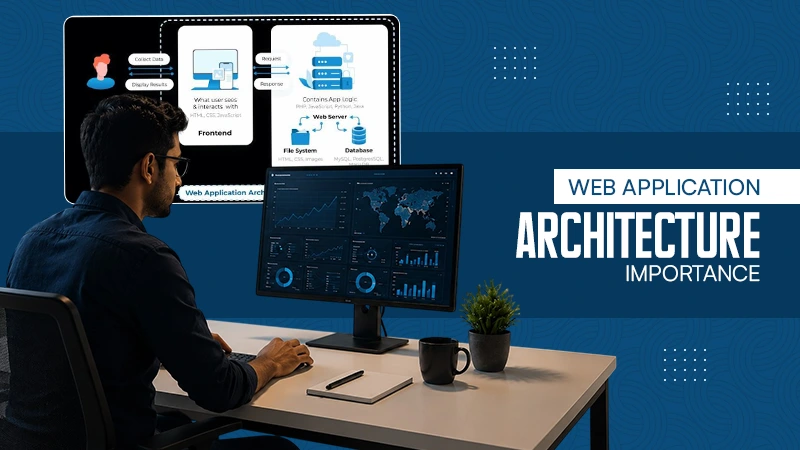
A crash in a consumer app is an inconvenience. A failure in business-critical software is a financial disaster. Building robust web applications requires a systematic approach to architecture, security, performance, and testing.
This guide provides an overview of the basic technical principles that secure enterprise operations and how to select an engineering partner to implement them.
Key Takeaways
- Reliable web applications eliminate single points of failure through high-availability architecture, redundancy, and automated failover.
- Strong security measures such as encryption, role-based access control, and continuous threat protection safeguard sensitive business data.
- Scalability, performance optimisation, and cloud elasticity ensure applications remain responsive during peak demand.
- Choosing an experienced development partner with transparent processes and long-term support is essential for maintaining reliable business-critical systems.
At the heart of every resilient system lies a thoughtfully designed web app architecture. For business-critical software, the primary goal of architecture is the removal of single points of failure. If one server, database, or network connection fails, the application must continue running without human involvement.
Genuine reliability begins with multi-region deployment. Hosting an application in a single data center exposes the enterprise to regional outages. Reliable web applications implement active-active deployments across geographically isolated regions. Traffic is dynamically routed through global load balancers that track server health in real time. If a virtual machine in Virginia becomes unavailable, the load balancer instantly diverts traffic to a healthy instance in Oregon.
Monolithic architectures, where all services run in a single environment, are inherently fragile. A bug in a minor reporting tool can disrupt the entire system. Modern architecture isolates distinct business capabilities into independent modules.
By decoupling these systems, an outage in the reporting engine will not prevent users from logging in or executing core workflows.
Data loss is unacceptable for business-critical applications. Engineers implement database architectures that write data to multiple locations simultaneously. Using a primary-replica model, the application reads and writes to a primary database, which instantly copies the data to replica databases. If the primary database fails, a replica is automatically promoted to primary within moments, preserving data integrity and system availability.
A web application cannot be considered reliable if it is vulnerable to exploitation. Secure web apps protect sensitive business data and maintain operational stability even when under active exploitation.
An application that crawls to a halt under heavy demand is just as useless as one that is completely offline. Enterprise platforms must handle unpredictable spikes in activity without degrading the user experience.
As organizations grow, they treat software development as a core strategic asset, particularly when investing in custom web app development. “The software is the solution,” says a senior systems architect at a leading US technology firm. “When a critical portal suffers from delays, it erodes trust with your enterprise partners just as quickly as a total service blackout.”
This perspective explains why forward-thinking companies avoid off-the-shelf solutions and invest in custom web app development. Performance is built into the architecture from day one through efficient data caching, optimized database queries, and content delivery networks that cache static assets close to end users.
By leveraging elastic cloud architecture, reliable applications automatically spin up new server resources as user traffic increases, maintaining fast response times regardless of load.
To understand the evolving landscape of custom system design, companies frequently monitor industry updates from major technology outlets like Engadget to keep pace with emerging cloud infrastructure trends. When choosing a development provider, decision-makers should focus on five critical pillars.
Do not rely on polished sales claims. Ask for detailed case studies that demonstrate experience building high-availability platforms. Look for partners who have successfully navigated complex data transitions, built real-time integrations, and scaled applications to support thousands of concurrent users. The ideal partner should show a clear history of solving issues similar to yours.
A modern development company must justify their architectural recommendations. Whether they propose a serverless cloud model or a microservices architecture, their choices must align with your long-term goals. If your team needs to stay informed on how developers evaluate these emerging structures , resources like The Next Web provide valuable context on modern engineering frameworks and language trade-offs. Ensure your vendor chooses technologies that are mature, widely supported, and easy to manage.
Complex software projects fail without clear collaboration. Your engineering partner must operate as an extension of your internal department.
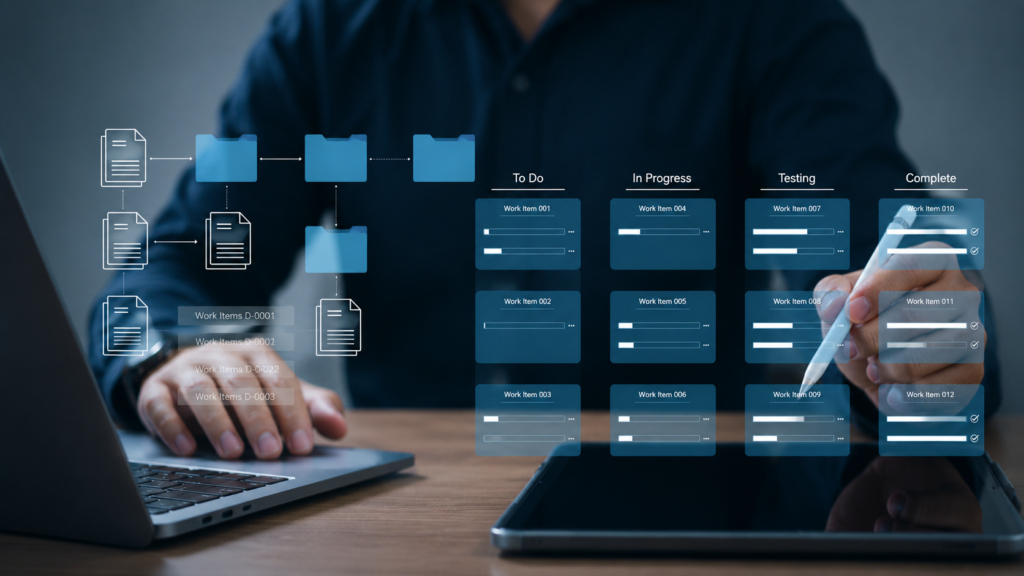
Ensure they use collaborative platfroms, provide regular sprint updates, and grant access to their project management boards so you always know where development stands.
A reliable vendor does not hide behind black-box costing. They provide detailed breakdowns of costs, timeline estimates, and resource distribution. They work with clear statements of work and agile approaches that allow you to see functioning software every few weeks. This transparency ensures that budget discussions are grounded in actual results rather than assumptions.
The launch of a web application is not the end of the process; it is the beginning. Business-critical workflows require continuous monitoring, regular security updates , and rapid-response technical support. A professional software firm offers structured service level agreements that guarantee response times for critical incidents, ensuring your system remains reliable as your business evolves.
Even with the best architecture and validation, anomalies will occur in production. What separates reliable web applications from fragile systems is how quickly they detect and recover from these anomalies.
Organizations cannot fix what they cannot detect. Modern enterprise applications integrate deep observability platforms, such as Tsuga observability, to track application performance metrics, system resource utilization, and database query speeds. Centralized logging engines aggregate error logs from across all services, allowing engineers to identify the root cause of an issue within minutes rather than hours.
The gold benchmark of reliability is automated self-healing. When system telemetry detects that a specific service instance is consuming excessive resources or failing health checks, automated container orchestration platforms can automatically terminate the unhealthy instance and spin up a new one.
Reliable web applications directly safeguard an enterprise’s bottom line performance. The upfront cost of robust architecture, rigorous testing, and security is quickly offset by operational stability, protected reputation, and uninterrupted growth. For business-critical workflows, selecting an engineering partner who prioritizes these architectural principles is a leader’s most consequential decision.
Reliable web applications are built to keep business-critical workflows running without interruption, even under heavy demand or unexpected failures. Investing in these fundamentals–and partnering with an experienced development team–helps ensure long-term operational stability and supports future business growth.
Authentication and session management are critical aspects of web application security. They ensure that a user’s identity is properly verified before granting access to the application and that a user’s session remains secure until they log out.
The key benefits of accessibility, scalability, and usability make web apps attractive to both users and businesses.
Offering strong authentication and authorization: Building in and enforcing controls for strong passwords, offering multi-factor authentication options including hard keys, offering access control options, and other practices.
HTTPS: HyperText Transfer Protocol Secure (HTTPS) is a protocol used for secure communication over the internet.