It enables scammers to create realistic voice clones, personalized phishing messages, and human-like chatbots that can manipulate children into sharing sensitive information or trusting fake identities.

“Technology is a useful servant but a dangerous master.”
– Christian Lous Lange (Historian)
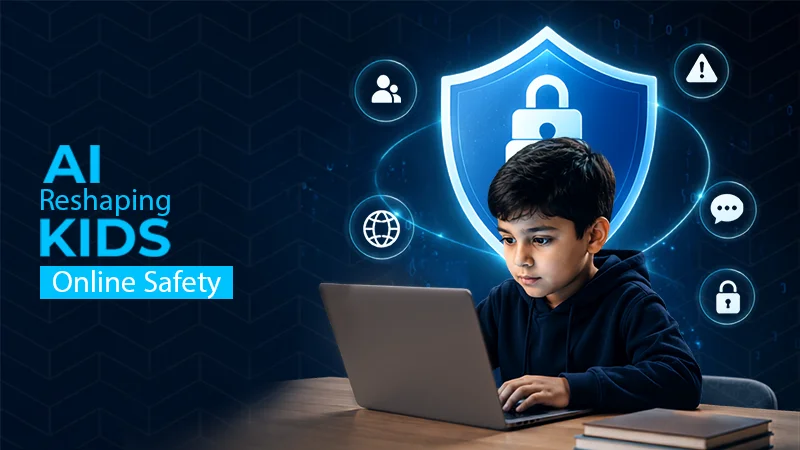
Today’s parents can feel this line. Artificial intelligence is quickly becoming part of children’s everyday lives, powering everything from homework helpers and chatbots to social media feeds and gaming platforms. While AI offers exciting opportunities, it also creates new risks that are far more sophisticated than the online threats families learned to recognize just a few years ago.
Understanding these technical changes might seem difficult, but it’s not the case. It starts with knowing how AI is reshaping online safety, what practical steps parents can take today, and why an entirely new generation of cybersecurity professionals is emerging to keep systems safe.
KEY TAKEAWAYS
- Online scams are getting more convincing with AI voice cloning, realistic chatbots, and personalized phishing attacks.
- Open conversations, verification habits, and parental safety tools are among the most effective ways to protect children online.
- AI is also strengthening online safety by powering smarter monitoring and content filtering technologies.
- AI security is a rapidly growing cybersecurity specialization, creating promising long-term career opportunities.
A few years ago, parents taught children to:
That advice still helps, but AI has quietly rewritten the playbook and changed how online attacks happen.
A few shifts matter most for families.
AI companion apps blur what’s real. Chatbots that talk, remember, and act like a friend are everywhere now, and kids get attached fast. Some collect a startling amount of personal data, and their content filters slip. We looked at one of the popular ones in our Talkie AI review, and the pattern holds across the category: the friendlier the app feels, the easier it is for a child to overshare.
Voice cloning makes scams personal. With a short clip of someone’s voice, scammers can fake a phone call from a friend, a coach, or even you. A panicked message that sounds exactly like a family member is much harder for a teen to brush off than a typo-filled email.
AI writes better bait than it used to. Phishing texts and fake giveaways aimed at kids now read cleanly, copy real brands, and arrive in volume. The old tell, spot the sloppy writing, barely applies when a machine wrote it.
Calm down, you don’t need to fear AI. Instead of pulling the plug, try staying a step ahead. A few habits go a long way:
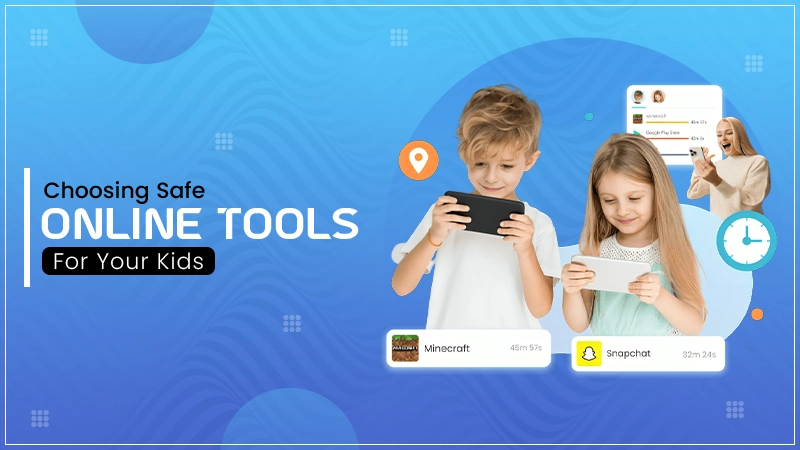
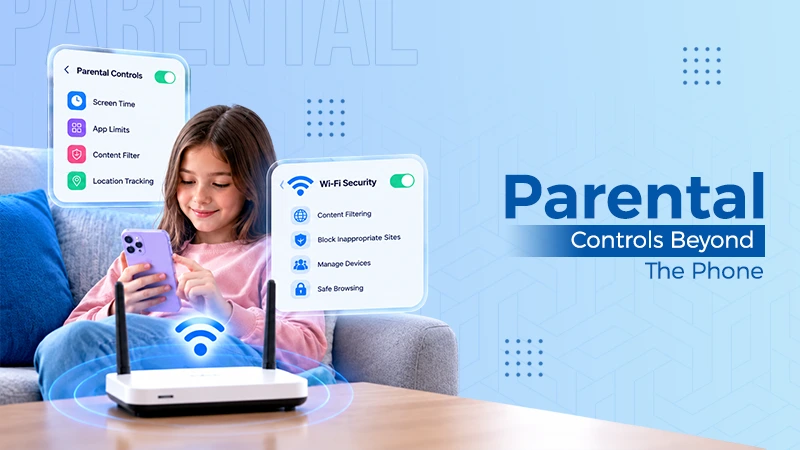
The good news is that it cuts both ways. The same technology behind these risks is also powering smarter AI parental controls that can flag concerning activity before it turns into something bigger.
SURPRISING STATS
As per UNICEF, children are adopting AI over 3x faster than adults. One in ten children turn to it “for advice on things that worry them.”
While parents protect children at home, another group is working behind the scenes. These professionals’ entire job is keeping systems safe.
Even seasoned security experts have had to go back and learn this. The threats AI created, from deepfakes to chatbots that can be manipulated into leaking data, don’t respond to the training most of them grew up on. The industry has been openly rethinking how to train security teams for AI-driven threats, because the old playbook fell behind.
One answer is a new credential from ISACA called the Advanced in AI Security Management, or AAISM. It’s the first certification built specifically around managing AI security risk: how these systems get attacked, how to govern them, and how to protect the data behind them. Structured AAISM training from Destination Certification is one of the ways security professionals are getting up to speed on exactly the threats this article describes.
For anyone, including teenagers, who enjoy technology, solving puzzles, or figuring out how systems work, AI security could become one of tomorrow’s most rewarding careers. And it helps to know how the path actually works.
AI security isn’t an entry-level field, and that’s the honest version. AAISM is an advanced credential. To earn it, you need an active CISSP (Certified Information Systems Security Professional) or CISM (Certified Information Security Manager) first- the foundational certifications that prove you understand security before you specialize in AI. So the route looks less like a single leap and more like a staircase: build the fundamentals, get certified, then add the specialization on top.
For a teenager years away from that, the takeaway is simpler. The field that protects people from AI threats is real, it’s hiring, and the curiosity they’re showing now is exactly what it runs on.
Artificial intelligence is transforming childhood in ways few families could have imagined just a few years ago. There’s no getting around it, especially in the online world. It’s making some threats sneakier and some scams far more convincing. But the same wave is creating the people and the tools to fight back, and you don’t need a certification to start protecting your own kids today.
Stay curious, stay involved, and keep the conversation going. That’s the part no app can do for you.
It enables scammers to create realistic voice clones, personalized phishing messages, and human-like chatbots that can manipulate children into sharing sensitive information or trusting fake identities.
No. Rather than avoiding it completely, parents should teach children how AI works, discuss potential risks openly, and establish safe online habits while using trusted platforms.
Yes. Many parental control apps and cybersecurity tools now use it to identify harmful content, suspicious conversations, and unusual online activity more quickly than traditional systems.