Today, digital transformation does not consist merely of using only a few technologies or tools. It involves constructing full-fledged digital solutions that integrate across various platforms. The key drivers behind such transformations are full-stack developers.
As the dependencies to create such projects increase, companies require highly-skilled individuals who are either certified with workplace experience or have completed a Full stack developer course or training.
Let’s understand the role of such positions and how these skills matter in the modern digital economy.
Key Takeaways
Full-stack developers are tasked with working on multiple stages of development for a digital product because of their varied knowledge.
Frontend or backend specialists can handle only some tasks at once, but full-stack devs can understand better, thus speeding up things.
They act as bridges between the design, development, and operations teams, communicating with all departments.
Having full-stack knowledge allows individuals to adapt easily to new software and technology and be competent in changing roles.
Understanding the Role of a Full Stack Developer
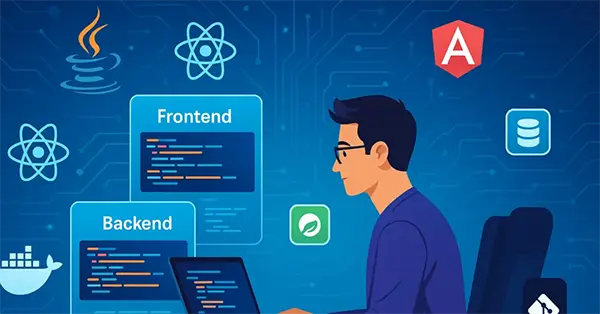
The tasks of a full-stack developer include all stages of development for a digital product. Rather than limiting their specialization to visual design or the architecture of an application, they must manage both aspects.
The responsibilities of a full-stack developer often include:
Creating easy-to-navigate user interfaces
Constructing the backend system to process information securely and efficiently
Integrating the front and back-end environments seamlessly
Recognizing the interaction between databases, servers, and browsers
A wide range of technical skill sets allows companies to develop full-fledged digital products without having to frequently coordinate among different professionals.
Bridging the Gap Between Frontend and Backend
The ability of full-stack developers to connect any possible communication gap is considered the biggest benefit they can provide to any company.
Some other benefits are:
Decision-making will be faster due to the complete knowledge of the system
Errors due to miscommunication between the frontend team and the backend team will become minimal
It becomes easier for one person to find the solution since he understands the whole system
Speed and effectiveness play a vital role in today’s world.
Driving Agility and Innovation in Digital Projects
Digital transformation requires constant experimentation, updates, and improvement. Full-stack developers support this need for agility.
They contribute by:
Quickly developing prototypes and minimum viable products
Adapting applications based on user feedback
Supporting continuous improvement without disrupting existing systems
It is because of these reasons that both startups and established businesses prefer having experienced individuals with full-stack knowledge. People who take training in full-stack developer classes are usually more equipped to face business demands.
Supporting End–to–End Ownership
In contrast to most jobs that operate on fragmented actions, full-stack developers usually take ownership of complete features or entire projects.
It will lead to the following:
Increased responsibility and quality assurance
Increased knowledge of business requirements
Improved product planning and design
This end-to-end ownership creates digital products that are effective and fulfill long-term business requirements.
Did You Know?
The term “Full-stack” was popularized around 2008 by Randy Schmidt to describe developers who handle everything from designing to programming.
Enhancing Collaboration Across Teams
Naturally, full-stack developers act as bridges between design, development, and operations teams.
It is natural that full-stack developers become bridges between design, development, and operations teams.
They do it through:
Explanation of complex technical information in easy terms
Improved coordination with designers, testers, and product owners
In doing so, collaboration will make digital teams even more effective.
Why Full Stack Skills Matter in the Modern Digital Economy
As companies welcome cloud-based solutions and automation techniques into their workflow, the developers require an all-inclusive approach to technology.
Having full-stack knowledge helps individuals to:
Adapt to new software or technologies
Offer inputs in architectural deliberations
Be competent in ever-changing positions and technologies
A lot of people learn such skills from taking a full-stack Java developer course.
Conclusion
In terms of frontend and backend development, full-stack developers are transforming the process of digital transformation. Their skills of aiming for long-term goals, being flexible, and collaborating effectively make them an integral part of modern-day society.
In light of organizations’ need for adaptable and forward-thinking employees, taking a course in full-stack developers or a full stack Java developer course turns out to be the right choice for those who wish to advance their careers within the digital era. Being a full-stack developer involves more than being skilled; it entails an attitude towards progress and innovation.
FAQs
Q1) What are the responsibilities of a full-stack developer?
Ans: The following are the responsibilities of a full-stack developer:
Creating easy-to-navigate user interfaces
Constructing the backend system
Integrating front-end and back-end environments
Recognizing interactions between databases, servers, and browsers
Q2) How do full-stack developers contribute to a project?
Ans: The following are how full-stack devs contribute to a project:
Quickly developing prototypes and minimum viable products
Adapting applications based on user feedback
Supporting consistent improvement without disrupting existing systems
Q3) How do they collaborate with different teams?
Ans: As they know many different fields, they act as bridges between design, development, and operation teams
Q4) What roles are companies looking for right now?
Ans: Firms are looking for individuals who have a good amount of experience, and are specialized in their field, having being able to handle multiple projects at once.