Number type and availability can vary by country and service. Review the current catalog information before placing an order rather than assuming every listing has the same classification.

SMS verifications are used by many online platforms to confirm that a registration request is connected to a reachable phone number. This verification process helps limit automated signups and adds a basic ownership check, but it also encourages users to use the same personal number for different platforms such as social networks, marketplaces, messaging apps, and online communities.
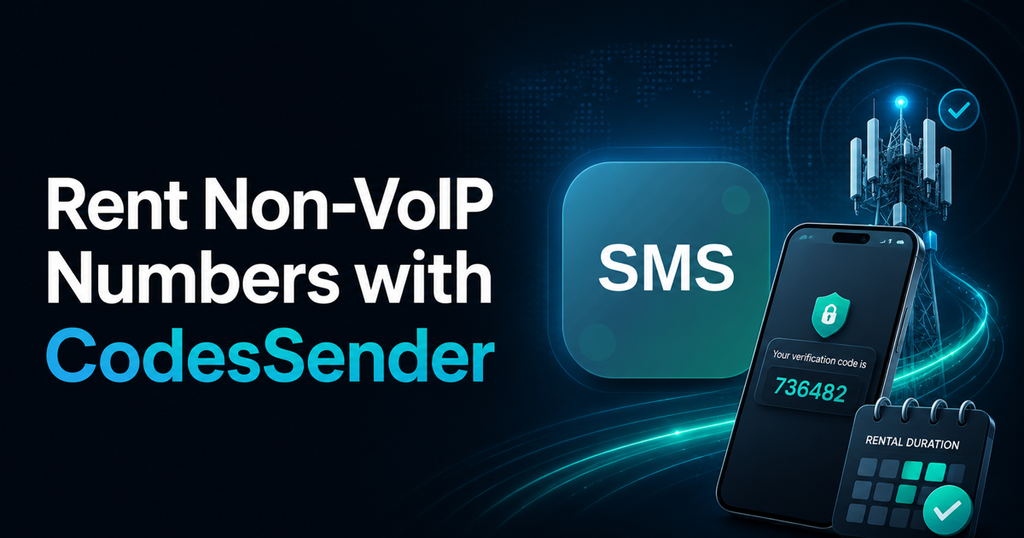
A rented non-VoIP number provides a distinct line for getting messages during a defined period. A rental offers to preserve access to the same number for days or weeks. This continuity can be important when an account requests another code after a new login, password change, security review, or device switch.
VoIP numbers route calls or messages mainly through internet-based telephony systems. Non-VoIP numbers are associated with mobile or traditional carrier infrastructure instead of a typical internet calling application. Because of that distinction, some online services serve non-VoIP inventory differently during phone verification.
The label does not guarantee acceptance. Platforms use their own risk systems, carrier databases, country rules, velocity limits, and account signals. A non-VoIP number may improve compatibility in some conditions, but the destination service makes the final decision.
The biggest difference is continuity. A one-time activation is appropriate when the only demand is an initial OTP. A rental is designed for situations where the same number may need to get additional messages during the rental window.
Renting is not the same as permanent ownership. Access ends with the selected term unless the provider provides an extension and inventory remains available. Important accounts should always have extra recovery methods.
Users can browse available CodesSender non-VoIP numbers by country and supported service. Inventory is dynamic, and a listed number should be picked for the specific platform that will send the verification message.
Country selection should follow the genuine context of the account. An app may compare the phone country code with profile information, payment details, IP location, or regional availability. Selecting an unrelated country solely because it is inexpensive can create verification problems or trigger additional review.
The rental period should cover genuine account use, not just the first login. Seven days may be good for a short project or trial. A longer term can make sense when repeat authentication is possible. The lowest upfront price is not always the lowest total cost if losing access makes the user replace the number and update the account.
The following are the differences between both options:
For a single verification session instead of continued access, a virtual phone number for SMS verification can be selected from the activation catalog. The correct choice depends on whether the same number will be required again.
A separate number restricts how widely a personal phone number is distributed, but it does not make an account anonymous. Websites can access IP addresses, browser identifiers, email addresses, payment information, device data, and usage patterns. Users should know that a phone number is only one part of a broader account profile.
Limit free public SMS pages for accounts that matter. Messages may be visible to strangers, and the same number can be used by many visitors. An order-specific rental provides better separation, but the OTP must still be treated as confidential.
Before the rental expires, check the destination account’s security settings. Add an email address, authenticator app, passkey, or backup codes when supported. If the service allows the phone number to be updated, decide whether the account should transition to a permanent number under your control.
Do not think that renting the same country and service later will restore the identical number. Inventory changes. If receiving future messages at that exact number is important, maintain the rental for the necessary period or use a permanent carrier line.
Non-VoIP rentals are important for privacy, QA testing, travel, separating work from personal communication, and maintaining access during a short project. They should never be used to impersonate another person, create deceptive accounts, send spam, evade enforcement, or violate local law and platform terms.
Renting a non-VoIP number can offer the continuity that one-time activation lacks. The strongest strategy is to select the exact service, use a country consistent with the account, choose enough rental time, and add independent recovery methods. Used responsibly, a rented number separates verification traffic from a personal line without needing another physical SIM.
Number type and availability can vary by country and service. Review the current catalog information before placing an order rather than assuming every listing has the same classification.
No provider can guarantee that every platform will accept every number. Delivery depends on inventory, carrier routing, the sender’s policies, and the account context.
Rental is intended for continued access during the selected term, subject to the supported service, provider conditions, and available routing. Check the rental details before ordering.
Access to the number ends unless it is extended through an available renewal option. Recovery information should be configured before expiration.