With children constantly switching to different apps and playing different games, it’s difficult for parents to keep up with what’s safe, what isn’t, which app offers what, and what the latest risks and challenges are.


“While the kids use apps, a question might hover around parents’ minds: “What hidden risks can these apps carry? So, if you are one of these parents, your search ends here.
According to the World Health Organisation, 12% of adolescents are at risk of problematic gaming, with boys more likely than girls to show signs of problematic gaming (16% vs 7%).
Therefore, this article aims to cover the risks involved that are not evident on screens, the power of algorithms on young minds, and encouraging awareness without fear, and more!
Key Takeaways
- The Risks You Don’t See On the Screen
- How Apps Collect More Than You Expect
- Devices Matter More Than Most Parents Think
- The Power of Algorithms Over Young Minds
- Gamification and the Loss of Healthy Boundaries
- Advertising That Doesn’t Look Like Advertising
- Encouraging Awareness Without Fear
- Looking Beyond the Obvious
| Key TakeawaysThe Risks You Don’t See On the ScreenHow Apps Collect More Than You ExpectDevices Matter More Than Most Parents ThinkThe Power of Algorithms Over Young MindsGamification and the Loss of Healthy BoundariesAdvertising That Doesn’t Look Like AdvertisingEncouraging Awareness Without FearLooking Beyond the Obvious |
Mobiles have become everyone’s convenient device now, but with advanced technology comes great risks, which cannot be seen on the screen as well.
Some of these risks include:
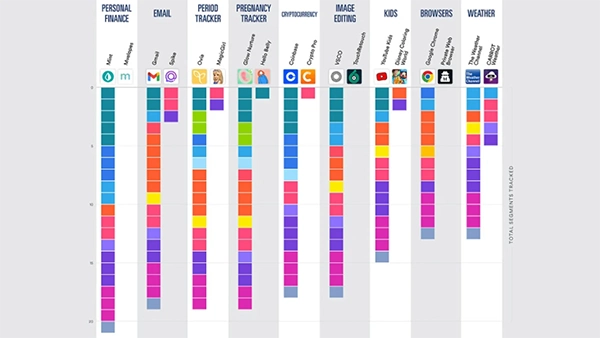
Apps often tend to collect more than one can expect through various sources, which enables access to information that ultimately is the reason for leads to data theft and other security breaches. These sources include :
The infographics further depict the apps that collect more data :
Devices matter more than parents think they do! According to a 2015 national survey by Common Sense Media, 53% children (aged 8-12 years) have their own tablet, and 24% have their own smartphone.
Among teenagers, 67% have their own smartphone.
So, as a precaution, many parents rely on phones ranging from kid-safe phones to practices such as the 20-20-20 rule, with 20-second breaks every 20 minutes, and seeing objects more than 20 feet apart.
Taking such precautions can prevent children from long term damages to their eyes and further improve the early-rising eye problems in children.
Kids today don’t just use the internet, they grow in it. It adversely affects their personality and brain, and causes diseases which include :
Neurological and Cognitive Impact:
Gamification has blurred the healthy boundaries between gaming for fun and being addicted to it. It results in leads to negative impacts on their health and further impacts the minds of young children.
These impacts include :
These impacts can be coped with by opting for mechanisms such as engaging in outdoor sports, opting for mind-engaging puzzles, and learning, etc.
Fun Fact: The longest gaming session led to a man’s death.
Young minds are often more prone to being influenced and affected by advertisements than adults, which makes them the first victims of such ads.
Under these circumstances, it leads to adverse implications such as :
In the era of technology, safeguarding your information is the need of the hour. So, if you want your kids to be secure online, here are a few tips :
These tips can ensure a healthy online surfing for your kids that will reduce the fear of being captured in an online trap.
When working in a tech-savvy world, thinking out of the box becomes important. It brings non-obvious thinking to light, as stated by Bhargava. This includes the four- step method known as SIFT.
In a world of technology where information is wealth, apps and algorithms play an important role in determining the online security of users.
And, with early access to phones, kids are subjected to online threats at an early age, which needs to be safeguarded with the four-step SIFT method.
With children constantly switching to different apps and playing different games, it’s difficult for parents to keep up with what’s safe, what isn’t, which app offers what, and what the latest risks and challenges are.
They can damage their online reputation (with the risk of cyber-bullying) and have a negative impact in the school setting, or on their personal and professional future.
A parental control app can provide an activity report to show if your child is accessing inappropriate websites or spending too much time on their devices.
What are the possible risks and consequences for children when going online?